
Quick answer
Galle International Stadium was badly damaged by the Indian Ocean tsunami on 26 December 2004, when the sea surged across the ground, destroying the pavilion and stands and leaving the outfield covered in debris. The stadium was rebuilt and Test cricket returned in December 2007. Cricketers including Muttiah Muralitharan and Shane Warne supported tsunami relief on the south coast, and memorials at Peraliya and Galle are within an hour of the ground.
Key takeaways
- The 2004 Indian Ocean tsunami killed more than 30,000 people in Sri Lanka.
- The tsunami struck Galle on the morning of 26 December 2004 and flooded the cricket ground.
- Galle International Stadium was rebuilt, and Test cricket returned in December 2007.
- Muttiah Muralitharan supported relief work on the south coast with the Foundation of Goodness at Seenigama.
- The Peraliya tsunami memorial, about 45 minutes north of Galle, marks one of the worst single losses of life.
The tsunami in Galle
On the morning of 26 December 2004, an earthquake off Sumatra sent a tsunami across the Indian Ocean. It reached Sri Lanka's east and south coasts within about two hours, and killed more than 30,000 people on the island, with many more displaced.
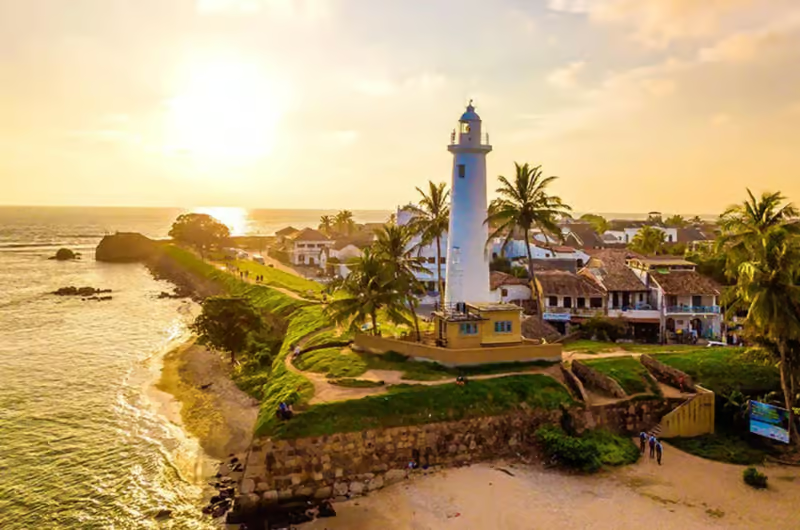
In Galle, the sea surged through the town, the bus station and the market, and across the low-lying cricket ground beside the fort. The fort's Dutch ramparts protected the old town inside the walls, but the area around them was devastated.
For many in Galle, the stadium was where the sea came in, and the memory is still strong.
- →Date: 26 December 2004.
- →Over 30,000 killed in Sri Lanka.
- →The fort walls protected the old town.
The damage to the stadium
Galle International Stadium was badly damaged. The sea destroyed much of the pavilion and stands, swept away equipment and left the outfield covered in mud, debris and wrecked vehicles from the nearby bus station. For a time, the ground was used by relief workers and displaced people.
There were doubts over whether Test cricket would return, and the rebuilding took nearly three years.
The ground's position, between the fort and the sea, which makes it so beautiful, is also what made it so vulnerable.
- →Pavilion and stands destroyed.
- →Outfield covered in debris.
- →Used by relief efforts for a time.
The rebuild and the return of Tests
Galle International Stadium was rebuilt with new stands and pavilions, and Test cricket returned in December 2007, when Sri Lanka played England. The return was an emotional moment for the town and for Sri Lankan cricket.
Since then, Galle has become one of the most important Test grounds in Sri Lanka, and the regular venue for Australian Tests on the island, including the series of 2011, 2016, 2022 and 2025.
Lankan Stays & Trails includes the story of the tsunami and the rebuild in its guided walks around Galle Fort for cricket fans.
- →Rebuilt with new stands.
- →Tests returned in December 2007.
- →Now Galle hosts most Australian Tests.
Cricketers and the recovery
Cricketers played a part in the recovery. Muttiah Muralitharan worked with the Foundation of Goodness, a charity based at Seenigama, between Hikkaduwa and Galle, which helped rebuild homes, schools and livelihoods on the south coast. Shane Warne and other Australian players supported fundraising and visited the area.
International cricket also raised funds through charity matches in early 2005. The links made then between Australian and Sri Lankan cricket are still remembered on the south coast.
- →Muralitharan and the Foundation of Goodness.
- →Australian players supported fundraising.
- →Charity matches in 2005.
Memorials near Galle
Several tsunami memorials lie within an hour of Galle International Stadium. The most moving is at Peraliya, about 45 minutes north, where the Queen of the Sea train was swept off the tracks with great loss of life. A standing statue of the Buddha faces the sea, and a small museum tells the story.
The Tsunami Honganji Vihara, near Peraliya, and the small tsunami photo museums along the coast road are also quiet stops.
- →Peraliya: the train memorial.
- →Tsunami Honganji Vihara.
- →Small photo museums on the coast road.
Visiting with respect
Visiting the memorials is a quiet, moving experience. Dress modestly, keep voices low and ask before photographing people. Many families on the coast lost relatives, so treat the subject with care in conversation.
A visit to Peraliya fits easily into a rest day or the drive between Galle and Colombo.
Frequently asked questions
Was Galle cricket stadium damaged by the tsunami?
Galle International Stadium was badly damaged by the Indian Ocean tsunami on 26 December 2004. The sea surged across the ground, destroying much of the pavilion and stands and leaving the outfield covered in debris. The stadium was rebuilt, and Test cricket returned in December 2007.
When did Test cricket return to Galle after the tsunami?
Test cricket returned to Galle International Stadium in December 2007, when Sri Lanka played England, nearly three years after the tsunami. Since then, Galle has become one of Sri Lanka's main Test grounds and the regular venue for Australian Tests on the island.
How many people died in Sri Lanka in the 2004 tsunami?
More than 30,000 people died in Sri Lanka in the 2004 Indian Ocean tsunami, with many more displaced, mostly on the east and south coasts. Galle, Hikkaduwa, Peraliya and the east coast towns were among the worst affected.
What is the Peraliya tsunami memorial?
The Peraliya memorial, about 45 minutes north of Galle, marks the place where the Queen of the Sea train was swept off the tracks by the tsunami, with great loss of life. It has a standing Buddha statue facing the sea and a small museum.
What did Muralitharan do after the tsunami?
Muttiah Muralitharan worked with the Foundation of Goodness, a charity based at Seenigama on the south coast, which helped rebuild homes, schools and livelihoods after the tsunami. He was one of several cricketers who supported the recovery.
Did the tsunami damage Galle Fort?
Galle Fort's Dutch ramparts largely protected the old town inside the walls from the 2004 tsunami, although the area around the fort, including the bus station, market and cricket ground, was devastated. The fort's survival is often credited to the strength of its 17th-century walls.
Can you visit tsunami memorials on a cricket trip?
You can. The Peraliya memorial, about 45 minutes north of Galle, and the nearby Tsunami Honganji Vihara are easy stops on a rest day or on the drive between Galle and Colombo. Dress modestly and treat the subject with care.