
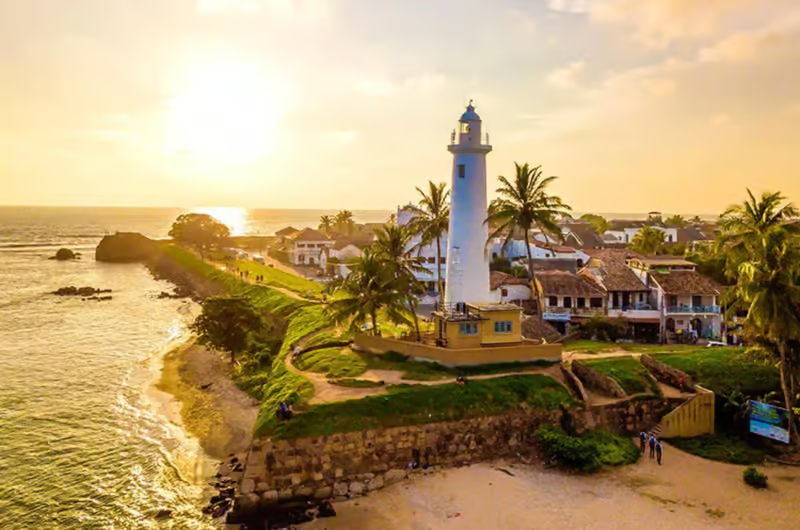
Quick answer
In October, choose Galle over Mirissa: it is usually the wettest month island-wide, the sea is unsettled and Mirissa's whale boats have not yet resumed. In November the balance shifts. The sea begins to calm, whale watching restarts in most years and Mirissa's restaurants reopen, so by mid to late November a split stay works again. Prices in both towns stay well below the December to March peak throughout.
Key takeaways
- October is usually the wettest month across Sri Lanka, with heavy afternoon and evening thunderstorms.
- Whale watching from Mirissa typically resumes in November as the sea settles.
- November is an improving month on the south coast, with calmer sea in the second half.
- Room rates in October and November are among the lowest of the year outside the monsoon.
- Galle is the safer base in October; Mirissa becomes worthwhile again from mid-November.
October in Galle and Mirissa
October in Galle and Mirissa belongs to the second inter-monsoon. The south-west winds have faded, the north-east monsoon has not begun, and the air is still and heavy. Mornings are often fine. By early afternoon, clouds pile up and thunderstorms break with real force, sometimes flooding roads for an hour.
The sea in October is calmer than in July but unsettled, with brown water near river mouths after rain. Mirissa is still largely closed, and Galle is the practical choice. Flooding and landslides inland occasionally disrupt travel in October, so allow slack in any tight connection.
- →Mornings: usually the best part of the day.
- →Afternoons: heavy thunderstorms are common.
- →Mirissa: quiet, many businesses still shut.
- →Galle: open and uncrowded.
November in Galle and Mirissa
November in Galle and Mirissa is a month of two halves. The first fortnight often resembles October, with afternoon storms. In the second, the pattern dries from the west, the sea flattens and the south coast season visibly begins. Beach restaurants rebuild their decks and put out their tables.
Mirissa's whale-watching operators generally restart during November, weather permitting, and early-season trips are uncrowded. Swimming in the main bay becomes possible on calm mornings. Galle is green, fresh and still quiet. Late November can be one of the most pleasant times of the year to visit both.
- →Early November: still showery.
- →Late November: calmer sea, more sun.
- →Whales: trips resume in most years.
- →Crowds: light until December.
Which to choose, week by week
Choosing between Galle and Mirissa in October and November is a matter of timing. In October, base in Galle and visit Mirissa only if a bright morning invites a drive along the coast. In the first half of November, do the same, with a little more optimism.
From mid-November, a split stay makes sense again: two nights in Mirissa with a flexible whale booking, and one in Galle. Travellers who cannot bear the uncertainty should keep the base in Galle throughout and treat any beach day as a bonus, since the fort delivers regardless of the sky.
- →October: Galle.
- →1 to 15 November: Galle, with a day trip east on a fine day.
- →16 to 30 November: Mirissa and Galle together.
- →Any week: mornings out, afternoons in.
Prices and availability
Prices in Galle and Mirissa during October and November are among the best of the year. Hotels that charge full rates from mid-December offer substantial reductions, and the most sought-after rooms in the fort are available at a week's notice. Villas near Mirissa often discount for stays of four nights or more.
Not everything is open. Some Mirissa properties use October for repairs and reopen in November. Check that the pool, restaurant and any boat service you are counting on will be operating. Flights into Colombo are also cheaper in these months than at Christmas.
Planning for uncertain weather
Planning for October and November on the south coast means building a day that works either way. Schedule outdoor things, such as the ramparts, a beach walk or a boat, for the morning. Keep museums, shopping, cooking classes, spa treatments and long lunches for the afternoon.
Book whale watching only a day ahead, when the forecast is clearer, and choose refundable rooms where possible. Lankan Stays & Trails keeps shoulder-season itineraries loose on the coast and shifts nights between Galle and Mirissa at short notice when the weather makes one the obvious choice.
Frequently asked questions
Is November a good time to visit Mirissa?
The second half of November is good and improving. The sea calms, whale-watching trips resume in most years, restaurants reopen and crowds are light. The first half of the month can still be showery, with unsettled sea. Prices are well below the December to March peak throughout.
Is October a bad time to visit Galle?
October is wet but not a bad time for Galle. Mornings are often fine, storms come mostly in the afternoon, and the fort's indoor sights, restaurants and shops are all open with few visitors. It is a poor month for beaches, so plan a town stay, not a seaside one.
When does whale watching start in Mirissa?
Whale-watching trips from Mirissa usually restart in November, once the sea has settled after the monsoon, and run until around the end of April. Early-season departures depend heavily on the weather, so book only a day or so ahead and keep a spare morning available.
When does the Mirissa season start?
The Mirissa season starts gradually through November and is fully under way by mid-December. Beach restaurants reopen from early to mid-November, whale boats resume when the sea allows, and swimming conditions improve steadily. By the start of December most services are operating normally.
Does it rain all day in October on the south coast?
Rarely. October rain on the south coast usually arrives as heavy thunderstorms in the afternoon and evening, lasting an hour or two, with mornings often dry and bright. Occasionally a weather system brings a day or more of persistent rain. Plan outdoor activities early in the day.
Are hotels cheaper in Galle and Mirissa in November?
Yes. November rates in Galle and Mirissa are typically well below those of December to March, often by a quarter or more, and availability is good. Prices begin to rise in the last week of the month and jump sharply from around 20 December.