
Quick answer
At a Sri Lankan Test match, temperatures in the stands are usually about 30 to 33 °C, with humidity of 70 to 85 per cent, which makes it feel like the high 30s or more. To cope over five days, sit in shade where possible, wear a wide-brimmed hat and light long sleeves, use high-factor sunscreen, drink water steadily with rehydration salts, limit alcohol in the heat of the day and take a session off if you feel unwell.
Key takeaways
- Daytime temperatures at Galle and Colombo are usually about 30 to 33 °C, with humidity of 70 to 85 per cent.
- High humidity makes the heat feel several degrees hotter and reduces the body's ability to cool by sweating.
- The UV index in Sri Lanka is usually very high to extreme from about 10 am to 3 pm.
- Heat exhaustion shows as heavy sweating, dizziness, headache, nausea and weakness.
- Sessions from about noon to 3 pm are the hottest part of a day's play.
How hot it really is
Sri Lanka's heat at a Test match is less about the thermometer than the humidity. Daytime temperatures at Galle International Stadium and Colombo's grounds are usually about 30 to 33 °C, but humidity of 70 to 85 per cent makes it feel like the high 30s or more, and sweat does not evaporate easily, so the body struggles to cool down.
The dry-zone grounds, at Dambulla and Hambantota, can reach about 33 to 35 °C, with less humidity. Pallekele, in the hills near Kandy, is a little cooler, about 28 to 30 °C. In all of them, the sun is strong, and the UV index is very high to extreme from about 10 am to 3 pm.
The hottest months are March to May; the most comfortable for spectators are December to February.
- →Galle and Colombo: about 30 to 33 °C, very humid.
- →Dambulla and Hambantota: about 33 to 35 °C.
- →UV: very high to extreme in the middle of the day.
Seats and shade
Shade is the most important choice at a Sri Lankan Test. Many stands at the main grounds are partly or wholly uncovered, and the sun moves across the ground during the day, so a seat that is shaded at 10 am may be in full sun by 2 pm. Check the seating plan, and ask locals which stands are covered.
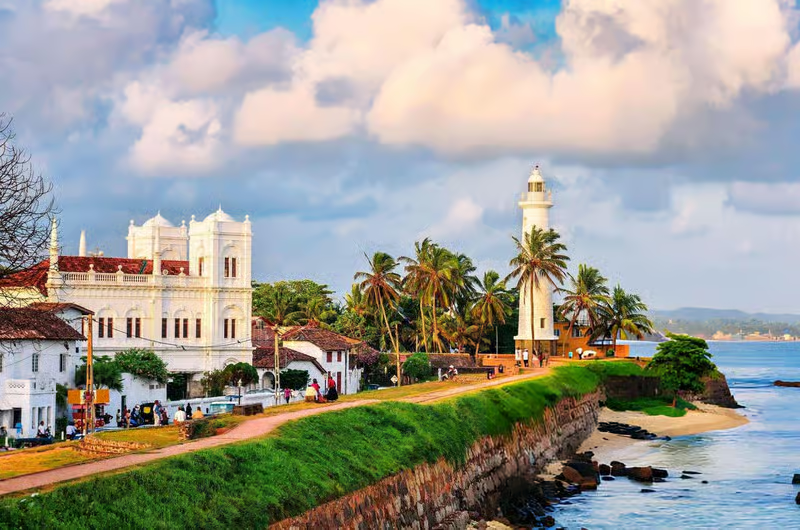
At Galle, the fort ramparts above the ground have little shade, so they suit a morning or late-afternoon session rather than the middle of the day. Grassy banks, where they exist, are pleasant but exposed.
Lankan Stays & Trails advises fans on shaded stands for each ground and builds a pool break into match days in the hottest months.
- →Check the seating plan for covered stands.
- →Ramparts: mornings and late afternoons.
- →Expect the sun to move across your seat.
What to wear
Wear a wide-brimmed hat, not a cap, light, loose long-sleeved shirts in pale colours and light trousers or long shorts. Cotton and linen breathe; quick-drying technical fabrics are also good. Sunglasses protect against glare.
Use high-factor sunscreen on all exposed skin and reapply every two hours. A cooling towel, soaked in water and worn round the neck, helps in the afternoon.
- →Wide-brimmed hat.
- →Light long sleeves.
- →High-factor sunscreen every two hours.
Drinking and eating
Drink water steadily through the day, rather than waiting until you are thirsty. Add rehydration salts, sold in pharmacies across Sri Lanka, to one or two bottles a day to replace salt lost in sweat. King coconut water, sold outside many grounds, is a good natural alternative.
Limit alcohol in the heat of the day: beer dehydrates and makes heat illness more likely. Eat light meals, and keep salty snacks to hand.
Check the ground's rules on bringing water in, because some stadiums restrict bottles or require them to be opened.
- →Water steadily, not just when thirsty.
- →Rehydration salts once or twice a day.
- →Limit alcohol until the evening.
Signs of heat exhaustion
Heat exhaustion shows as heavy sweating, dizziness, headache, nausea, weakness, cramps and a fast pulse. If you or a friend show these signs, move to shade, drink water with rehydration salts, cool the skin with water and rest. Most people recover within an hour.
Heatstroke is more serious: confusion, hot dry skin, fainting or a very high temperature. It needs urgent medical help. Ask stewards for the first-aid point.
- →Heat exhaustion: shade, water, rest.
- →Heatstroke: urgent medical help.
- →Know where the first-aid point is.
Pacing five days
Five days of Test cricket in the heat is tiring. Take a session off on at least one day, ideally from noon to 3 pm, and spend it in the hotel pool or the fort's cafes. Sleep well, and keep rest days genuinely restful.
Arrive a few days before the first Test to acclimatise, and avoid long drives on match days.
Frequently asked questions
How hot is it at a Test match in Sri Lanka?
At Galle and Colombo, temperatures in the stands are usually about 30 to 33 °C, with humidity of 70 to 85 per cent, making it feel like the high 30s or more. Dambulla and Hambantota can reach about 33 to 35 °C. Pallekele, in the hills, is a little cooler.
Are the stands covered at Galle International Stadium?
Some stands at Galle International Stadium are covered and many are not, and the sun moves across the ground during the day. Check the seating plan when buying tickets and ask locals which stands stay shaded in the afternoon. The fort ramparts have little shade.
What should you wear to the cricket in Sri Lanka?
Wear a wide-brimmed hat, light, loose long-sleeved shirts in pale colours, light trousers or long shorts, and sunglasses. Use high-factor sunscreen on exposed skin and reapply every two hours. A cooling towel around the neck helps in the afternoon.
How much water should you drink at a Test match in Sri Lanka?
Drink steadily through the day, often three litres or more in the heat, rather than waiting until thirsty. Add rehydration salts to one or two bottles to replace salt lost in sweat. Check the ground's rules on bringing water, and buy more inside if needed.
What are the signs of heat exhaustion?
Signs of heat exhaustion include heavy sweating, dizziness, headache, nausea, weakness, cramps and a fast pulse. Move to shade, drink water with rehydration salts, cool the skin and rest. Confusion, hot dry skin or fainting may mean heatstroke, which needs urgent medical help.
Is Sri Lankan heat worse than Australian heat?
Sri Lanka's temperatures are often lower than a hot Australian summer day, but the humidity is much higher, which makes it feel hotter and makes cooling harder. Nights stay warm, so there is less recovery. Many Australian fans find it more tiring than a home Test.
When is the coolest time for cricket in Sri Lanka?
The most comfortable months for spectators are roughly December to February, when Galle and Colombo are dry and slightly less humid. March to May are the hottest months. In any month, the morning and late-afternoon sessions are cooler than the middle of the day.