
Quick answer
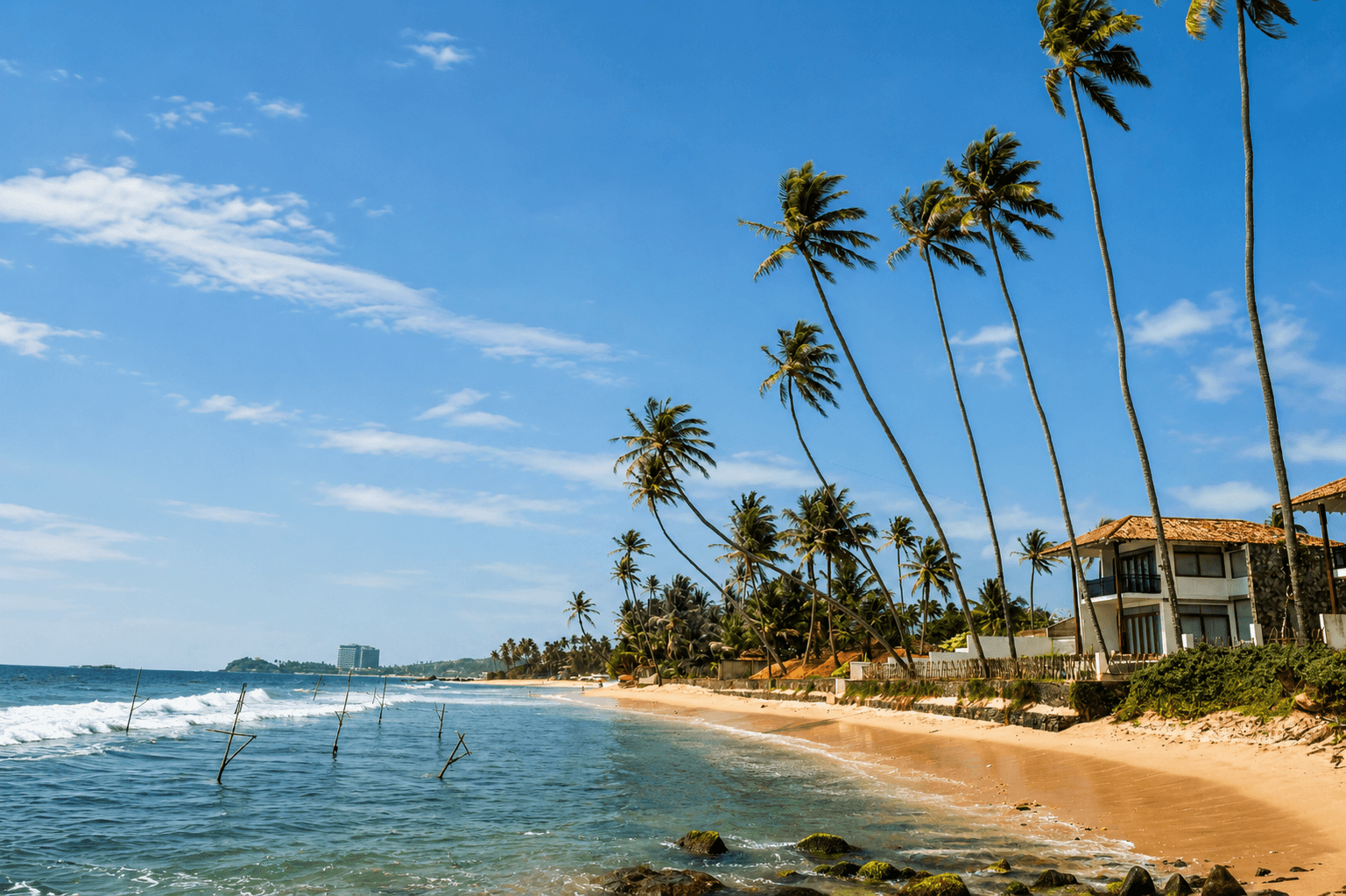
Hikkaduwa is a beach town on Sri Lanka's south-west coast, about 20 kilometres north of Galle, known for the Hikkaduwa Marine National Park coral sanctuary, a reef surf break, and green turtles that feed and come ashore near the main beach. The season runs from about November to April, matching the rest of the south-west coast. It suits travellers who want snorkelling, surf and a lively main strip within easy reach of Galle Fort, and it is livelier and less polished than Unawatuna or Mirissa.
Key takeaways
- Hikkaduwa sits about 20 kilometres north of Galle on the south-west coast, roughly two hours from Colombo.
- The Hikkaduwa Marine National Park coral sanctuary is snorkellable straight off the beach in calm conditions.
- Green turtles regularly feed and haul out near the main beach; feeding them is discouraged.
- The season runs roughly November to April, in line with the rest of the south-west coast.
- The reef break suits experienced surfers; beginners should use the sandy beach break or Weligama.
Where Hikkaduwa is and what it feels like
Hikkaduwa lies on the Galle Road about 20 kilometres north of Galle and roughly two hours south of Colombo, with an expressway exit and a railway station that make it one of the easiest coastal towns to reach. The town is strung along the main road, with hotels and guesthouses on the sea side and shops, dive centres and restaurants on the other.
It is busier and rougher round the edges than Unawatuna or Mirissa. The main road runs close to the beach and traffic noise is part of the deal in the centre. In exchange you get the best off-the-beach snorkelling on this coast, a genuine surf scene, and prices below the boutique south coast further round.
- →About 20 km north of Galle; roughly two hours from Colombo by expressway.
- →Served by the coastal railway line, with trains from Colombo Fort and Galle.
- →Livelier and less polished than Unawatuna, Mirissa or Tangalle.
- →Quieter stretches at Narigama and Thiranagama to the south of the centre.
The coral sanctuary and snorkelling
Hikkaduwa Marine National Park protects a shallow fringing reef that begins only a short swim from the beach in the centre of town. It is the most accessible reef snorkelling on the south-west coast: you can walk in, put your face down and be over live coral and reef fish within a few minutes, without a boat.
Be realistic about condition. The reef has been damaged over the decades by bleaching events, storms and heavy visitor pressure, and it is not the reef it was. Pigeon Island on the east coast is the better snorkel if that is your priority. What Hikkaduwa still offers is easy access, plenty of fish and, frequently, turtles in the shallows. Glass-bottom boats operate for non-swimmers, though they can crowd the reef.
- →Snorkel straight off the beach in the central sanctuary area, no boat needed.
- →Best visibility in the calm season, roughly November to April.
- →Never stand on, touch or collect coral, and use reef-safe sunscreen.
- →For the country's best reef snorkelling, Pigeon Island off Nilaveli is superior.
Turtles at Hikkaduwa
Green turtles are a fixture at Hikkaduwa, feeding in the shallows and hauling out on the sand near the centre of town. Seeing one within a few metres of shore is a routine occurrence rather than a lucky break, and it is one of the reasons the town keeps its following.
The ethics here are worth stating plainly. Feeding turtles seaweed for photographs is common along this stretch and it is not good for them: it habituates wild animals, concentrates them in a busy area with boat traffic, and changes natural foraging behaviour. Watch from a distance, do not touch or ride them, and do not pay anyone who offers to hand-feed one for you. If you want to support turtle conservation, choose a properly run hatchery or a night nesting walk at Rekawa rather than a roadside operation.
- →Green turtles feed and haul out near the main beach year-round.
- →Do not feed, touch, chase or ride turtles, and do not pay others to.
- →Keep at least a few metres away and let them surface freely.
- →For nesting, Rekawa near Tangalle offers a properly managed night walk.
Surfing at Hikkaduwa
Hikkaduwa has a real reef break, one of the more powerful waves on the south-west coast, along with sandier options that suit less experienced surfers. The season matches the coast: roughly November to April, with the cleanest conditions in the early morning before the onshore wind arrives.
The main reef is not the place for a first lesson. Beginners should stay on the beach breaks here or travel down to Weligama, where the whole bay is sandy. Board hire, repair and lessons are all easy to arrange in season along the main strip.
- →Season: roughly November to April, cleanest at dawn.
- →Main reef break: powerful, for experienced surfers, with a shallow bottom.
- →Beach break options for improvers; complete beginners should use Weligama.
- →Board hire and repair widely available along the main road in season.
Diving and wrecks
Hikkaduwa is a long-established dive base, with several wrecks within reach including the well-known Conch and other vessels lying in accessible depths. Visibility is best in the calm season, roughly November to April, and the town has PADI centres offering courses from Open Water upwards.
Compared with Trincomalee or Kalpitiya, the diving here is more about wrecks and easy shore-adjacent sites than dramatic reef walls. It is a good place to learn, and a convenient one, because you can be in the water within twenty minutes of breakfast.
When to visit, and where to base yourself
Come between November and April. Outside that window the south-west monsoon makes the sea rough, snorkelling impossible and swimming often unsafe, and much of the town goes quiet. December to March is the reliable core.
Within Hikkaduwa, the central strip is closest to the coral sanctuary and the noisiest. Narigama and Thiranagama, a short way south, have wider sand, calmer nights and a growing set of better guesthouses. Many travellers now stay in Galle Fort and visit Hikkaduwa for the day, which is a perfectly good approach given it is only half an hour away.
- →Season: November to April. Avoid May to September.
- →Central Hikkaduwa: closest to the reef, busiest and noisiest.
- →Narigama and Thiranagama: wider beach, quieter, better value.
- →Galle Fort makes an easy alternative base, around 30 minutes away.
Fitting Hikkaduwa into a south coast trip
Hikkaduwa works best as a stop rather than a fortnight. Two or three nights gives you the coral sanctuary, a dive or two, a surf session and a turtle encounter, before moving on to Galle Fort, Unawatuna, Weligama and Mirissa as the coast unfolds south.
Lankan Stays & Trails includes Hikkaduwa on south coast itineraries between November and April and will steer you towards dive and snorkel operators who respect the reef rather than crowd it.
Frequently asked questions
Is Hikkaduwa worth visiting?
Yes, particularly if you want reef snorkelling straight off the beach, diving, surf and easy access to Galle. It is livelier and less polished than Unawatuna or Mirissa, and the coral is not what it once was, but no other south-west beach makes the reef this accessible.
When is the best time to visit Hikkaduwa?
Between November and April, with December to March the most reliable. This matches the south-west coast season, when the sea is calm, visibility is good for snorkelling and diving, and the surf is clean in the mornings. May to September is monsoon season here.
Can you snorkel at Hikkaduwa?
Yes. Hikkaduwa Marine National Park protects a shallow fringing reef that begins a short swim from the central beach, so you can snorkel without a boat. Visibility is best from November to April. The reef has suffered bleaching damage, so expect fish and turtles more than pristine coral.
Are there turtles at Hikkaduwa?
Yes. Green turtles feed in the shallows and haul out on the sand near the town centre year-round, and encounters are common. Do not feed, touch or ride them, and avoid operators offering hand-feeding for photographs, which habituates wild animals and harms their natural foraging.
Is Hikkaduwa good for beginner surfers?
Partly. Hikkaduwa's main reef break is powerful and shallow, and is not suitable for beginners. There are gentler sandy options for improvers, but complete beginners are much better served at Weligama, about an hour south, where the whole bay is sand-bottomed.
How far is Hikkaduwa from Galle?
About 20 kilometres, or roughly 30 minutes by road, which makes a day trip in either direction straightforward. Colombo is roughly two hours away using the southern expressway, and Hikkaduwa also has a station on the coastal railway line.
Hikkaduwa or Unawatuna, which is better?
Choose Hikkaduwa for reef snorkelling off the beach, diving and a livelier, cheaper scene. Choose Unawatuna for a prettier sheltered bay, calmer swimming, better restaurants and closer proximity to Galle Fort. Both share the same November to April season.