
Quick answer
A Buddhist pilgrimage trip to Sri Lanka from India typically needs 6 to 8 days to cover the core circuit properly: the Jaya Sri Maha Bodhi and sacred city of Anuradhapura, Mihintale where Buddhism first arrived on the island, the Temple of the Tooth in Kandy, Dambulla's cave temples, and Kelaniya near Colombo. A shorter 4 to 5 day trip can cover Anuradhapura, Mihintale and Kandy alone. Since Sri Lanka shares India's time zone and sits a short flight away, pilgrims lose no travel days to jet lag before the circuit begins.
Key takeaways
- The core Buddhist pilgrimage circuit, Anuradhapura, Mihintale, Kandy and Dambulla, typically needs 6 to 8 days to visit without rushing between sites.
- The Jaya Sri Maha Bodhi at Anuradhapura grew from a cutting of the original Bodh Gaya tree, brought by Sanghamitta and planted in 236 BCE.
- Mihintale, roughly 13 km from Anuradhapura, marks the site where Buddhism is traditionally said to have arrived in Sri Lanka in the third century BCE.
- The Temple of the Tooth in Kandy houses the Tooth Relic, one of Buddhism's most venerated objects, and holds a daily ritual of offerings open to visitors.
- This Buddhist circuit is distinct from the Hindu Ramayana trail elsewhere in Sri Lanka, which runs through Nuwara Eliya, Ella, Chilaw and the south coast rather than the Cultural Triangle.
How many days a Buddhist pilgrimage circuit needs
A focused Buddhist pilgrimage trip from India needs a minimum of 4 to 5 days to visit Anuradhapura, Mihintale and Kandy without rushing, since Anuradhapura's sacred city alone rewards a full day or more given the number of stupas, monastic ruins and the bo tree itself spread across a wide archaeological zone. Adding Dambulla's cave temples and Kelaniya near Colombo extends the trip to 6 to 8 days, which is the range most pilgrimage groups from India actually book.
Pilgrims wanting to combine the Buddhist circuit with a broader first visit to Sri Lanka, adding a beach stay or a wildlife safari, typically extend to 9 or 10 days total, treating the pilgrimage sites as the first half of the trip and a coastal stay as the second. Groups travelling with monks or senior members should generally build in a slower pace than the minimum, since a schedule that rushes between sacred sites tends to undercut the purpose of the visit itself.
The core sites and how much time each needs
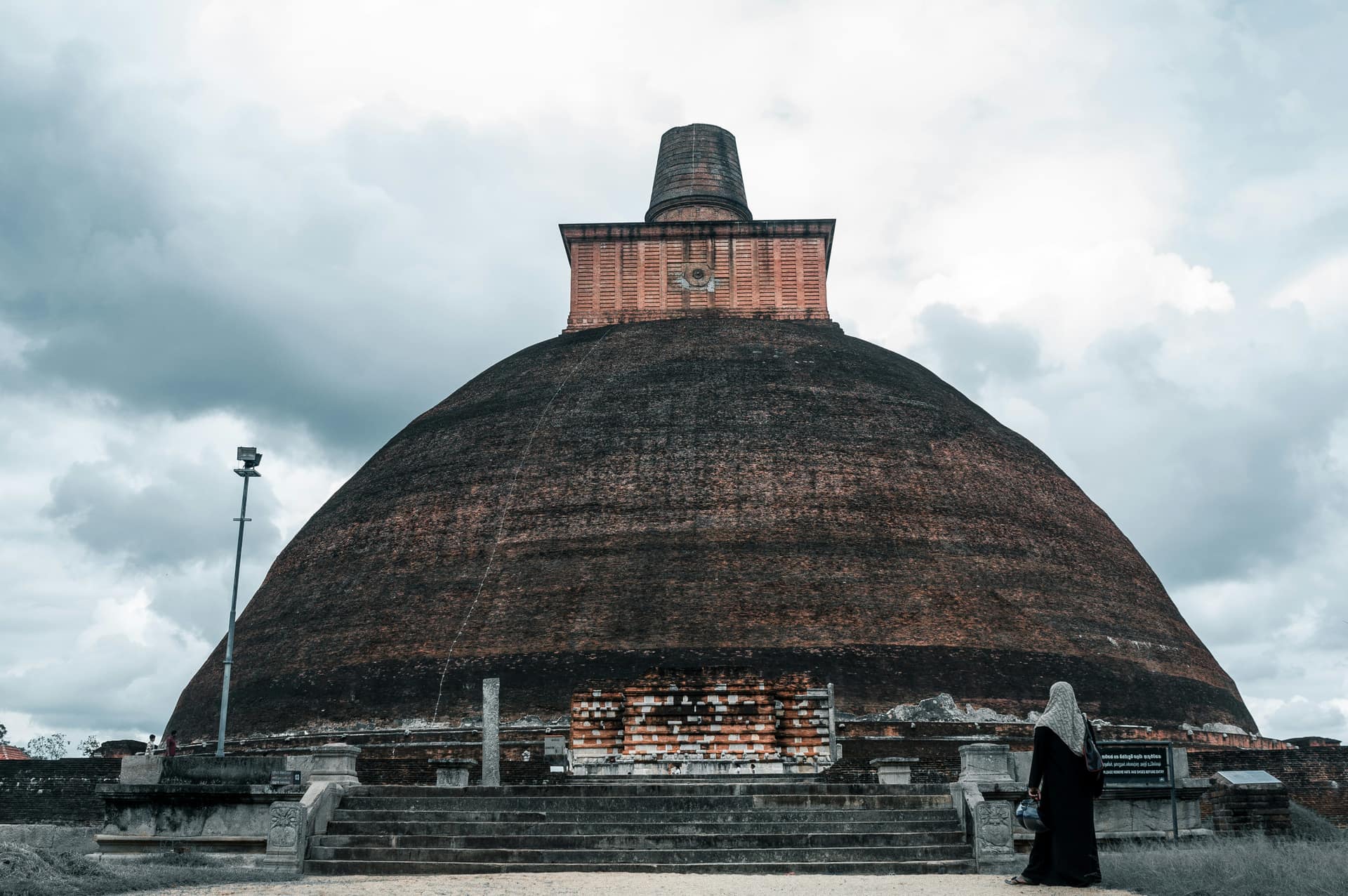
Anuradhapura is the anchor of the circuit and deserves the most time of any single stop. The Jaya Sri Maha Bodhi, grown from a cutting of the original Bodh Gaya tree brought to the island by the nun Sanghamitta and planted in 236 BCE, is the oldest human-planted tree in the world with a continuously recorded planting date, and the surrounding sacred city includes the Ruwanwelisaya, Jetavanaramaya and Abhayagiri stupas, each substantial enough to warrant real time rather than a drive-past.
Mihintale, roughly 13 km from Anuradhapura, is traditionally identified as the site where the monk Mahinda met King Devanampiyatissa in the third century BCE, the event that is said to have brought Buddhism to Sri Lanka. It is usually visited as a half-day addition on the way to or from Anuradhapura, involving a climb of stone steps up the rock.
- →Anuradhapura sacred city: a full day, ideally starting early to avoid the midday heat across the wide archaeological zone.
- →Mihintale: a half-day, including the stepped climb to the summit stupas.
- →Temple of the Tooth, Kandy: 2 to 3 hours, with the evening ritual of offerings a particular highlight for pilgrims.
- →Dambulla cave temples: half a day, combined easily with a Sigiriya or Cultural Triangle stop if the itinerary allows.
Kandy's Temple of the Tooth and Kelaniya
The Temple of the Tooth (Sri Dalada Maligawa) in Kandy houses the Tooth Relic, traditionally regarded as the most sacred object in Sri Lankan Buddhism and historically the symbol of legitimate kingship on the island. Daily rituals of offerings, known as pujas, take place at set times and are open to visitors, and pilgrims often plan their Kandy stay specifically around attending one.
Kelaniya, on the outskirts of Colombo, is one of the sixteen most sacred Buddhist sites in Sri Lanka and is traditionally associated with a visit by the Buddha himself. Its position close to the airport makes it a natural first or last stop on a pilgrimage itinerary, easily fitted in without a dedicated extra travel day.
- →Temple of the Tooth, Kandy: plan around a puja offering time, particularly the evening ritual, for the fullest experience.
- →Kelaniya: close to Colombo and the airport, easily fitted in as a first or last stop without a dedicated extra day.
- →Both sites are lower-effort physically than Anuradhapura or Mihintale, suiting pilgrims of any age or mobility level.
How this differs from the Ramayana trail
It is worth being clear that the Buddhist pilgrimage circuit and the Hindu Ramayana trail are separate routes serving different pilgrims, and combining both properly in a single trip needs considerably more than a week. The Ramayana trail runs through sites associated with the Ramayana, the Sita Amman temple near Nuwara Eliya, Ravana Falls near Ella, and temples near Chilaw and the south coast, a geography that barely overlaps with the Buddhist circuit's Cultural Triangle and Kandy focus.
Some Indian travellers do combine elements of both into a longer 10 to 12 day trip, but a focused Buddhist pilgrimage on its own is best planned as its own trip of 6 to 8 days rather than diluted across too many themes. Groups travelling specifically for religious purposes generally prefer this focused approach, since it keeps the itinerary's purpose clear and avoids the pace feeling scattered between two quite different traditions.
Practicalities for pilgrimage travel
Modest dress is expected at every site on this circuit: shoulders and knees covered, and shoes removed before entering temple grounds, which at Anuradhapura and Mihintale can mean walking on hot stone, so carrying socks for midday visits is a genuinely useful, unglamorous tip. Vegetarian food is easy to find throughout the Cultural Triangle and Kandy, and many pilgrims travelling for religious reasons specifically appreciate how straightforward it is to maintain dietary observances throughout the trip.
A private driver-guide familiar with the sites' religious significance, rather than just their tourist highlights, makes a meaningful difference on a pilgrimage trip, since the context behind each stupa or relic chamber is often what pilgrims are actually there for.
- →Shoulders and knees covered, shoes removed, at every temple and stupa site on the circuit.
- →Carry socks for Anuradhapura and Mihintale, where stone surfaces get hot underfoot by midday.
- →Vegetarian food is straightforward to find throughout the Cultural Triangle and Kandy.
When to plan the pilgrimage
The Cultural Triangle and Kandy sit largely outside the worst of either monsoon, but December to March remains the most comfortable window, with drier conditions and cooler evenings in Kandy specifically. The Poson Poya festival, held on the full moon of June, marks the arrival of Buddhism at Mihintale and draws large numbers of pilgrims to Anuradhapura and Mihintale; travellers planning around it should confirm the exact date each year, since poya dates shift with the lunar calendar.
Avoid mid-April if possible, as the Sinhala and Tamil New Year closes many shops, restaurants and some visitor facilities across the island for several days. Vesak Poya in May, marking the Buddha's birth, enlightenment and passing, is another significant date on the calendar, again shifting each year with the lunar cycle.
Planning your pilgrimage length
Choose 5 days for a focused pilgrimage covering Anuradhapura, Mihintale and Kandy alone. Choose 7 to 8 days to add Dambulla and Kelaniya properly, which is the length that lets each site receive the time its significance deserves rather than becoming a drive-by stop on a broader sightseeing loop.
Lankan Stays & Trails runs dedicated Buddhist pilgrimage itineraries for travellers from India, paced around the sites' religious significance rather than a standard tourist schedule, and typically recommends 7 days as the point where the circuit feels complete rather than compressed.
Frequently asked questions
How many days do you need for a Buddhist pilgrimage in Sri Lanka?
Six to eight days covers the core circuit of Anuradhapura, Mihintale, Kandy's Temple of the Tooth, Dambulla and Kelaniya without rushing. A shorter 4 to 5 day trip can cover Anuradhapura, Mihintale and Kandy alone.
What is the Jaya Sri Maha Bodhi at Anuradhapura?
It is a sacred fig tree grown from a cutting of the original Bodh Gaya tree, brought to Sri Lanka by the nun Sanghamitta and planted in 236 BCE, making it the oldest human-planted tree in the world with a recorded planting date.
What is the significance of Mihintale in Sri Lanka?
Mihintale, near Anuradhapura, is traditionally identified as the site where the monk Mahinda met King Devanampiyatissa in the third century BCE, the event that brought Buddhism to Sri Lanka. It is visited as a stepped climb to summit stupas.
Is the Buddhist pilgrimage circuit the same as the Ramayana trail?
No. The Buddhist circuit covers Anuradhapura, Mihintale, Kandy and Dambulla in the Cultural Triangle. The Ramayana trail is a separate Hindu pilgrimage route through Nuwara Eliya, Ella, Chilaw and the south coast, and needs its own dedicated trip.
What should pilgrims wear when visiting Buddhist temples in Sri Lanka?
Modest dress with shoulders and knees covered, and shoes removed before entering any temple or stupa platform. At Anuradhapura and Mihintale the stone can get hot underfoot by midday, so carrying socks is genuinely useful.
Can a Buddhist pilgrimage trip be combined with a beach holiday?
Yes, many travellers extend a 6 to 8 day pilgrimage circuit to 9 or 10 days by adding a south-coast beach stay afterwards, treating the pilgrimage sites as the first half of the trip.
When is the best time for a Buddhist pilgrimage trip to Sri Lanka?
December to March offers the most comfortable, driest conditions in the Cultural Triangle and Kandy. Poson Poya in June, marking Buddhism's arrival at Mihintale, draws large numbers of pilgrims, though the exact date shifts yearly with the lunar calendar.