
Quick answer
To turn Sri Lanka's top ten places into a finished itinerary, work in this order: fix the dates, let the season choose which coast, confirm the four elements the trip must include, group the ten into four or five bases, allocate a minimum of two nights per base, and only then schedule the individual sites by time of day. Anything that does not fit after step five is left for a second trip.
Key takeaways
- The planning order matters more than any individual decision: dates, coast, elements, bases, nights, timings.
- Ten places become four or five bases, because the Cultural Triangle sites all share one.
- Two nights minimum per base is the rule that determines whether a trip feels unhurried.
- Seven days covers four or five of the ten, ten days covers six to eight, fourteen covers all ten.
- Site timings are scheduled last but change the experience more than the route does.
Step one: fix the dates, then the coast
Start with the dates, because they are usually fixed anyway and because they determine the one genuinely season-dependent decision in the itinerary. Sri Lanka has two monsoons affecting opposite halves of the island, which means the coast is chosen by the calendar rather than by preference.
The south and west coasts, including Galle, Unawatuna, Mirissa and Tangalle, are at their best roughly December to March. The east coast, including Trincomalee, Nilaveli and Uppuveli, is at its best roughly May to September. April, October and November fall between the monsoons and are unpredictable on both.
Everything inland is largely unaffected. Eight of the ten places work in any month, so this step settles only the coastal stop, but settling it first prevents the most common planning error, which is choosing a famous beach and discovering afterwards that the dates do not suit it.
- →December to March: south and west coast. May to September: east coast.
- →April, October and November are unpredictable on both coasts.
- →Eight of the ten places are unaffected by season.
- →Settling the coast first prevents the most common planning error.
Step two: confirm the four elements
A first trip to Sri Lanka is built from four elements rather than ten places: the ancient Cultural Triangle, the hill country, one safari, and one coast. Confirming that all four are in, and in what proportion, is the step that gives the itinerary its shape.
This is also where personal weighting happens. A wildlife-led trip gives the safari element three or four drives rather than one and takes the nights from the ancient capitals. A history-led trip does the reverse. A slow trip reduces to three bases and keeps all four elements intact anyway.
What should not happen at this stage is adding a fifth element, such as the north or the east coast on top of a south coast stop. Those are second-trip material, and adding them here is what produces itineraries that later require two consecutive transfer days.
- →The four elements: Cultural Triangle, hill country, one safari, one coast.
- →Weight the elements by interest before choosing individual places.
- →Wildlife-led trips take nights from the ancient capitals, and vice versa.
- →Do not add a fifth element; that is second-trip material.
Step three: group the ten into bases
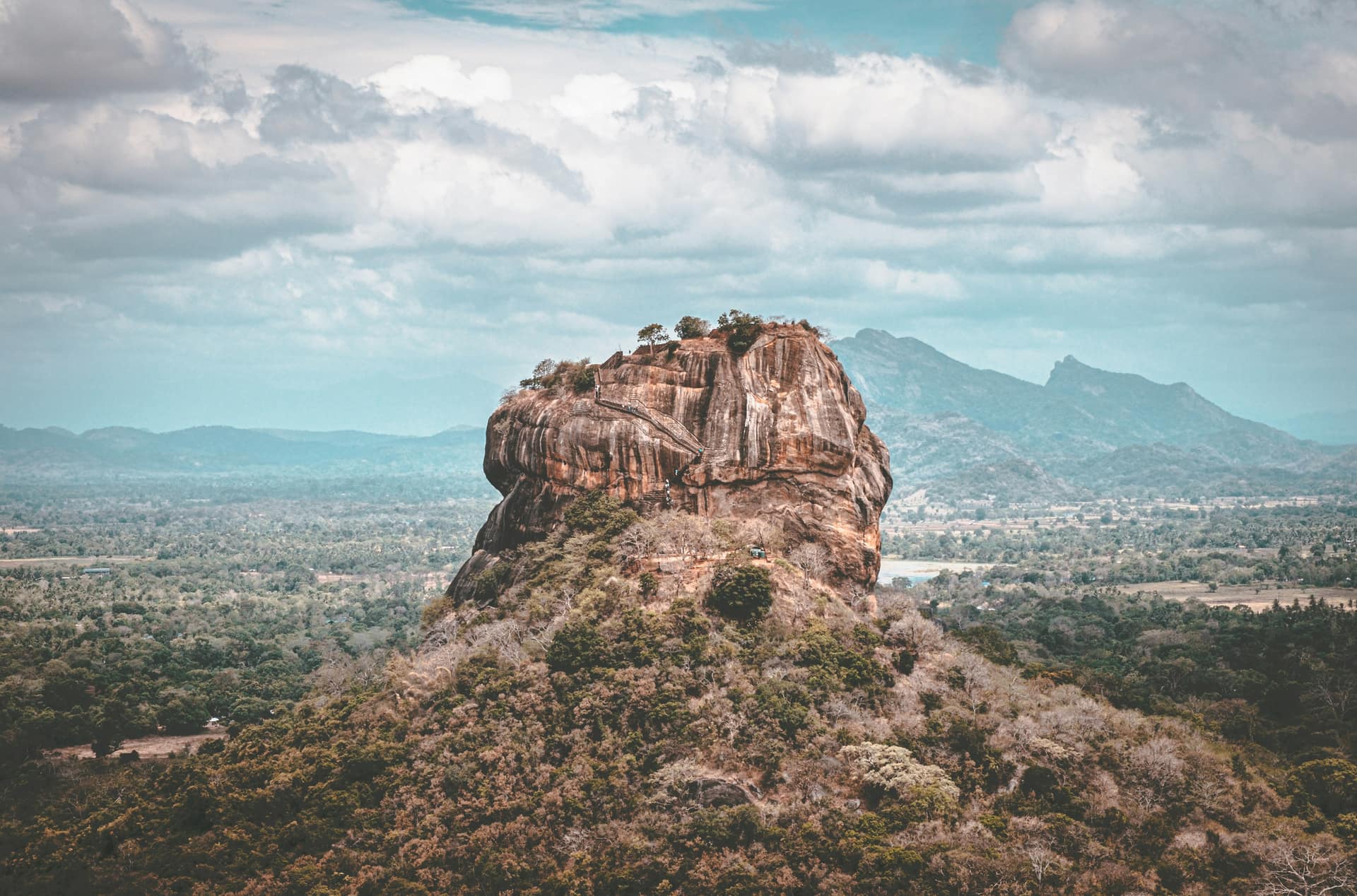
Ten places do not need ten hotels, and this is the step that most reduces an itinerary's workload. Sigiriya, Dambulla, Polonnaruwa and Anuradhapura all work as day trips from one base at Sigiriya or Habarana. Galle and Mirissa sit roughly 45 minutes to an hour apart and share one. The hill country needs one base, not three.
That leaves four or five bases for the whole trip: the Cultural Triangle, Kandy, the hill country, a safari park, and the coast. An airport night at either end makes six at most.
Choose within each group by what the stay needs to do. Sigiriya village for an opening-time climb, Habarana if Polonnaruwa and a wildlife drive are included. Inside Galle Fort if the fort is the draw, a quieter beach nearby if it is not.
- →Four Cultural Triangle sites share one base at Sigiriya or Habarana.
- →Galle and Mirissa share one coastal base.
- →The hill country needs one base, not three.
- →Four or five bases total, plus an airport night at either end.
Step four: allocate nights, two per base minimum
Two nights per base is the rule that determines whether the finished trip feels unhurried, and it is worth treating as close to inviolable. One night delivers an evening and no full day while still costing a full transfer half-day, which is the worst ratio available.
The exceptions are functional stops, where one night is correct precisely because nothing is expected of them: a night near a safari park purely to enable a dawn drive, or an airport night at either end.
This is where the trip length becomes binding. Seven days supports three bases at two nights plus an arrival night, which covers four or five of the ten places. Ten days supports five bases, covering six to eight. Fourteen days supports all ten without a single one-night stop.
- →Two nights per base, except functional safari and airport nights.
- →Seven days: three bases, four or five places.
- →Ten days: five bases, six to eight places.
- →Fourteen days: all ten places with no one-night stops.
Step five: cut until it fits
At this point most itineraries do not fit, and the correct response is to remove whole places rather than shorten stays. Removing a destination frees its nights and its transfer together, so the saving is larger than it looks. Shortening every stay keeps all the driving and loses all the depth.
The cutting order that loses least is: the north and east first, then one of Anuradhapura or Polonnaruwa, then Nuwara Eliya if Ella is already included, then Colombo, then Galle as a separate base rather than an evening visit.
Protect the safari and the final coastal stop longest. The safari is the only wildlife element on the standard route, and the coast is what converts a demanding schedule into a holiday. If those two are being cut, the trip is too short and needs reshaping rather than trimming.
- →Cut whole places, never nights from every stop.
- →Order: north and east, one ancient capital, Nuwara Eliya, Colombo, Galle as a base.
- →Protect the safari and the final coastal stop longest.
- →If those two are going, reshape the trip rather than trimming it.
Step six: schedule the hours, not just the days
The final step is the one most often skipped, and it changes the experience more than the route does. Heat, cloud and crowds all build through a Sri Lankan morning, so every major site has a correct hour and most itineraries do not specify one.
Climb Sigiriya at opening, around seven. Reach the Nine Arch Bridge shortly after dawn. Leave Nuwara Eliya well before dawn for Horton Plains. Depart accommodation around half past four or five for a safari drive. Visit Dambulla in the late afternoon when the caves are cooler and better lit. See Galle Fort after five in the afternoon.
Slot the Temple of the Sacred Tooth Relic against a puja time rather than a convenient hour, confirming the current schedule locally. These six decisions cost nothing and collectively determine how a first trip is remembered.
- →Sigiriya at opening; the Nine Arch Bridge shortly after dawn.
- →Horton Plains well before dawn; safari drives from around half past four or five.
- →Dambulla in the late afternoon; Galle Fort after five.
- →Schedule the Kandy temple against a puja time, confirmed locally.
A worked ten-day example
Applying all six steps to a January trip of ten nights produces something like this: one night at Negombo on arrival, three at Habarana covering Sigiriya at dawn, Dambulla in the late afternoon and Polonnaruwa by bicycle, one at Kandy timed for evening puja, two at Ella with a dawn start at the Nine Arch Bridge, one near Udawalawe for a morning drive, and two at Galle staying inside the walls.
That is eight of the ten places across five bases, with no leg over roughly four hours and no two consecutive transfer days. Anuradhapura and Nuwara Eliya are the omissions, which is the standard and correct answer at this length.
Lankan Stays and Trails builds first-trip itineraries in exactly this order, and the step clients most often want to skip is step five. Cutting is the part that makes the rest work, and a first trip that covers eight places well is remembered better than one that covered ten in a blur.
Frequently asked questions
How do I plan a Sri Lanka itinerary from scratch?
Work in this order: fix the dates, let the season choose the coast, confirm the four elements the trip needs, group the places into four or five bases, allocate two nights minimum per base, then schedule individual sites by time of day.
How many bases should a Sri Lanka itinerary have?
Four or five, plus an airport night at either end. The four Cultural Triangle sites share one base, Galle and Mirissa share one, and the hill country needs one rather than three. Ten places genuinely do not require ten hotels.
How many days do I need for Sri Lanka's top 10 places?
Fourteen days covers all ten without one-night stops. Ten days covers six to eight at a comfortable pace, and seven days covers four or five. The limiting factor is road speed rather than distance, since legs of three to four hours are common.
What order should I make Sri Lanka planning decisions in?
Dates, coast, elements, bases, nights, timings. Reversing any of the first four produces the overstuffed first drafts most travellers write, particularly choosing a famous beach before checking whether the dates fall in its monsoon season.
What should I cut if my Sri Lanka itinerary does not fit?
Whole places, in this order: the north and east first, then one of Anuradhapura or Polonnaruwa, then Nuwara Eliya if Ella is included, then Colombo. Protect the safari and the final coastal stop longest, since they are what make the trip work.
What does a good 10-day Sri Lanka itinerary look like?
One night at Negombo, three at Habarana covering Sigiriya, Dambulla and Polonnaruwa, one at Kandy timed for evening puja, two at Ella, one near Udawalawe, and two inside Galle Fort. That is eight places across five bases with no excessive driving days.
Does the time of day matter when planning Sri Lanka sites?
More than the route does. Heat, cloud and crowds all build through the morning, so Sigiriya goes at opening, the Nine Arch Bridge at dawn, Horton Plains before dawn, Dambulla in the late afternoon and Galle Fort after five.