
Quick answer
Public transport can realistically replace a private driver-guide for one leg of the 12-day Alps-to-beach itinerary, the Kandy-Ella scenic railway, which runs on a genuine public timetable and reserved second and third class seating. The road legs, arrival transfer, Cultural Triangle to Kandy, and especially the roughly 4 to 5 hour Ella-to-coast drive, are far less practical by public bus given limited direct routes, luggage handling and the time lost to transfers.
Key takeaways
- The Kandy-Ella scenic railway is the one leg of this route genuinely built for independent, non-driver travel, with reserved second and third class tickets bookable in advance.
- The roughly 3 to 4 hour arrival transfer to the Cultural Triangle has no direct public rail link, so public transport here typically means multiple bus changes taking considerably longer.
- The roughly 4 to 5 hour Ella-to-coast leg, the route's longest single transfer, has no direct train and would typically require a rail journey to Colombo followed by a separate onward bus, turning a half-day drive into most of a day by public transport.
- Public buses in Sri Lanka run frequently but do not follow fixed schedules published in the way Swiss public transport does, so timing this route to buses adds meaningful uncertainty versus a private driver-guide.
- A realistic hybrid approach, private road transfers for the harder legs plus the public scenic railway for the Kandy-to-hill-country leg, is what most travellers on this route already end up doing, whether by choice or default.
The honest answer: it depends which leg
Sri Lanka's public transport network is real and used daily by millions of people, so the question is not whether public transport exists on this route, it clearly does, but whether it can realistically replace a private driver-guide across all 5 stops of the fixed 12-day itinerary without adding significant time, uncertainty or luggage hassle. The answer varies sharply leg by leg.
The single strongest case for public transport is the Kandy-Ella scenic railway, which most travellers on this exact route already use regardless of whether the rest of the trip is private or independent, since it is genuinely one of the best ways, not just the cheapest way, to make that journey.
Cost is often the underlying reason this question gets asked in the first place, since public buses and trains are considerably cheaper than a private driver-guide across a 12-day trip. Whether that saving is worth the added time, uncertainty and logistics on each leg is a genuinely personal trade-off, and this guide focuses on the practical reality of each leg rather than making that judgement for every traveller.
Where public transport works well: the scenic railway
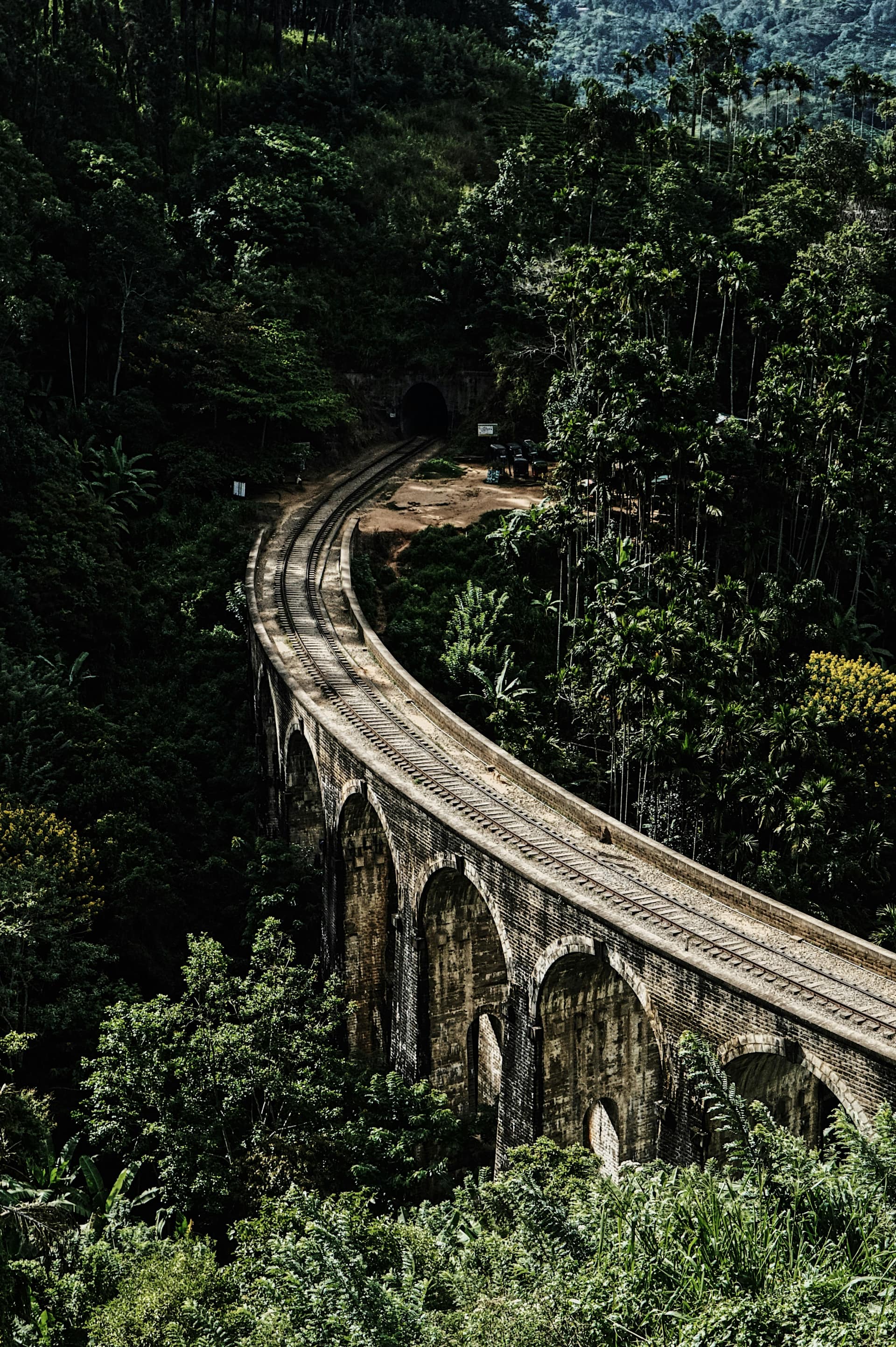
The Kandy-Ella line runs on a real public timetable with reserved second and third class seating, bookable in advance through the national railway's booking system or via a local operator who secures seats on a traveller's behalf. This leg is roughly 6 to 7 hours and is arguably better experienced from a train window than it would be by road, since much of its appeal is the slow climb through tea estates and misty ridgelines that a road transfer cannot replicate.
The main practical caveat is that reserved seats sell out well in advance in peak season (roughly December to March), so this is not a leg to leave until the last minute even for a traveller doing everything else independently.
Some travellers also choose an unreserved or a higher-comfort observation carriage where available, though seating in these carriages is generally less predictable than the reserved second and third class tickets, and standing for part of the 6 to 7 hour journey is a realistic possibility if the train is busy. Booking reserved seats well ahead remains the more comfortable and predictable option for most travellers on this exact route.
- →Reserved second and third class seating, bookable in advance.
- →Roughly 6 to 7 hours, Kandy to the hill country.
- →Sells out in peak season; book well ahead regardless of how the rest of the trip is arranged.
Where it struggles: the road legs
The arrival transfer to the Cultural Triangle, roughly 3 to 4 hours by private road transfer, has no direct rail line and would typically require multiple bus changes via a larger town, considerably lengthening a leg that is already a traveller's first experience of Sri Lanka after a long-haul flight. Doing this by public bus on arrival day, with luggage, after 12 to 17 hours of flying, is a meaningfully harder proposition than the same leg by private car.
The Ella-to-coast leg, roughly 4 to 5 hours and the longest single transfer on the fixed route, is the hardest of all to replicate publicly, since there is no direct train and the practical public alternative typically means a rail journey towards Colombo followed by a separate bus onward to the south coast, easily turning a half-day private drive into most of a full day by public transport.
Luggage is a practical detail that is easy to underestimate on the road legs specifically, since Sri Lankan public buses generally are not designed for two or more full-size suitcases per traveller, and space is limited compared with a private vehicle's boot. This matters most on the arrival transfer and the Ella-to-coast leg, both involving a full set of luggage for a 12-day trip rather than the smaller day bag that suits a rail journey better.
- →Arrival to Cultural Triangle: no direct rail; multiple bus changes typically needed.
- →Cultural Triangle to Kandy: possible by bus, but with more stops and longer total time than a private transfer.
- →Ella to south coast: no direct train; typically a rail-plus-bus combination, considerably slower than a direct drive.
The uncertainty factor Swiss travellers should weigh
Sri Lankan public buses run frequently on most of these routes but do not generally publish and hold to fixed timetables in the way Swiss public transport does, so building a tight 12-day schedule around bus connections introduces a level of timing uncertainty that a private driver-guide removes almost entirely. For a traveller used to Swiss rail punctuality, this is often the single biggest adjustment, more than cost or comfort.
This matters most on this specific route because several days are already built around a fixed activity (the Sigiriya climb before the heat, the Temple of the Tooth's evening ceremony, a whale watching boat's early departure), and a delayed or missed bus connection can cascade into missing that fixed activity entirely.
Route-finding on public buses also generally requires more local knowledge than the scenic railway does, since bus stops, especially in larger towns, are not always clearly signed in English and onward connections are not always obvious to a first-time visitor. This adds a layer of difficulty beyond simple timing uncertainty, particularly for a traveller managing the whole route independently for the first time.
The hybrid most travellers on this route actually use
In practice, most travellers running this exact 12-day route end up with a hybrid: a private driver-guide for the arrival transfer, the Cultural-Triangle-to-Kandy leg and the long Ella-to-coast drive, combined with the genuinely public, reserved-seat scenic railway for the Kandy-to-hill-country leg. This is not a compromise so much as simply using each mode of transport for what it does best on this particular route.
Travellers with more flexible time and a lower priority on hitting every scheduled activity precisely could run more of the road legs by public bus, but should expect the overall 12-day frame to stretch, since bus connections add hours that a private transfer does not.
This hybrid approach also tends to work out as a reasonable middle ground on cost, since the most expensive and time-pressured legs (the road transfers) are exactly where a private driver-guide adds the most practical value, while the one leg genuinely suited to public transport, the scenic railway, is also the cheapest and most straightforward to book independently regardless of how the rest of the trip is arranged.
Booking a mixed approach
A local operator can book the scenic railway's reserved seats directly while running the road legs as private transfers, giving a traveller the experience of the public rail leg without the timing risk of doing every leg independently.
Travellers specifically prioritising budget over convenience should weigh this decision alongside accommodation standard and the number of nights added or cut from the fixed itinerary, since the private-versus-public transport choice is one of the larger single variables in the overall cost of the trip.
We at Lankan Stays & Trails run this exact hybrid for most Swiss travellers on this route: private road transfers for the harder legs, the scenic railway booked with reserved seating for the Kandy-to-hill-country stretch.
Frequently asked questions
Can I do the whole 12-day Alps-to-beach itinerary by public transport?
It is possible in principle but not generally practical, since several road legs, especially the roughly 4 to 5 hour Ella-to-coast transfer, have no direct public route and would take considerably longer by bus and connecting trains than by private transfer.
Is the Kandy-Ella train public transport or a private service?
It is a genuine public railway with reserved second and third class seating, used by both locals and travellers. It is the one leg of this route that works well independently, regardless of how the rest of the trip is arranged.
Do I need to book the scenic railway seats in advance even if I am not travelling independently?
Yes, reserved seats on the Kandy-Ella line sell out well in advance in peak season, roughly December to March, so this leg should be booked ahead regardless of whether the rest of the trip uses a private driver-guide or public transport.
Why is the Ella-to-coast leg hard to do by public transport?
There is no direct train from Ella to the south coast, so the practical public alternative typically involves a rail journey towards Colombo followed by a separate bus, turning a roughly 4 to 5 hour private drive into most of a full day.
Are Sri Lankan public buses reliable for a tight schedule?
They run frequently but generally do not follow fixed, published timetables in the way Swiss public transport does, which introduces timing uncertainty that matters on a route with fixed activities like an early Sigiriya climb or a whale watching boat departure.
What is the most practical mix of private and public transport for this route?
Most travellers use a private driver-guide for the road legs, arrival transfer, Cultural Triangle to Kandy, and Ella to the coast, while booking the Kandy-Ella scenic railway separately as reserved public seating for the hill country leg.