
Quick answer
February is a very good month for Jaffna. The north-east monsoon rains have usually ended, leaving dry, warm weather around 29 to 31°C and green landscapes. Visit the Nallur Kandaswamy temple, the Dutch fort, the market and the public library, take boats to the islands of Nainativu and Delft, and try northern Tamil cuisine such as Jaffna crab curry. Reach Jaffna by train, road or domestic flight. February is quieter than the south, with fewer visitors.
Key takeaways
- February is dry and warm in Jaffna, around 29 to 31°C.
- The landscape is green after the monsoon rains.
- Nallur Kandaswamy temple, the fort and the islands are the highlights.
- Jaffna is quieter than the south in February, with fewer visitors.
- Reach Jaffna by train, road or domestic flight.
Jaffna's weather in February
Jaffna's rainy season is driven by the north-east monsoon, which brings most of its rain from October to December, with occasional showers into January. By February the rain has usually ended, and the days are dry and sunny.
Temperatures are around 29 to 31°C by day, with warm nights. Humidity is lower than in the wetter months, and a breeze off the sea makes evenings pleasant.
The landscape is still green from the rains, with palmyra palms, paddy fields and lagoons full of water. Later in the year, the peninsula becomes dry and dusty.
- →Dry and sunny, 29 to 31°C.
- →Green landscapes after the rains.
- →Pleasant evenings with a sea breeze.
What to see in Jaffna
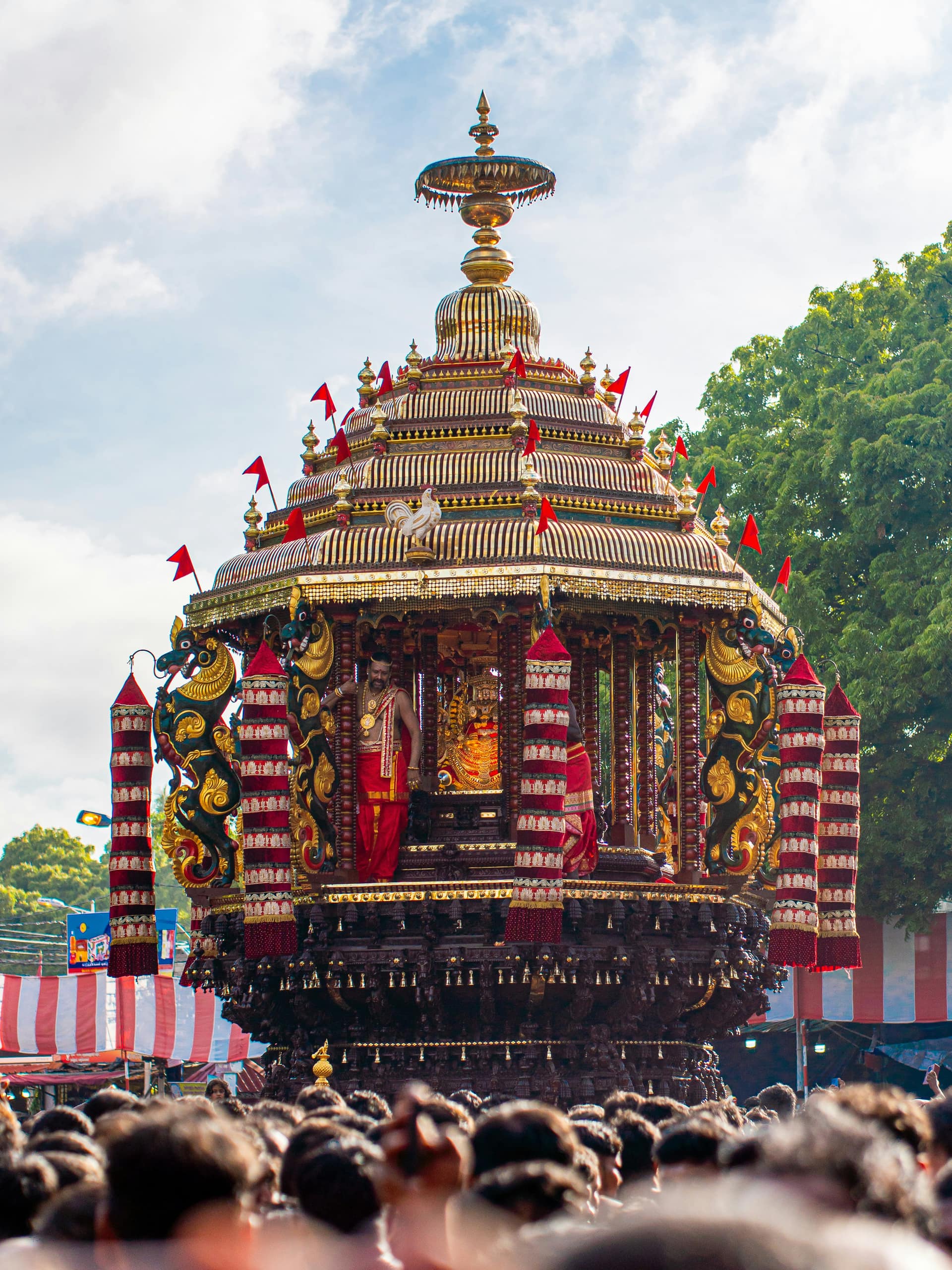
The Nallur Kandaswamy temple is the most important Hindu temple in Jaffna, with a golden gopuram and daily pujas. Men remove their shirts to enter, and everyone removes shoes.
The Dutch fort, built on Portuguese foundations, overlooks the lagoon. The Jaffna Public Library, rebuilt after its destruction during the conflict, is a symbol of the city's resilience. The market is a lively place to see local produce.
Point Pedro, the northernmost point of Sri Lanka, and the Keerimalai springs are easy trips from the city. Casuarina Beach on Karainagar island is a popular spot for a swim.
The landscape itself is part of the experience. Palmyra palms line the roads, the lagoons are full of wading birds in February, and village temples are painted in bright colours. Cycling or taking a tuk-tuk through the peninsula's quiet lanes in the early morning gives a strong sense of everyday life in the north.
- →Nallur Kandaswamy temple.
- →Dutch fort.
- →Jaffna Public Library.
- →Point Pedro and Keerimalai.
The islands
The islands around Jaffna are connected by causeways and ferries. Nainativu holds the Nagadeepa Buddhist temple and the Nagapooshani Amman Hindu temple, both important pilgrimage sites.
Delft, further out, is known for its wild ponies, coral walls and remote atmosphere. Ferries run from Kurikadduwan jetty, and timings depend on weather and demand, so check the day before.
February's calm seas make the island crossings more comfortable than in the monsoon months.
Food in Jaffna
Jaffna's cuisine is distinct from the south, with spicier curries, seafood and dishes such as Jaffna crab curry, odiyal kool, a seafood soup, and string hoppers with curry.
Local sweets, palmyra products and Jaffna mangoes, in season later in the year, are worth trying. Small restaurants and family-run places serve the best local food.
Vegetarian food is widely available, especially near the temples.
Many visitors take a short cooking class or a market tour with a local host, which explains the spice blends, the use of palmyra and the differences between northern and southern curries. It is one of the most rewarding ways to spend a hot February afternoon in the city.
- →Jaffna crab curry.
- →Odiyal kool seafood soup.
- →Palmyra products and sweets.
Getting there and practical tips
Jaffna is about six to eight hours by road or train from Colombo. Domestic flights operate from Colombo, and the train is a comfortable option, with reserved seats bookable in advance.
Many travellers combine Jaffna with Anuradhapura or Trincomalee. Two or three nights in Jaffna allows time for the city, the islands and a day trip to Point Pedro.
The planners at Lankan Stays & Trails often suggest Jaffna as an extension for travellers who have seen the south and want something different, and February is one of the best months to go.
Respect matters in the north, where the conflict ended in 2009 and memories remain strong. Visitors are welcome, and conversations are warm, but it is wise to let local people lead discussions about the past and to avoid photographing military sites, checkpoints or memorials without permission.
Frequently asked questions
Is February a good time to visit Jaffna?
Yes. The north-east monsoon rains have usually ended by February, leaving dry, warm weather and green landscapes. It is one of the best months to visit Jaffna, with fewer visitors than the south and comfortable conditions for temples, islands and the city.
How hot is Jaffna in February?
Warm, around 29 to 31°C by day, with warm nights. Humidity is lower than during the monsoon months, and a sea breeze makes evenings pleasant. It is cooler than later in the year, when temperatures rise and the landscape becomes dry and dusty.
How do I get to Jaffna?
By road or train from Colombo, which takes about six to eight hours, or by domestic flight. The train is comfortable and reserved seats can be booked in advance. Many travellers combine Jaffna with Anuradhapura or Trincomalee on a longer route.
Can I visit the islands near Jaffna in February?
Yes. February's calm seas make crossings comfortable. Nainativu has important Buddhist and Hindu temples, and Delft is known for wild ponies and coral walls. Ferry timings depend on weather and demand, so check the day before you plan to go.
How many days should I spend in Jaffna?
Two or three nights allows time for the city, the Nallur temple, the fort, the islands and a day trip to Point Pedro. One night is possible for a quick visit, but the travel time from the south makes a longer stay worthwhile.
What should I wear at Nallur temple?
Men must remove their shirts before entering, and everyone removes shoes. Women should cover shoulders and knees. Light, modest clothing is best. Photography may be restricted inside, so follow the signs and ask temple staff if unsure.
Is Jaffna busy in February?
No. Even in peak season, Jaffna sees far fewer visitors than the south coast or the Cultural Triangle. Hotels are easier to book, temples are filled mainly with local devotees, and the islands are quiet. That calm is one of the main reasons to make the journey north.