
Quick answer
The Esala Perahera runs for about ten nights in July or August, ending on the Esala full moon, with the grandest processions on the final nights. On a mid-year cricket tour with matches at Pallekele or a gap near Kandy, book a reserved seat along the route and a Kandy hotel well ahead, as both sell out. Watch one of the final nights if you can, and plan a match-free day after it, as processions run late.
Key takeaways
- The Esala Perahera runs for about ten nights in July or August, ending on the Esala full moon.
- The final nights have the largest processions, with dozens of elephants.
- Reserved seats along the route and Kandy hotels sell out early.
- Processions often run until late at night.
- Check the festival dates against the confirmed cricket schedule.
What the Perahera is
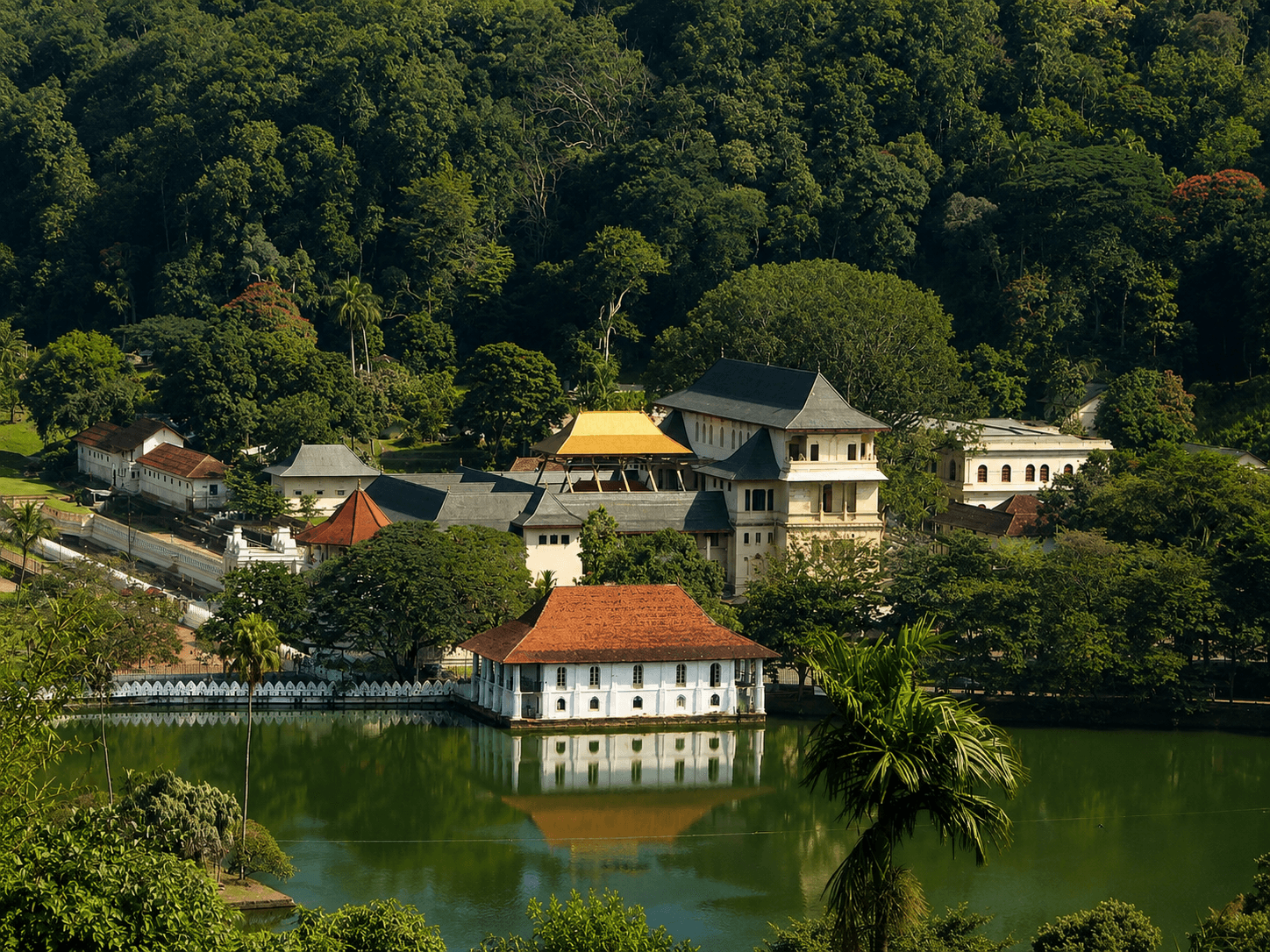
The Esala Perahera is a Buddhist festival honouring the Sacred Tooth Relic, kept at the Temple of the Tooth in Kandy. Each night for about ten nights, a procession of elephants, Kandyan dancers, drummers, whip-crackers, fire-dancers and torchbearers winds through the streets around the temple and the lake.
The processions grow larger each night, and the last few, known as the Randoli Perahera, are the grandest, with the main tusker carrying a casket representing the relic. The festival ends with a daytime procession after the full moon.
For many visitors, it is the single most memorable night in Sri Lanka.
- →About ten nights of processions.
- →Final nights are the largest.
- →Ends after the Esala full moon.
When it falls and the cricket
The festival follows the lunar calendar, so the dates change each year, usually falling in July or August. Mid-year Australian tours have run roughly June to September, so in some years the Perahera falls during the tour, between legs or just after it.
The best fit is when a white-ball match at Pallekele, or a gap in the schedule, falls near the final nights. Check the Perahera dates as soon as the cricket fixtures are announced and see whether they overlap.
Lankan Stays & Trails checks the Perahera calendar against the fixtures when planning mid-year trips, and builds in a Kandy stop when the dates allow.
- →Dates follow the lunar calendar.
- →Usually July or August.
- →Check against the fixtures early.
Seats and rooms
The processions pass along a set route around the temple and through central Kandy. Reserved seats in stands and on balconies along the route are sold by hotels, shops and agents, and the best places on the final nights sell out well ahead.
Kandy's hotels fill up and raise prices during the festival, especially for the final nights. Book a room as early as you can, or stay outside the town and arrange a driver to bring you in.
Standing on the street is free but very crowded, with long waits for a good spot.
- →Buy a reserved seat for a final night.
- →Book Kandy hotels early.
- →Street spots are free but crowded.
On the night
Arrive at your seat early, as roads close and crowds build in the evening. Processions start after dark and can run for several hours. Bring water, a cushion, a light layer and patience.
Dress modestly, as it is a religious festival, and keep photography respectful. Flash photography of the elephants is discouraged. Some visitors have concerns about the use of elephants, which is worth knowing before you go.
- →Arrive early; roads close.
- →Bring water, a cushion and a layer.
- →Dress modestly; no flash.
Planning around matches
Because processions finish late, avoid a match the next morning if you can. A good plan is a Perahera night between white-ball matches, or at the start or end of a Pallekele leg, with a slow morning after.
By day, Kandy during the festival is lively, with the Temple of the Tooth, the lake and the markets busy with pilgrims.
If the dates do not line up, the Temple of the Tooth is still worth a visit on any Kandy rest day. The evening puja, with drumming and offerings, gives a small taste of the festival atmosphere all year round.
- →Avoid a match the morning after.
- →Plan a slow next day.
- →Kandy by day is lively too.
Frequently asked questions
Can you see the Kandy Esala Perahera on a cricket tour?
Yes, if the dates line up. The Perahera runs for about ten nights in July or August, and mid-year Australian tours have run roughly June to September. Check the festival dates against the cricket fixtures as soon as both are confirmed.
When is the Kandy Esala Perahera?
The Esala Perahera usually falls in July or August, following the lunar calendar, and ends on the Esala full moon with a daytime procession after it. The exact dates change each year, so check the official calendar before booking.
Which night of the Perahera is best?
The final nights, known as the Randoli Perahera, are the grandest, with the most elephants, dancers and drummers and the main tusker carrying the relic casket. They are also the most crowded, so reserve seats and rooms well ahead.
How do you get seats for the Perahera?
Reserved seats in stands and on balconies along the route are sold by hotels, shops and agents in Kandy. The best places on the final nights sell out early, so book as soon as you know your dates. Street spots are free but very crowded.
Is Kandy busy during the Perahera?
Yes, Kandy is very busy during the festival, with pilgrims and visitors filling hotels and streets. Hotels raise prices for the final nights. Book early, or stay outside the town and arrange a driver to bring you in for the procession.
How long does the Perahera procession last?
Each night's procession usually lasts several hours, starting after dark and often finishing late. Arrive at your seat early, as roads close in the evening, and bring water, a cushion and a light layer. Plan a slow morning afterwards.
What should you wear to the Perahera?
Dress modestly, with shoulders and knees covered, as it is a religious festival. Bring a light layer, as Kandy evenings can be cool. Comfortable shoes help, as you may walk some distance from your car or hotel to your seat.
What if the Perahera does not fall during the cricket?
Visit the Temple of the Tooth for the evening puja, with drumming and offerings, which gives a taste of the festival atmosphere all year. Smaller peraheras are held in other towns at different times, and Kandyan dance shows run most evenings in Kandy.