
Quick answer
February is a very good month for Kandy. Days are dry and warm, around 28°C, and evenings are cool and pleasant. Visit the Temple of the Tooth at an early or evening puja, walk around Kandy Lake, explore the Royal Botanic Gardens at Peradeniya, and take in the views from Bahirawakanda or the Arthur's Seat viewpoint. February is busy, so book hotels early and arrive at the temple ahead of tour groups. Kandy is also the main starting point for the train to Ella.
Key takeaways
- Kandy is dry and warm in February, around 28°C by day with cool evenings.
- The Temple of the Tooth is busiest at the evening puja; early morning is calmer.
- Peradeniya gardens and the lake walk are at their best in dry weather.
- February is peak season, so book hotels and the Ella train early.
- Day trips to the temples of the Kandy area, tea estates and Knuckles work well.
Kandy's weather in February
Kandy lies at about 500 metres, so it is cooler than the coast and the Cultural Triangle but warmer than the high tea country. In February days are usually dry and sunny, around 28°C, with cool evenings that call for a light layer.
Rain is uncommon in February. The north-east monsoon that brings showers to Kandy in December and early January has usually faded, and the inter-monsoon storms of April are still weeks away.
Mornings can be misty in the hills around the city, clearing to bright days. The air is pleasant for walking, which makes February a good time to explore Kandy on foot.
- →Days: around 28°C, dry and sunny.
- →Evenings: cool, bring a light layer.
- →Rain: uncommon in February.
The Temple of the Tooth
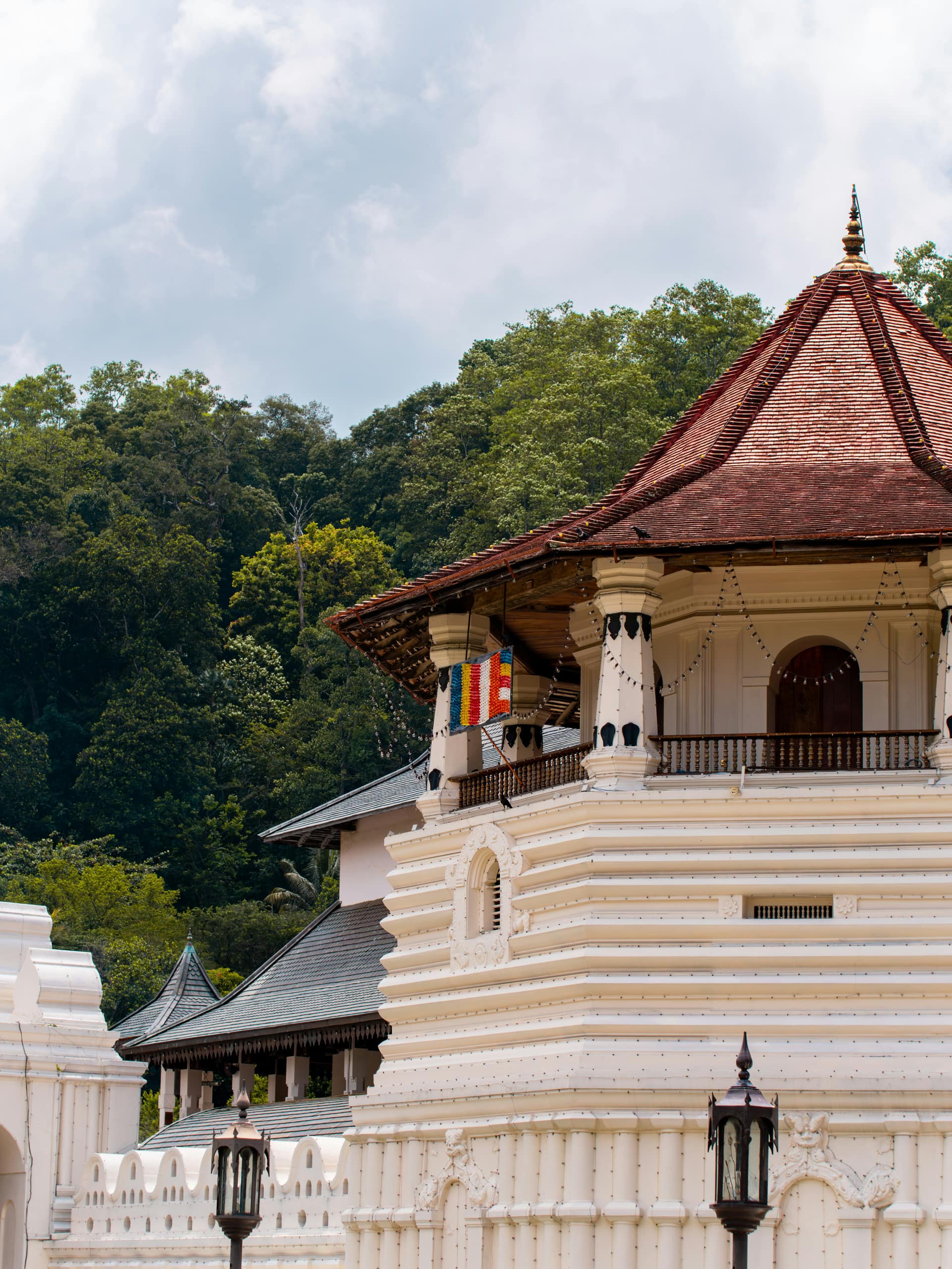
The Sri Dalada Maligawa, or Temple of the Tooth, holds Sri Lanka's most sacred Buddhist relic. Three daily pujas, at dawn, midday and evening, fill the temple with drumming and offerings. The evening puja is the busiest and most atmospheric.
In February the temple is busy with both pilgrims and visitors. Arriving for the dawn puja, or around opening time, gives a calmer visit. The Navam full moon brings more pilgrims, so expect bigger crowds that day.
Dress in white or light colours, cover shoulders and knees, and remove shoes at the entrance. Allow about an hour to see the main shrine, the museum and the surrounding buildings.
- →Dawn puja: calm and atmospheric.
- →Evening puja: busiest.
- →Dress code: covered shoulders and knees.
Other things to do in Kandy
Kandy Lake is a gentle walk of about 45 minutes around its shore, best in the early morning or late afternoon. The Royal Botanic Gardens at Peradeniya are a short drive away and are lovely in dry weather, with orchid houses, giant bamboo and avenues of palms.
For views, head to the Arthur's Seat viewpoint above the lake or the Bahirawakanda Buddha statue. Both are best at sunset. The Kandyan dance shows in the evenings offer a colourful introduction to local performing arts.
The central market and the streets around the clock tower are lively and good for spices, textiles and snacks. The Udawattakele forest reserve behind the temple offers shady walks and birdlife.
- →Kandy Lake walk.
- →Peradeniya Royal Botanic Gardens.
- →Arthur's Seat and Bahirawakanda viewpoints.
- →Kandyan dance and the central market.
Day trips from Kandy in February
The three temples west of Kandy, Embekke, Lankathilaka and Gadaladeniya, make an easy half-day trip and are quieter than the city's main sights. Tea estates around Kandy and further towards Nuwara Eliya offer factory tours and tastings.
The Knuckles Range is about an hour and a half away and is excellent in February, when trails are dry and views clear. Hantana offers shorter walks close to the city.
Pinnawala, often included on itineraries, is controversial for its treatment of elephants. Travellers who want to see elephants are better served by a safari in Udawalawe or Minneriya.
Tips for visiting Kandy in February
Book hotels early, especially for half-term weeks. Kandy has a range of hotels, from city centre guesthouses to hillside retreats with views, and the best fill quickly in February.
Traffic in central Kandy can be heavy, particularly in the late afternoon. Staying a little outside the centre offers quiet nights, though it means a short drive for the temple and lake.
Lankan Stays & Trails usually suggests two nights in Kandy in February, with the train to Ella booked for the morning of departure. That leaves a full day for the temple, the gardens and a viewpoint at sunset.
Frequently asked questions
Is February a good time to visit Kandy?
Yes. February is dry and sunny in Kandy, with warm days around 28°C and cool evenings. It is one of the most comfortable months for walking around the lake, exploring the gardens and visiting temples. It is peak season, so book hotels early.
How busy is the Temple of the Tooth in February?
Busy, especially at the evening puja and on the Navam full moon. Arriving for the dawn puja or around opening time gives a calmer visit. Allow about an hour for the main shrine and museum, and dress in light colours with shoulders and knees covered.
Does it rain in Kandy in February?
Rarely. The north-east monsoon has usually faded by February, and the inter-monsoon storms of April are still weeks away. Mornings can be misty, but they clear to bright, dry days. A light rain layer is rarely needed in February.
How many days should I spend in Kandy in February?
Two nights works well for most travellers. That gives time for the Temple of the Tooth, the lake, Peradeniya gardens and a sunset viewpoint. Add a third night for the Knuckles Range or the three temples west of the city.
Is it cold in Kandy in February?
Not really. Days are warm, around 28°C, and evenings are cool rather than cold. A light layer is enough. It is much colder in Nuwara Eliya and Haputale, higher in the hill country, where nights can fall below 10°C.
What are the best day trips from Kandy in February?
The three temples of Embekke, Lankathilaka and Gadaladeniya, tea estates towards Nuwara Eliya and hikes in the Knuckles Range are all excellent in February. The dry weather makes the Knuckles trails especially rewarding, with clear views across the mountains.