
Quick answer
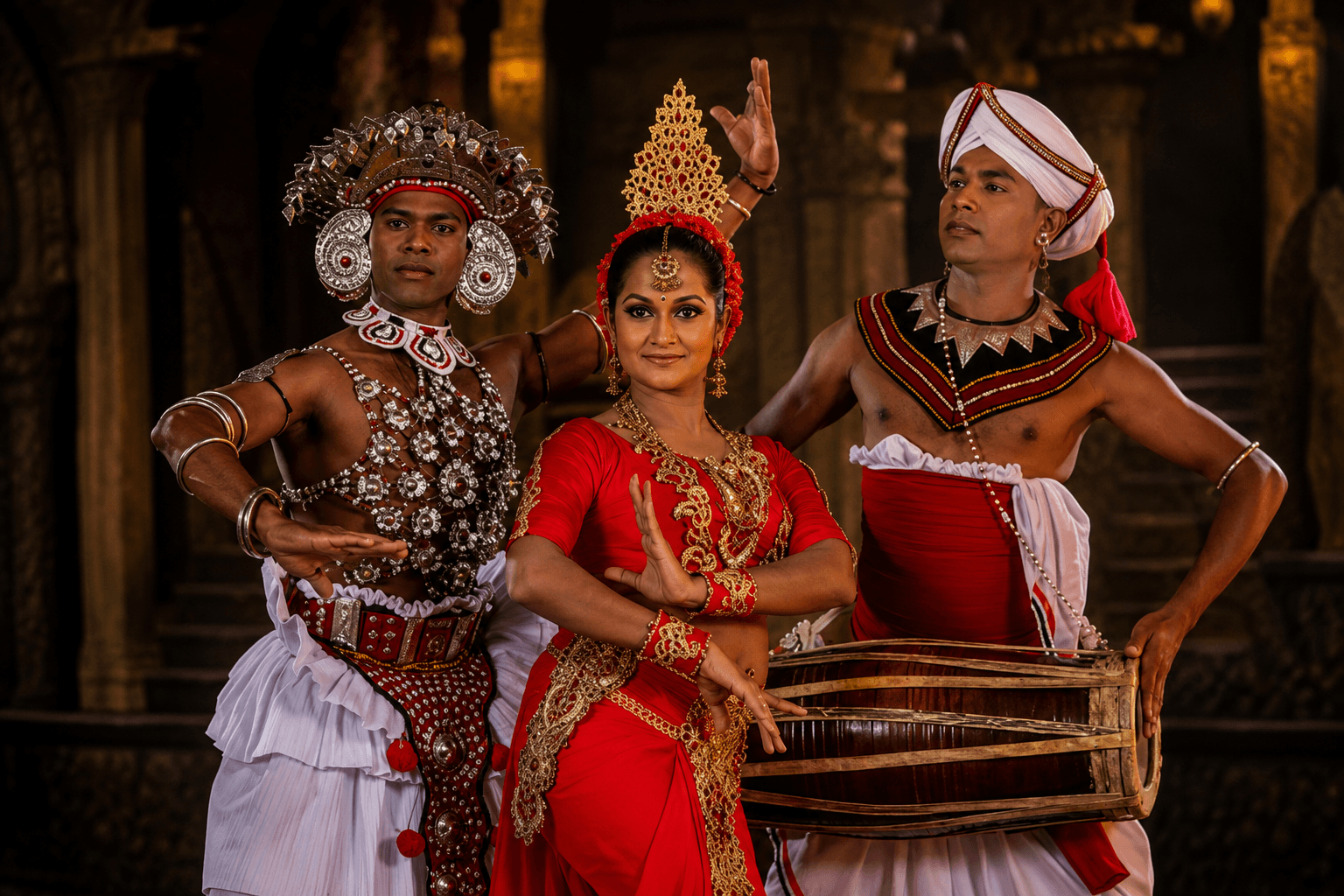
In January, Kandyan dance shows run every evening in Kandy, usually for about an hour before the Temple of the Tooth's evening puja, and in hotels and cultural centres in the Cultural Triangle. Shows include Kandyan, low-country and Sabaragamuwa dances, drumming, masked dances and often fire walking at the end. Arrive early in high season, and choose shows run by established cultural organisations.
Key takeaways
- Kandy's cultural shows run every evening.
- Shows usually precede the Temple of the Tooth's evening puja.
- Kandyan, low-country and Sabaragamuwa styles are often shown.
- Fire walking often ends the show.
- Arrive early in January's high season.
What Kandyan dance is
Kandyan dance developed in the Kandyan kingdom and was traditionally performed in rituals to the gods and at royal and temple ceremonies. Male dancers wear the ves costume, with a silver headdress, beaded chest pieces and anklets.
The dance is driven by the geta bera drum, with fast footwork, spins and high leaps. Each dance tells a story or honours an animal or deity, such as the elephant, peacock or eagle.
Becoming a ves dancer once involved years of training and a special ceremony, and the tradition is still passed down in dance families and schools.
Dancers often begin with a blessing to the gods and the audience, and the drummers set the pace for each sequence. The best performers combine strength and grace, landing huge leaps in perfect time with the drum.
- →Ritual and royal origins.
- →Ves costume and headdress.
- →Driven by the geta bera drum.
Shows in Kandy
Several venues in Kandy, near the lake, hold cultural shows every evening. Performances usually last about an hour and end shortly before the Temple of the Tooth's evening puja, so visitors can attend both.
In January, shows are busy with high-season visitors. Arriving early secures a good seat, and tickets are sold at the door.
Lankan Stays & Trails often schedules the show and puja on the same evening in Kandy, which makes a full, memorable night without long travel.
Some venues are run by long-established dance associations that train young performers, and ticket sales help support them. Choosing one of these over a hotel show gives a longer, more complete programme and better musicianship.
Other dance styles
Most shows include low-country dances from the south, with masks and drumming linked to healing rituals, and Sabaragamuwa dances from the region around Ratnapura.
Masked dances, such as kolam and sanni, use colourful wooden masks to portray characters, demons and stories. They are closely linked to the mask-making traditions of Ambalangoda.
Drumming is central to all styles, and the different drums, such as the geta bera, yak bera and davula, give each style its distinctive rhythm.
- →Low-country masked dances.
- →Sabaragamuwa dances.
- →Different drums for each style.
Fire walking and fire dancing
Many shows end with fire walking, where performers walk barefoot across glowing coals, and fire dancing with flaming torches. These draw on ritual practices of devotion and protection.
Fire walking is a spectacular finale, but it is also a reminder that many of these dances began as religious rituals rather than entertainment.
Watch from your seat, and avoid flash photography during the fire sections, which can distract performers.
- →Walking on glowing coals.
- →Flaming torch dances.
- →Ritual origins.
Shows elsewhere in January
Hotels and cultural centres near Sigiriya and Habarana hold evening shows, which are convenient during a Cultural Triangle stay. Quality varies, so ask your driver or hotel for recommendations.
The south coast has fewer shows, but some hotels in Bentota and Galle host low-country dance and drumming evenings. Ambalangoda's mask workshops sometimes include demonstrations.
In January, the Duruthu Perahera at Kelaniya near Colombo offers the chance to see dancers and drummers in a religious procession, which is a different experience from a staged show.
- →Shows near Sigiriya and Habarana.
- →Hotel evenings on the south coast.
- →Dancers at the Kelaniya perahera.
Tips for a good show
Choose shows run by established cultural organisations or recommended by locals. Some hotel shows are short and less authentic.
Arrive early in January, as popular shows fill up. Sit near the front for the best view of footwork and costumes.
Shows usually ask visitors not to use flash. Video may be allowed, but check at the door.
- →Choose established venues.
- →Arrive early.
- →No flash photography.
Frequently asked questions
Where can I see Kandyan dance?
Kandy has several venues near the lake that hold cultural shows every evening, usually for about an hour before the Temple of the Tooth's evening puja. Hotels and cultural centres near Sigiriya and Habarana also hold shows, though quality varies.
How long is a Kandyan dance show?
Most shows last about an hour. In Kandy, they usually end shortly before the Temple of the Tooth's evening puja, so visitors can attend both. Arrive early in January to secure a good seat, as shows fill up in high season.
Is the Kandy cultural show worth it?
Yes, for most first-time visitors. It offers a good introduction to Sri Lanka's dance traditions, drumming and costumes in an hour. Choose an established venue, sit near the front and combine it with the Temple of the Tooth's evening puja.
What is fire walking in Sri Lanka?
Fire walking is a ritual practice where performers walk barefoot across glowing coals as an act of devotion and protection. It often ends cultural shows in Kandy. In temple festivals, devotees may also walk on fire as part of vows to the gods.
Do I need to book a Kandy cultural show?
Tickets are usually sold at the door, but in January's high season, popular shows fill up. Arrive at least 30 minutes early. Drivers and hotels can sometimes reserve seats, which helps for larger groups or families with children.
Can I take photos at a Kandyan dance show?
Photography without flash is usually allowed, and some venues allow video. Avoid flash, especially during fire sections, which can distract performers. Check the rules at the door, and stay in your seat rather than moving into the aisles for photos.
Are cultural shows suitable for children?
Yes. Children usually enjoy the drums, costumes, acrobatics and fire walking. Shows are about an hour long, which suits younger attention spans. The drums are loud, so earplugs help for small children. Sit near an aisle if you may need to leave early.