
Quick answer
January is one of the best months to visit Sri Lanka's west and south coasts, the hill country and the Cultural Triangle, with dry, sunny weather and calm seas. Blue whale watching off Mirissa is at its most reliable, south-coast surf is consistent, and the Adam's Peak pilgrimage season is in full swing. The north and east coasts are wet under the north-east monsoon, so skip Trincomalee and Arugam Bay this month. Expect peak-season crowds and prices from late December to mid-January.
Key takeaways
- January is peak dry season on the south and west coasts and in the hill country.
- Blue whale watching from Mirissa is at its most dependable between roughly November and April, and January sits in the sweet spot.
- Trincomalee, Nilaveli and Arugam Bay are in the north-east monsoon and are best avoided.
- Thai Pongal falls in mid-January, and the Duruthu Perahera at Kelaniya marks the January full moon poya.
- Prices and crowds peak until roughly mid-January, then ease noticeably.
January weather, region by region
Sri Lanka in January is governed by the north-east monsoon, which pushes rain onto the north and east while leaving the south-west in its rain shadow. That split is the single most useful thing to understand about the month: there is no bad time to visit the island, only a wrong coast.
Colombo, Negombo, Bentota, Galle, Unawatuna and Mirissa see long dry spells with daytime temperatures typically in the low thirties Celsius and warm nights. The hill country around Ella, Haputale and Nuwara Eliya is clear and comfortable by day and genuinely cold after dark, and Nuwara Eliya can drop close to single figures. The Cultural Triangle around Sigiriya, Dambulla and Polonnaruwa is hot, dry and very workable if you start early.
- →South and west coasts: dry, sunny, calm seas. The best conditions of the year.
- →Hill country: clear mornings, cold nights, occasional afternoon mist.
- →Cultural Triangle: hot and dry. Climb Sigiriya at opening, not at midday.
- →North and east (Jaffna, Trincomalee, Arugam Bay): wet and windy. Save for May to September.
Blue whales, leopards and January wildlife
January is prime blue whale season off the south coast. Boats leave Mirissa harbour before dawn and typically work the deep water south of Dondra Head, where the continental shelf drops away sharply and blue whales, sperm whales and spinner dolphins concentrate between roughly November and April. Sea conditions are usually calm, which matters enormously if anyone in your group is prone to seasickness.
On land, Yala and Udawalawe are entering their strongest stretch. The dry season concentrates elephants, leopards and sloth bears around shrinking waterholes, and sightings improve steadily from January through to about July. Wilpattu in the north-west is drier than it was in December and starting to come good.
- →Mirissa: blue and sperm whales, best booked as an early-morning departure.
- →Yala and Udawalawe: dry-season concentration begins; book jeeps ahead in peak weeks.
- →Kalametiya and Bundala: migratory waterbirds are at their winter peak.
What's on in January
Thai Pongal, the Tamil harvest thanksgiving, falls in mid-January and is a public holiday. In Jaffna and the tea estates of the hill country you will see kolam patterns drawn at doorways and milk boiled over in clay pots at sunrise. It is a domestic, family-centred festival rather than a spectacle, and visitors are usually welcomed warmly if they are quiet and respectful.
The Duruthu Perahera at Kelaniya Raja Maha Vihara, just outside Colombo, marks the January full moon poya and commemorates the Buddha's first visit to the island. It is a genuine procession of dancers, drummers and caparisoned elephants, and it draws far fewer international visitors than the Kandy Esala Perahera in August. Full moon poya days are public holidays and alcohol is not served, so plan around that.
- →Thai Pongal: mid-January, strongest in Jaffna and the plantation districts.
- →Duruthu Perahera, Kelaniya: on the January full moon, near Colombo.
- →Adam's Peak: the pilgrimage season runs from the December poya through to Vesak in May.
Surf, snorkelling and beach days
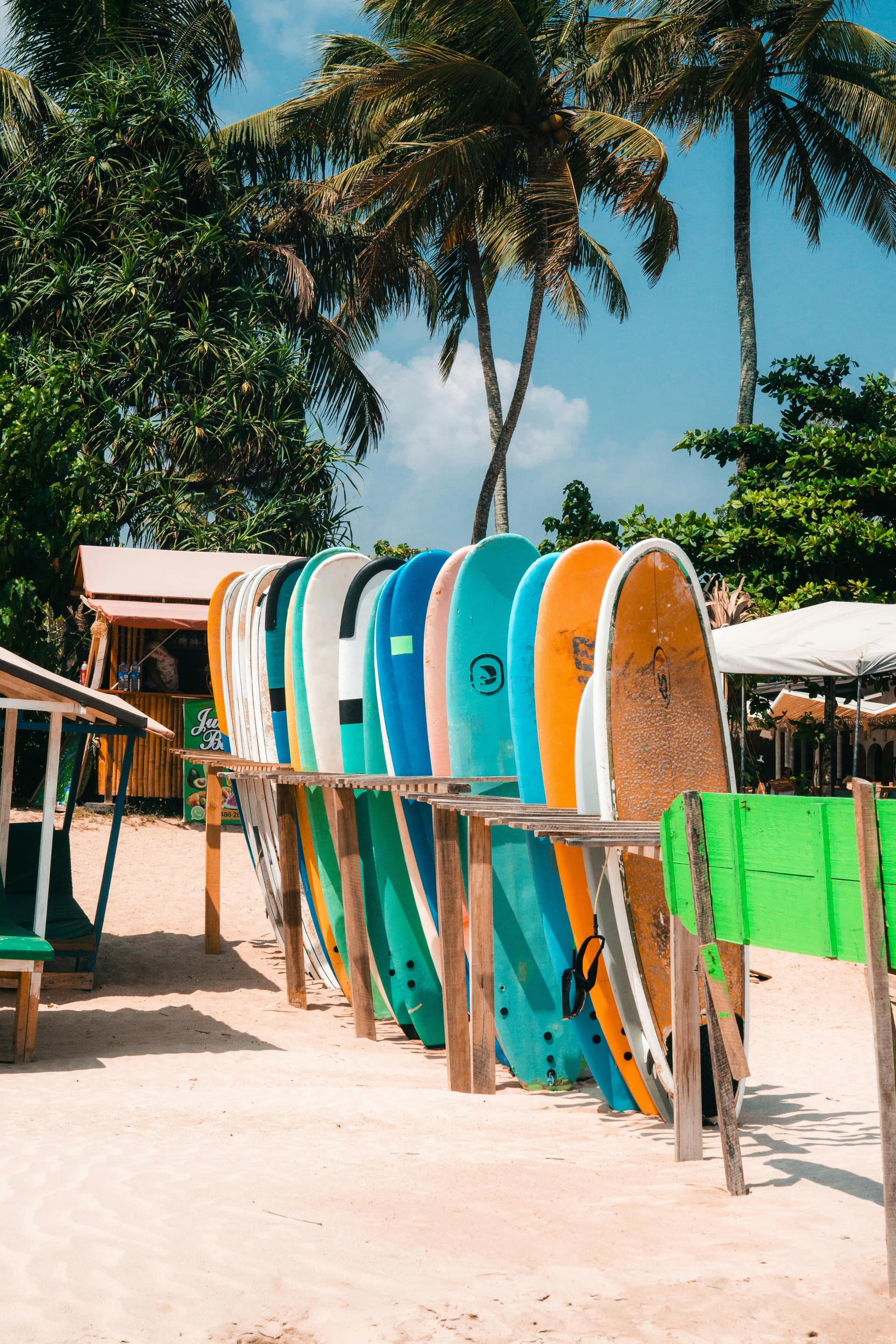
January is the heart of the south-coast surf season. Weligama's beach break is the island's gentlest place to learn, Midigama and Ahangama offer punchier reef and point breaks for intermediates, and Hikkaduwa works consistently. Swell is generally cleanest in the early morning before the onshore wind builds.
Snorkelling on the south-west is good but not spectacular in January; the standout reefs at Pigeon Island off Nilaveli belong to the opposite season. Unawatuna's Jungle Beach and the Hikkaduwa marine sanctuary are the reliable picks this month.
Crowds, cost and how to sidestep both
The stretch from Christmas to roughly the second week of January is the busiest and most expensive of the year on the south-west coast. Galle Fort's boutique hotels, Mirissa's whale boats and the Kandy to Ella train all sell out well in advance. From mid-January onwards the pressure drops noticeably while the weather stays excellent, which makes the second half of the month the best value in the whole dry season.
If you are travelling in the first fortnight, book the Kandy to Ella train reserved seats, whale-watching boats and any Galle Fort accommodation as early as you reasonably can. If you are flexible, arrive after the 15th.
- →Book ahead: reserved train seats, whale boats, Galle Fort stays, Yala jeeps.
- →Best value window: roughly mid-January to the end of the month.
- →Domestic travel spikes again around Thai Pongal and the full moon poya.
A January route that works
The classic January shape is a loop that never crosses into the wet half of the island: Negombo or Colombo on arrival, north to the Cultural Triangle for Sigiriya, Dambulla and Polonnaruwa, down through Kandy into the hill country for Ella and the tea estates, then out to the south coast for Yala, Mirissa and Galle before flying home. Ten to fourteen days covers it without rushing.
Lankan Stays & Trails runs this as a private, driver-guided journey with the early starts built in, which is the difference between climbing Sigiriya in the cool and climbing it at eleven o'clock. If you want the north or east instead, we will tell you honestly to come back in June.
Frequently asked questions
Is January a good time to visit Sri Lanka?
Yes, January is one of the best months for the south and west coasts, the hill country and the Cultural Triangle. It sits in the middle of the dry season there, with sunny days and calm seas. The north and east coasts are wet in January under the north-east monsoon.
What is the weather like in Sri Lanka in January?
Expect dry, sunny days on the south and west coasts with daytime temperatures typically in the low thirties Celsius. The hill country is clear by day and cold at night, sometimes near single figures in Nuwara Eliya. The north and east are wet and windy.
Can you see blue whales in Sri Lanka in January?
Yes. January falls within the main southern whale-watching window of roughly November to April, and boats from Mirissa work the deep water south of Dondra Head. Sightings are never guaranteed, but January is among the most reliable months and the sea is usually calm.
Is Arugam Bay good in January?
No. Arugam Bay and the whole east coast sit under the north-east monsoon in January, with rain, onshore wind and flat, messy surf. The east coast season runs roughly May to September. In January, head to Weligama, Midigama or Hikkaduwa instead.
Is Sri Lanka crowded in January?
The first two weeks are the busiest of the year on the south-west coast, following the Christmas and New Year peak. Crowds and prices ease noticeably from around mid-January while the weather stays excellent, which makes the second half of the month the best value.
What festivals happen in Sri Lanka in January?
Thai Pongal, the Tamil harvest festival, falls in mid-January and is a public holiday. The Duruthu Perahera at Kelaniya near Colombo takes place on the January full moon poya. Poya dates shift each year with the lunar calendar, so confirm before you book.
What should I pack for Sri Lanka in January?
Light, breathable clothing for the coast and lowlands, plus genuinely warm layers for the hill country, where evenings in Nuwara Eliya can be cold. Bring modest cover for shoulders and knees for temple visits, reef-safe sun protection, and a light rain shell for the highlands.