
Quick answer
A luxury 7-day Sri Lanka itinerary for wildlife runs a southern loop from December to April: one night at Udawalawe for elephants, two nights in a tented camp at Yala for leopards, two nights at Mirissa for blue whales, and one night beside Sinharaja rainforest for endemic birds. From May to September, the better version heads north to Wilpattu, Minneriya and Trincomalee. Both keep every drive under four hours and use naturalist guides throughout.
Key takeaways
- Yala's Block 1 has one of the highest recorded densities of leopards in the world.
- Udawalawe National Park holds an estimated 500 to 700 elephants, seen on almost every drive.
- Blue whales are watched off Mirissa from roughly December to April and off Trincomalee from roughly May to September.
- Sinharaja Forest Reserve is a UNESCO World Heritage Site with most of Sri Lanka's endemic bird species.
- Yala usually closes for several weeks in September and October.
The southern wildlife loop
A luxury 7-day Sri Lanka itinerary for wildlife keeps to the south between December and April. The Southern Expressway makes the first drive manageable, at roughly three and a half to four hours from the airport to Udawalawe, and every later stage is shorter.
The loop moves from grassland to dry forest, to open ocean and then rainforest. Four habitats in six nights give a wider range of species than a week in any single park could.
- →Night 1: Udawalawe.
- →Nights 2 and 3: Yala.
- →Nights 4 and 5: Mirissa.
- →Night 6: Sinharaja.
Udawalawe: elephants first
Udawalawe opens the week gently. After the drive from the airport, an afternoon safari of about three hours in open grassland finds elephant families within minutes of the gate, along with buffalo, crocodiles and crested hawk eagles.
The Elephant Transit Home beside the park raises orphaned calves for release, and visitors watch the feeding from a platform at set times. Stay in a small lodge near the park, and leave after breakfast for Yala, about two hours east.
Yala: two nights for leopards
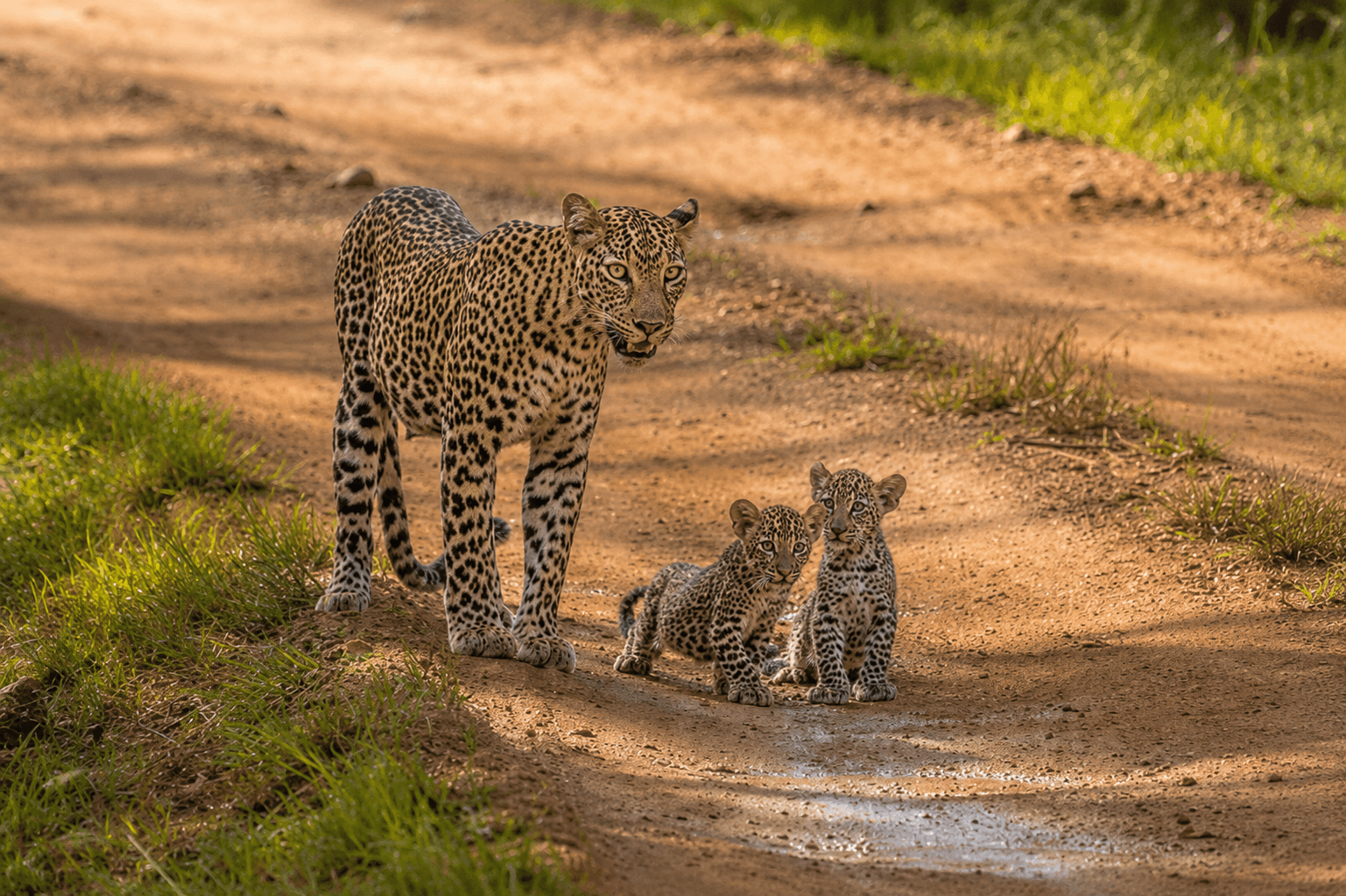
Yala deserves two nights on a wildlife week because leopards cannot be scheduled. Four game drives, two at dawn and two in the afternoon, give a strong chance of a sighting in Block 1, and time to explore quieter areas such as Block 5 or Lunugamvehera.
A tented camp on the park boundary is the right base, with a resident naturalist, a private jeep and meals timed around the drives. Expect roughly US$500 to US$1,200 a night for two, all-inclusive. Sloth bears are seen mainly in May to July, when the palu trees fruit.
- →Dawn drives: 5.30am to about 9.30am.
- →Afternoon drives: 2.30pm to dusk.
- →Midday: rest, pool, bird walk around camp.
Mirissa: the ocean
Mirissa is about two and a half hours from Yala along the coast. A private charter at 6am on day 5 heads for the deep water off Dondra Head, where blue whales, sperm whales and spinner dolphins are seen between roughly December and April.
The second coast day is a rest, or a morning in Galle Fort. At night between January and April, green turtles nest on the beach at Rekawa, 45 minutes east, where a community project runs watches under strict rules.
- →Day 5: whale charter, four to six hours.
- →Day 6: beach, Galle Fort or a lagoon boat.
- →Optional: Rekawa turtle watch after dark.
Sinharaja: the rainforest
Sinharaja Forest Reserve is the last large tract of lowland rainforest in Sri Lanka, about two to two and a half hours inland from the coast. Its fame among birdwatchers rests on mixed feeding flocks, in which a dozen or more species move through the forest together.
A dawn walk with a forest guide is the point of the stop. Sri Lanka blue magpie, red-faced malkoha and green-billed coucal are among the endemics. Leeches are plentiful after rain, and leech socks are supplied. The few good lodges near the forest are small and simple by the standards of the rest of the week.
The May to September version
From May to September the wildlife week moves north. Wilpattu National Park, three to three and a half hours from the airport, has leopards and sloth bears among forest lakes, with a fraction of Yala's jeeps. Two nights in a camp there start the week.
Habarana follows for two nights and the elephant gathering at Minneriya, which peaks from July to September. The week ends with two nights at Trincomalee, where whales and dolphins are seen offshore and Pigeon Island offers snorkelling with reef sharks and turtles.
- →Nights 1 and 2: Wilpattu.
- →Nights 3 and 4: Habarana, for Minneriya.
- →Nights 5 and 6: Trincomalee.
Planning a wildlife week
A wildlife week depends on guides more than hotels. The same camp can deliver a memorable drive or a dull one according to who is in the front seat. Ask for named naturalists, and for a private jeep at every park.
Lankan Stays & Trails builds this route around park conditions each season, checking closure dates, water levels and where animals have been seen. Bring binoculars of your own, neutral clothing and patience. Sightings are likely across a week and guaranteed on no single drive.
Frequently asked questions
Can you see leopards, elephants and whales in one week in Sri Lanka?
Yes, between December and April. A southern loop of Udawalawe, Yala and Mirissa covers all three within a few hours' drive of each other. Elephants are near certain, whales likely in season, and leopards a good chance over four drives at Yala.
What is the best month for wildlife in Sri Lanka?
February to April suits the southern loop, with dry conditions at Yala and calm seas for whales. July to September suits the north, with the elephant gathering at Minneriya and whales off Trincomalee. Wildlife is visible all year somewhere on the island.
Is Yala or Wilpattu better for leopards?
Yala's Block 1 has the higher density and the more frequent sightings, along with heavy jeep traffic. Wilpattu is larger, forested and far quieter, with fewer but more private sightings. Choose Yala for odds and Wilpattu for atmosphere.
Is Sinharaja worth visiting on a short trip?
For birdwatchers and anyone who loves forest, yes. One night allows a dawn walk when the feeding flocks are active. For general travellers, the leeches, humidity and simple lodges make it less appealing than a third night on the coast.
How many safaris should I do in a week in Sri Lanka?
On a wildlife-focused week, five or six game drives across two parks is a good number: one or two at Udawalawe and four at Yala. More than two drives a day is tiring. Balance them with the coast and a forest walk.
Do luxury safari camps in Sri Lanka have naturalists?
The leading camps do, with resident naturalists who lead drives and walks and give talks in the evening. Standards vary, so ask who will guide you and for how many guests. A private jeep with a named naturalist is worth the supplement.