
Quick answer
Choose Yala if seeing a leopard is the priority: Block 1 has one of the highest recorded leopard densities in the world and the best odds on a single drive, at the cost of significant jeep congestion. Choose Wilpattu if you value wilderness and space: it is Sri Lanka's largest national park at around 1,300 square kilometres, far less visited, with sloth bears and a landscape of natural lakes, but sightings take longer. Yala is best February to July; Wilpattu February to October.
Key takeaways
- Yala's Block 1 has one of the highest recorded leopard densities in the world and the best single-drive odds.
- Wilpattu is Sri Lanka's largest national park at around 1,300 square kilometres, with a fraction of Yala's traffic.
- Yala Block 1 usually closes for an annual drought period from about September to mid-October.
- Wilpattu's villus, natural sand-rimmed lakes, define its landscape and its wildlife viewing.
- Yala suits first-time visitors and photographers; Wilpattu suits repeat visitors and anyone crowd-averse.
The short answer
If this is your only safari in Sri Lanka and you want the best chance of a leopard, go to Yala and accept the jeeps. If you have two safari days, do both. If you have been to Yala before, or you know that crowding would spoil it for you, go to Wilpattu.
Both are excellent parks. The difference is not quality; it is density of animals versus density of vehicles, and which of those you weight more heavily.
- →Best leopard odds on one drive: Yala Block 1.
- →Best wilderness feel and solitude: Wilpattu.
- →Two safari days available: do both, they are genuinely different.
- →Travelling with impatient children: Yala, for the shorter waits.
Leopards: the numbers and the reality
Yala's Block 1 is frequently cited as having one of the highest leopard densities recorded anywhere in the world. The animals there are also habituated to vehicles, which means they behave naturally in the open rather than melting into the scrub, and that combination is why Yala delivers.
Wilpattu also has a healthy leopard population, but it is spread across a far larger and more densely wooded area, and the animals are less habituated. Sightings happen, and when they do they are usually yours alone, but they take longer and are less predictable. A single morning at Wilpattu gives worse odds than a single morning at Yala. Three mornings at Wilpattu is a different conversation.
- →Yala Block 1: exceptional density, habituated animals, best single-drive odds.
- →Wilpattu: healthy population spread thinly over a much larger, wooded area.
- →Wilpattu leopards are less habituated and harder to find.
- →For a guaranteed-feeling leopard trip, Yala with two or three drives is the answer.
Crowds and the jeep problem
This is the honest downside of Yala and it should not be glossed over. In high season, Block 1 can see very large numbers of jeeps, and a leopard sighting frequently draws a crowd of vehicles jostling for position. It is unpleasant to be part of, and it is not good for the animals.
Wilpattu, being roughly twice the size and far less visited, does not have this problem. You can drive for an hour without meeting another vehicle. If your mental image of safari involves silence and space, Yala in February will not match it and Wilpattu will.
There are mitigations at Yala: enter at the gate opening, use the less-visited blocks, and choose an operator who will drive away from a crowded sighting rather than join it. Ask that question directly when booking.
- →Yala Block 1 can be heavily congested in high season.
- →Wilpattu's size and lower visitor numbers largely remove the problem.
- →Mitigate at Yala: first entry at the gate, alternative blocks, a good operator.
- →Ask your operator whether they will leave a crowded sighting. The answer matters.
Landscape and other wildlife
The two parks look completely different. Yala is coastal scrub and rock outcrops running down to the sea, with lagoons, granite boulders and open plains. It holds elephants, sloth bears, crocodiles, buffalo, spotted deer and outstanding birdlife, and the coastline itself is a large part of its appeal.
Wilpattu is defined by its villus, natural sand-rimmed lakes scattered through dense dry-zone forest, which is where the name comes from. The forest is thicker and the views shorter, but the villus concentrate animals and are beautiful at first light. Wilpattu is also the better park for sloth bears, particularly during the palu fruiting season around June and July.
- →Yala: coastal scrub, rock outcrops, lagoons and open plains beside the sea.
- →Wilpattu: dense dry-zone forest punctuated by natural villu lakes.
- →Sloth bears: better at Wilpattu, especially during palu fruiting around June and July.
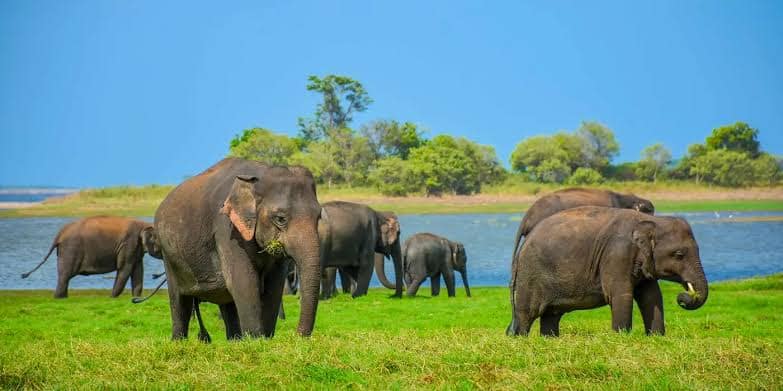
- →Elephants: present in both; Udawalawe is better than either for guaranteed sightings.
Seasons and closures
Yala is at its best from roughly February to July, during the dry season when waterholes shrink and animals concentrate. Block 1 usually closes for an annual drought period from about the start of September to mid-October, with dates set each year by the Department of Wildlife Conservation, so confirm before planning a September Yala trip.
Wilpattu's best months run roughly February to October, which gives it a longer window and makes it the sensible choice when Yala is closed or at its wettest. Wilpattu is in the north-west, so it sits outside the worst of the north-east monsoon that affects Yala's region in November and December.
- →Yala: best February to July. Block 1 usually closed around September to mid-October.
- →Wilpattu: best February to October, a longer usable window.
- →Both are wetter and harder in November and December.
- →Always confirm current closure dates before booking a September safari.
Access, cost and where to stay
Yala sits in the deep south, close to Tissamaharama and Kataragama, which puts it neatly on the standard south coast circuit after Galle and Mirissa. It has by far the greater choice of accommodation, from budget guesthouses to serious tented camps, and jeeps are abundant.
Wilpattu is in the north-west, roughly an hour from Anuradhapura and about three and a half hours from Colombo, which places it on a Cultural Triangle or northern route rather than a southern one. Accommodation is more limited and mostly consists of lodges and camps near the entrance. Park fees are broadly comparable; jeep hire at Wilpattu can be slightly higher because there is less competition.
- →Yala: deep south, near Tissamaharama, on the standard south coast circuit.
- →Wilpattu: north-west, about an hour from Anuradhapura, on a Cultural Triangle route.
- →Yala has far more accommodation and jeeps; Wilpattu has fewer of both.
- →Fees are broadly similar; Wilpattu jeep hire can cost a little more.
How to decide
Choose Yala if: this is your first Sri Lankan safari, a leopard sighting is the point, you are already travelling the south coast, you are with children who will not tolerate three hours of looking at trees, or you want the widest choice of accommodation.
Choose Wilpattu if: you have been to Yala before, you are travelling the Cultural Triangle or the north, you would rather have a quiet park than a guaranteed sighting, you are hoping for sloth bears, or you are travelling in September when Yala's main block is closed.
Do both if you have the days. They are genuinely different experiences, not two versions of the same one, and the contrast between them is one of the more interesting things about Sri Lankan wildlife.
A word on ethics either way
Whichever park you choose, the operator matters more than the park. A good driver keeps a respectful distance, does not block an animal's path, does not use the radio network to converge on every sighting, and does not speed. A bad one does all four, and the animals pay for it.
Ask before booking whether the operator has a policy on crowded sightings, whether they limit passenger numbers, and whether the naturalist is trained. Lankan Stays & Trails works with operators who will drive away from a scrum, which occasionally costs a sighting and is worth it.
- →The operator matters more than the park. Ask about their sighting policy.
- →Good practice: distance kept, no path blocking, no radio convergence, no speeding.
- →Never ask a driver to get closer, and do not tip for doing so.
- →Book a private jeep if you can; shared jeeps are driven to the loudest voice.
Frequently asked questions
Yala or Wilpattu, which is better for leopards?
Yala. Block 1 has one of the highest recorded leopard densities in the world and its leopards are habituated to vehicles, giving far better odds on a single drive. Wilpattu has a healthy population but spread over a much larger, more wooded area, so sightings take longer.
Which is bigger, Yala or Wilpattu?
Wilpattu is Sri Lanka's largest national park at around 1,300 square kilometres, roughly twice the size of Yala. That size, combined with far lower visitor numbers, is why Wilpattu feels like wilderness while Yala's Block 1 can feel congested in high season.
Is Yala too crowded?
Block 1 can be, particularly in high season, when a leopard sighting draws large numbers of jeeps. It can be mitigated by entering at gate opening, using less-visited blocks, and choosing an operator willing to drive away from a crowded sighting rather than join it.
When is Yala closed?
Yala's Block 1 usually closes for an annual drought period from around the start of September to mid-October, with dates set each year by the Department of Wildlife Conservation. Other blocks and other parks including Wilpattu and Udawalawe remain open throughout.
Where is the best place to see sloth bears in Sri Lanka?
Wilpattu, particularly during the palu fruit season around June and July, when bears feed on the fallen fruit and are more visible. Yala also has sloth bears and sightings do occur, but Wilpattu is generally considered the better park for them.
Can you visit both Yala and Wilpattu on one trip?
Yes, and it is worth doing if you have the days, because they are genuinely different experiences. They sit at opposite ends of the island, though, so plan the route accordingly: Yala on the southern coastal leg, Wilpattu on the Cultural Triangle or northern leg.
Which park is easier to reach?
Yala, if you are travelling the south coast: it sits near Tissamaharama, after Galle and Mirissa on the standard circuit, with far more accommodation and jeeps. Wilpattu is about an hour from Anuradhapura and suits a Cultural Triangle or northern itinerary instead.