
Quick answer
The best all-round period for safari in Sri Lanka is roughly February to July, the dry season in the main southern parks, when receding water concentrates wildlife around remaining waterholes. Yala is at its best February to July and its Block 1 usually closes from around September to mid-October. Wilpattu runs February to October. The Minneriya elephant Gathering peaks around July to September. Bundala's migratory birds arrive roughly September to March. Early morning drives are best in all parks except Minneriya.
Key takeaways
- February to July is the strongest all-round safari window for the southern parks.
- Yala's Block 1 usually closes for an annual drought period from about September to mid-October.
- Wilpattu has a longer usable season, roughly February to October.
- The Minneriya Gathering peaks around July to September and is best in late afternoon.
- Bundala's migratory shorebirds are present roughly September to March.
Why the dry season works
Safari timing in Sri Lanka follows a simple ecological principle. During the wet season, water is everywhere: animals disperse across the park, drink wherever they happen to be, and are hidden by tall grass and dense foliage. Finding them becomes a matter of luck.
As the dry season advances, seasonal pools evaporate and animals must come to the few remaining waterholes and tanks. That makes their movements predictable, concentrates them in known locations, and reduces the vegetation that hides them. A good tracker in the dry season is working with a much shorter list of possibilities.
- →Wet season: water everywhere, animals dispersed, vegetation dense.
- →Dry season: animals must come to remaining water, on a predictable schedule.
- →Lower grass and thinner foliage improve visibility considerably.
- →Dry-season photography also benefits from clearer sightlines.
Yala
Yala is at its best from roughly February to July. The dry season concentrates leopards, elephants, sloth bears and crocodiles around shrinking waterholes, and Block 1 has one of the highest recorded leopard densities anywhere in the world.
The critical planning point is the closure. Block 1 normally closes for an annual drought period from around the start of September to mid-October, with exact dates set each year by the Department of Wildlife Conservation. Always confirm before booking a September Yala trip. Other blocks and other parks remain open. Yala is also heavily visited in high season, so entering at gate opening matters more here than anywhere else.
- →Best: February to July, in the dry season.
- →Block 1 usually closed from around September to mid-October; confirm annually.
- →Highest leopard density; also heaviest jeep traffic in the country.
- →Enter at gate opening; the difference in experience is substantial.
Wilpattu
Wilpattu's season runs roughly February to October, which is longer than Yala's and makes it the sensible choice when Yala's main block is closed. It is the largest national park in the country and receives a fraction of the traffic.
The specific opportunity is the palu fruiting season around June and July, when sloth bears climb the fruiting trees and become far more visible than at any other time. If bears matter to you, that is the window. Leopard sightings take longer here than at Yala but are usually yours alone when they happen.
- →Best: February to October, a longer window than Yala.
- →June and July: palu fruiting season, the best chance for sloth bears.
- →Far fewer jeeps; sightings are usually uncrowded.
- →The obvious alternative when Yala's Block 1 is closed.
Udawalawe
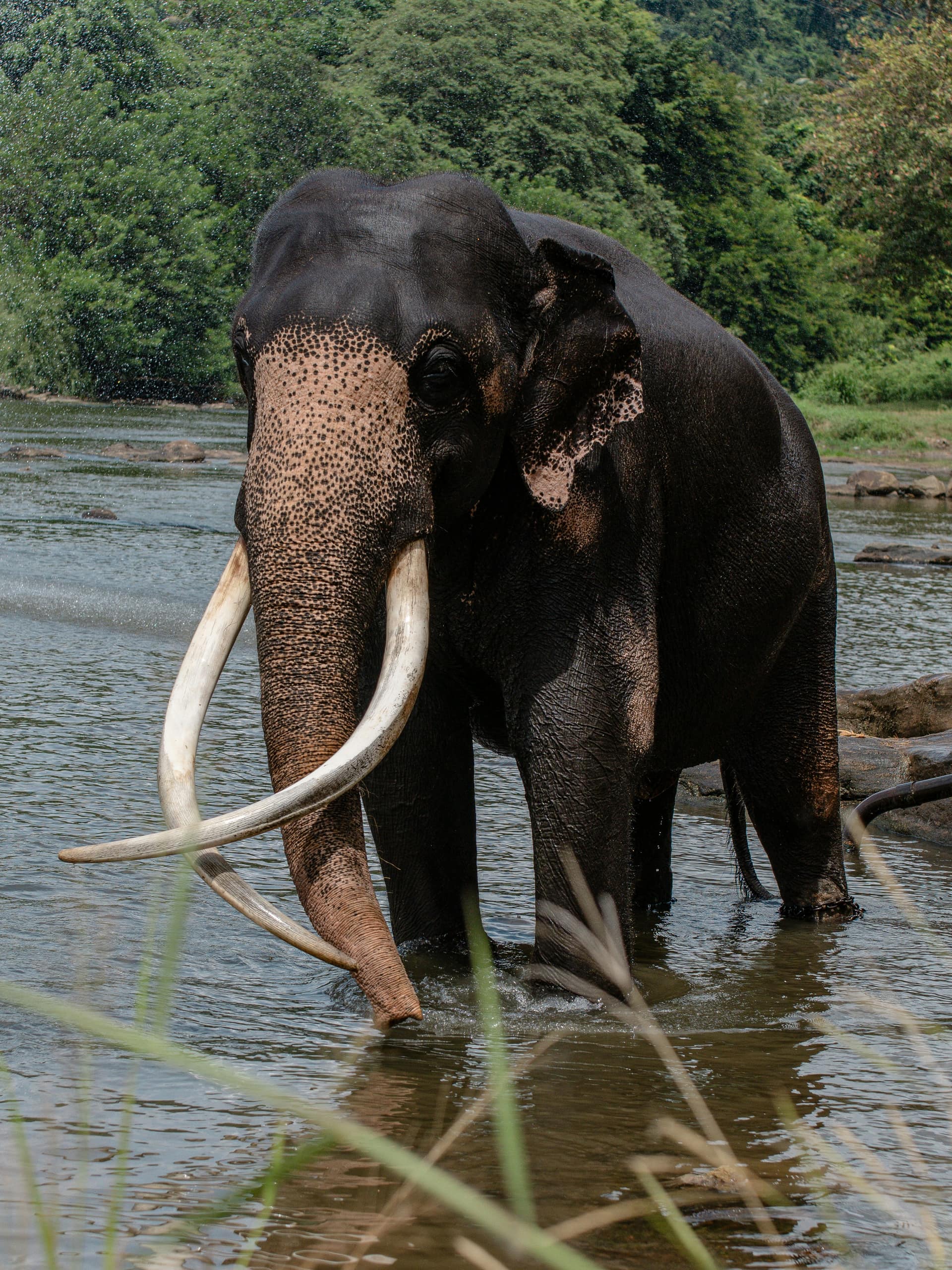
Udawalawe is the exception to seasonal planning: it delivers elephants essentially year-round, because it holds a large resident population in open grassland where visibility is excellent in any month. If you want a guaranteed-feeling elephant sighting on a fixed date, this is the park.
That said, February to July still gives the best conditions, with lower grass and better light. The park is open all year with no equivalent of Yala's closure.
- →Reliable elephant sightings in every month of the year.
- →Open grassland gives excellent visibility regardless of season.
- →February to July still offers the best light and lowest grass.
- →No annual closure; open year-round.
Minneriya, Kaudulla and the Gathering
This is where the general rule inverts. The Gathering, the largest annual congregation of Asian elephants in the world, happens as the Minneriya tank recedes and exposes fresh grass, broadly from July to September. That falls outside the standard February to July window and is entirely worth planning around.
It is also the one Sri Lankan safari that is better in the late afternoon than at dawn, because herds emerge to feed through the afternoon and numbers peak towards dusk. The herds move between Minneriya, Kaudulla and Hurulu Eco Park depending on grazing, so book a park based on where the animals currently are rather than on the name.
- →The Gathering runs broadly July to September, driven by water levels.
- →The only major Sri Lankan safari better in late afternoon than at dawn.
- →Herds move between Minneriya, Kaudulla and Hurulu; check current location.
- →Base at Habarana or Sigiriya, 30 to 60 minutes from the entrances.
Bundala and Kumana for birds
Bird timing follows a different calendar entirely. Migratory shorebirds, waterfowl and raptors arrive in Sri Lanka for the northern winter, roughly September to March, and Bundala on the deep south coast is the premier site, with lagoons and salt pans holding greater flamingos and large numbers of waders. January and February are usually the peak.
Kumana in the south-east has a similar migratory calendar with far fewer visitors, plus resident elephants, leopards and crocodiles. For endemic forest birds rather than migrants, the wet zone at Sinharaja is a separate calculation, best in the drier months of roughly December to April.
- →Bundala and Kumana: migratory birds roughly September to March, peaking January and February.
- →Greater flamingos gather in Bundala's lagoons and salt pans.
- →Kumana offers similar birding with far fewer visitors than Yala.
- →Endemic forest birds at Sinharaja: best roughly December to April.
Time of day matters more than month
Whatever the season, the single largest variable in a safari is what time you enter the park. Early morning drives, entering at gate opening, give cooler temperatures, active animals, better light, and crucially fewer vehicles. Late afternoon drives are the second window, with animals becoming active again as the heat drops.
The middle of the day is the worst time in every park except Minneriya during the Gathering. Animals rest in shade, visibility is poor, light is flat and hot, and the drive is uncomfortable. A half-day drive spanning midday is largely wasted.
- →Enter at gate opening: cooler, more active animals, better light, fewer jeeps.
- →Late afternoon is the second window as heat drops and animals move again.
- →Midday is poor in every park except Minneriya during the Gathering.
- →Two short drives beat one long one spanning the middle of the day.
Putting it together
For a single safari on a general itinerary between December and April, use Yala or Udawalawe if you are on the south coast, or Wilpattu if you are in the Cultural Triangle or north. Between July and September, prioritise Minneriya for the Gathering and Wilpattu for bears and leopards.
For a serious wildlife trip, February to April covers Yala, Wilpattu, Udawalawe and the tail of the migratory bird season simultaneously, which is the single best window if you can only choose one. June and July add the palu bear season and the start of the Gathering at the cost of some coastal weather.
- →December to April, south coast: Yala or Udawalawe.
- →December to April, north or Cultural Triangle: Wilpattu.
- →July to September: Minneriya for the Gathering, Wilpattu for bears.
- →February to April: the best single window for a serious wildlife trip.
Frequently asked questions
When is the best time for safari in Sri Lanka?
Roughly February to July for the main southern parks, when the dry season concentrates animals around remaining waterholes and vegetation is thinner. The exception is the Minneriya elephant Gathering, which peaks around July to September, and migratory birds, which arrive September to March.
When is Yala National Park closed?
Yala's Block 1 usually closes for an annual drought period from around the start of September to mid-October, with exact dates set each year by the Department of Wildlife Conservation. Other blocks and other parks including Wilpattu and Udawalawe remain open throughout.
What is the best month to see leopards in Sri Lanka?
February to July at Yala, with February and March often cited as strongest, when dry-season waterholes concentrate animals and grass is low. Enter at gate opening, book multiple drives, and choose an operator willing to leave a crowded sighting rather than join it.
When can you see the elephant Gathering at Minneriya?
Broadly July to September, though it is driven by the Minneriya tank receding rather than by the calendar. Herds move between Minneriya, Kaudulla and Hurulu Eco Park depending on grazing, so check where they currently are rather than booking a park by name.
Is it worth going on safari in Sri Lanka during the rainy season?
It is harder. Water is everywhere so animals disperse rather than concentrating at waterholes, and tall grass and dense foliage reduce visibility considerably. Sightings still happen, particularly with a good tracker, and parks are far quieter, but odds are lower.
What time of day is best for safari in Sri Lanka?
Enter at gate opening in the early morning: cooler temperatures, more active animals, better light and fewer vehicles. Late afternoon is the second window. Midday is poor in every park except Minneriya during the Gathering, when herds emerge to feed through the afternoon.
Which Sri Lankan park is best for a single safari?
It depends on your route and dates. On the south coast between December and April, Yala for leopards or Udawalawe for guaranteed elephants. In the Cultural Triangle or north, Wilpattu. Between July and September, Minneriya for the Gathering.