
Quick answer
Horton Plains National Park, in Sri Lanka's central highlands at roughly 2,100 to 2,300 metres, is best walked at dawn, when the plateau's grassland and cloud forest are clearest before mist typically rolls in from around mid-morning. The main circuit leads to World's End, a cliff edge with a near 870-metre drop, and a private early start, ideally arriving at the park gate by sunrise, is the single most important booking decision for a worthwhile visit.
Key takeaways
- Horton Plains sits at roughly 2,100 to 2,300 metres in Sri Lanka's central highlands, a landscape of grassland, cloud forest and cool air that offers a genuine sensory contrast to the island's coasts and dry-zone parks.
- World's End, the park's main landmark, is a cliff edge with a near 870-metre drop, typically reached after a walk of a few hours along a marked circuit that also passes Baker's Falls.
- Mist commonly rolls in from around mid-morning, which is why an early, ideally pre-dawn, start is the most important factor in actually seeing the view from World's End rather than a wall of cloud.
- The park sits within a private road transfer of Nuwara Eliya, Sri Lanka's best-known tea-country hill station, making it a natural pairing with a tea-estate bungalow stay.
- Temperatures at this altitude can drop close to single figures overnight, cool enough to need a jacket even for a traveller used to a genuinely cold Swiss winter.
What Horton Plains is, and why the altitude matters
Horton Plains National Park occupies a highland plateau at roughly 2,100 to 2,300 metres in Sri Lanka's central hill country, a landscape of open grassland, stunted cloud forest and cool, often misty air, a marked contrast to the tropical coast only a few hours' drive away.
This is not an Alpine equivalent (there is no snow, no glacier and no high-altitude architecture to match), but the cool temperatures, thin mist and genuinely different vegetation make it the closest thing on the island to a highland escape, worth visiting on its own terms rather than as a comparison.
World's End and the plateau circuit
The park's best-known feature is World's End, a cliff edge with a near 870-metre drop reached via a marked circuit walk of a few hours, which also passes Baker's Falls, a smaller waterfall roughly midway along the route.
The full circuit is a moderate walk on established paths rather than a technical hike, suited to most reasonably fit travellers, though the altitude and cool air are worth factoring into pacing for anyone unused to hiking at this elevation.
Why timing the visit for dawn matters
Mist commonly builds from around mid-morning, and a clear view from World's End is far more likely for visitors who reach the gate at or shortly after sunrise than for those arriving even an hour or two later. This is the single most important practical detail for a worthwhile visit.
A private early start, arranged the evening before with a driver-guide, is the most reliable way to make this timing work, particularly when the alternative is a shared arrival alongside the day's other visitors.
- →Aim to reach the park gate at or shortly after sunrise, before mist typically builds.
- →Bring a warm layer; temperatures at this altitude can drop close to single figures overnight.
- →The full circuit to World's End and back typically takes a few hours at a comfortable pace.
Pairing Horton Plains with a tea-country stay
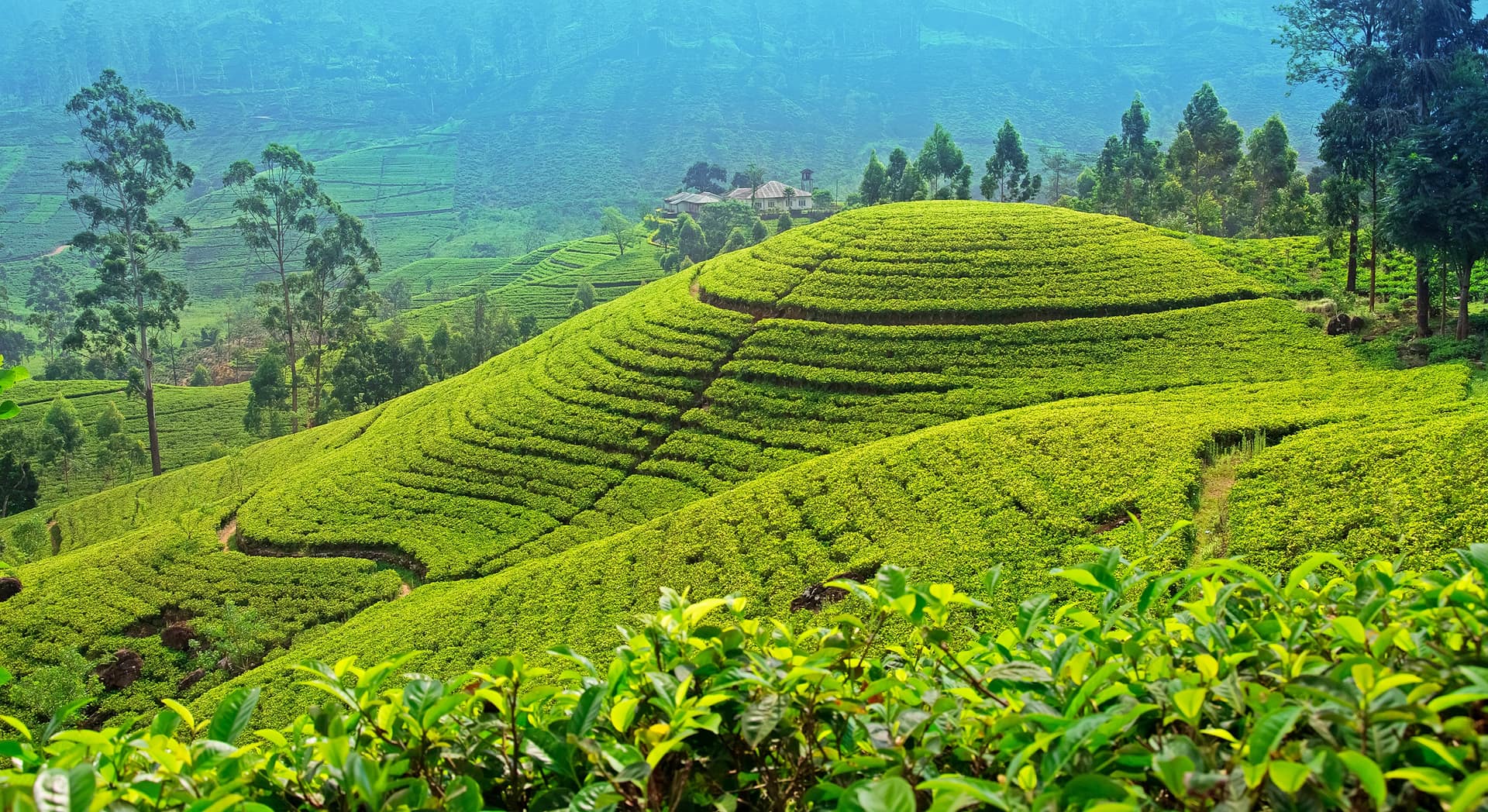
Horton Plains sits within a private road transfer of Nuwara Eliya, Sri Lanka's best-known tea-country hill station, making a restored tea-estate bungalow or boutique hotel there a natural base for an early-morning visit to the park.
The wider Nuwara Eliya and Ella area, with its terraced tea estates, cool evenings and log fires, extends the highland experience beyond the single dawn walk into a broader two or three-night stay.
Fitting Horton Plains into a wider nature escape
Horton Plains works best as part of a two or three-night hill-country stop within a wider 10 to 14 day nature-focused itinerary, positioned between a Cultural Triangle or safari leg and a coastal finish.
Because the payoff depends heavily on timing, it is worth confirming the plan for an early departure with the driver-guide the evening before, rather than leaving it as a loosely scheduled add-on.
Frequently asked questions
What is World's End in Sri Lanka?
World's End is a cliff edge in Horton Plains National Park with a near 870-metre drop, reached via a marked walking circuit of a few hours through the park's highland grassland and cloud forest.
What time should I arrive at Horton Plains?
At or shortly after sunrise. Mist commonly builds from around mid-morning, and an early arrival is the single most important factor in seeing a clear view from World's End rather than cloud cover.
How cold does it get at Horton Plains?
At roughly 2,100 to 2,300 metres, temperatures can drop close to single figures overnight and remain cool during an early-morning walk, so a warm layer is worth packing even on an otherwise tropical trip.
How long does the walk to World's End take?
The full circuit, which also passes Baker's Falls, typically takes a few hours at a comfortable pace on established paths, suited to most reasonably fit travellers rather than requiring technical hiking experience.
Where should I stay to visit Horton Plains?
Nuwara Eliya, Sri Lanka's main tea-country hill station, sits within a private road transfer of the park and is the most common base, often paired with a restored tea-estate bungalow stay.
Is Horton Plains like the Swiss Alps?
Not directly. There is no snow, glacier or high-altitude architecture to compare, but the cool air, mist and highland grassland offer a genuine sensory contrast to Sri Lanka's coast, worth experiencing on its own terms.
Does Lankan Stays & Trails arrange early-morning Horton Plains visits?
Yes. We time private departures to reach the park gate at or shortly after sunrise, paired with a tea-estate bungalow or boutique hotel stay in nearby Nuwara Eliya.