
Quick answer
Luxury tea estate bungalows near Nuwara Eliya and Ella, often restored 19th century British planters' homes, typically cost roughly $150-500 a night and suit travellers who want colonial-era architecture, log fires and a private estate setting at elevations around 1,800-2,000 metres. Hill country homestays with tea-growing families run roughly $25-55 a night and suit travellers who want to see, and sometimes help with, an actual tea pluck and understand how the industry works from the inside. Both put you within a short drive of the same tea estates; the difference is who greets you at the door.
Key takeaways
- Nuwara Eliya sits at roughly 1,868 metres elevation, giving it noticeably cooler temperatures, often 10-20°C, than Sri Lanka's coast even in the same month.
- Many hill country luxury bungalows date to the 19th century, built originally as homes for British tea planters before Ceylon's tea industry was established from the 1860s onward.
- A working tea pluck typically starts early morning, often before 8am, since the leaf is picked while the day is still cool, a detail homestay hosts can build into a guest's morning far more easily than a large hotel can.
- Ella and Nuwara Eliya sit roughly 1.5-2 hours apart by road through tea country, meaning a bungalow night in one town and a homestay night in the other is an easy pairing.
- A tea factory tour, covering withering, rolling and drying, generally takes roughly 30-45 minutes and is available near both towns regardless of which accommodation style you choose.
Sri Lanka's tea country around Nuwara Eliya and Ella
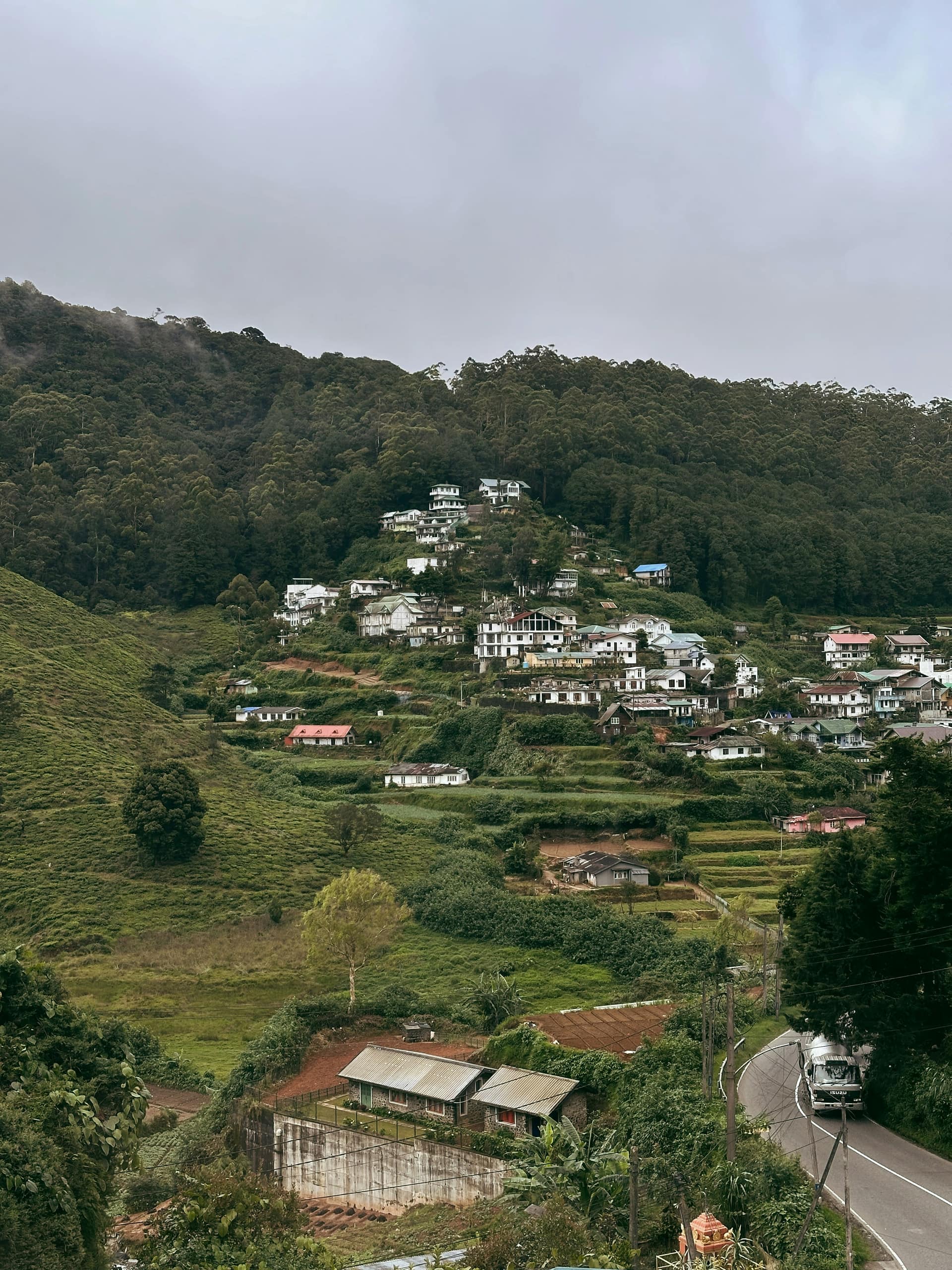
Sri Lanka's hill country, centred on Nuwara Eliya and Ella, is where the island's tea industry took root in the 19th century after coffee crops failed to blight. The landscape is a patchwork of tea bushes on steep slopes, cool enough at roughly 1,800-2,000 metres elevation that many visitors need a jacket in the evening even in the tropics.
Both luxury tea bungalows and family homestays sit scattered through this same landscape, often within sight of each other's tea rows. The choice is less about location and more about what kind of welcome and comfort level you want.
What luxury tea estate bungalows offer
Luxury tea bungalows are typically restored 19th century planters' homes, complete with period furniture, wraparound verandas overlooking the estate, and often a working log fire for the cool hill country evenings. Rates generally run roughly $150-500 a night depending on the property's history and how many rooms it holds, with some of the best-known bungalows offering only 4-8 rooms in total.
Many operate on a full-board basis, meaning breakfast, lunch and dinner are included and served in a formal dining room, which suits travellers who want the whole stay handled without leaving the estate.
- →Restored colonial-era architecture, often with original verandas, fireplaces and antique furnishings.
- →Full-board dining in-house, useful in a hill town with limited restaurant options after dark.
- →Higher rates, roughly $150-500 a night, reflecting both restoration and a small, exclusive room count.
What hill country homestays offer
Homestays in the hill country are usually run by families connected to the tea industry, either smallholders or estate workers, and priced roughly $25-55 a night including meals. Staying with one often means an invitation to join a morning tea pluck, watch leaf being weighed at the estate collection point, or simply talk with someone who has worked the tea for years.
The rooms themselves are simpler, often a single guest room in a family home rather than a suite, but the trade-off is a level of insight into how Ceylon tea is actually grown and processed that a hotel stay rarely offers.
- →Lower nightly rates, roughly $25-55, including home-cooked meals with the family.
- →A realistic chance to join or observe an early morning tea pluck, usually starting before 8am.
- →Direct, first-hand insight into the tea industry from people who work in it, not a guide reciting facts.
Ella and Nuwara Eliya as bases
Nuwara Eliya carries more of the hill country's colonial character, with a golf course, a lake and several of the best-known heritage bungalows, and suits travellers drawn to that formal, old-world atmosphere. Ella has a younger, more backpacker-friendly energy, with Nine Arch Bridge and Little Adam's Peak nearby, and tends to have more homestays and small guesthouses relative to grand bungalows.
Both towns sit within Sri Lanka's tea belt and are roughly 1.5-2 hours apart by road, so a trip that includes both a bungalow night in Nuwara Eliya and a homestay night near Ella is a realistic, well-trodden combination.
Tea experiences available from either base
A working tea factory tour, covering withering, rolling, oxidising and drying, generally takes roughly 30-45 minutes and is available to guests of both bungalows and homestays near either town. Several factories also run a tasting session afterwards, comparing different grades of the same leaf.
The difference is depth rather than access: a bungalow typically arranges a standard factory visit through its front desk, while a homestay host connected to a specific estate can sometimes get you into the field itself for the actual pluck, not just the finished factory tour.
- →A standard factory tour, roughly 30-45 minutes, covers withering, rolling, oxidising and drying stages.
- →Most tours end with a tasting session comparing different grades of tea from the same estate.
- →Homestay hosts connected to an estate can sometimes arrange access to the field pluck itself, not just the factory.
Blending a bungalow night with a homestay night
A tea bungalow and a homestay are not a forced choice for a hill country stay; many American travellers do both within the same trip. A night or two in a heritage bungalow for the architecture and comfort, paired with a homestay night for the tea-pluck experience, covers both sides of what makes this region worth visiting.
Lankan Stays & Trails often builds hill country legs this way, sequencing a bungalow stay against a homestay visit rather than assuming one style should carry the whole tea country section of an itinerary.
Frequently asked questions
How much does a luxury tea bungalow cost in Sri Lanka?
Roughly $150-500 a night, depending on the property's history, room count and whether meals are included on a full-board basis. The best-known restored planters' bungalows, often with only 4-8 rooms, sit toward the higher end of that range and book out ahead in peak hill country season, roughly January to March.
Can American travellers stay with a tea-growing family in Sri Lanka?
Yes, homestays run by tea smallholder or estate-worker families are available near both Nuwara Eliya and Ella, typically priced roughly $25-55 a night including meals. Many arrange the chance to join an early morning tea pluck, usually starting before 8am, as part of the stay.
Why is Nuwara Eliya so cold compared to the rest of Sri Lanka?
Nuwara Eliya sits at roughly 1,868 metres elevation, and hill country temperatures generally run 10-20°C rather than the 27-32°C typical on the coast. Evenings can feel genuinely cold, so a jacket or warm layer is worth packing regardless of accommodation style.
Is Ella or Nuwara Eliya better for a luxury tea estate stay?
Nuwara Eliya has more of the classic heritage bungalow scene, with a formal, colonial-era atmosphere. Ella leans younger and more casual, with strong hiking and viewpoint access, and tends to have more mid-range and homestay options relative to grand bungalows.
What is a typical tea factory tour like in Sri Lanka?
A standard tour covers withering, rolling, oxidising and drying stages and generally takes roughly 30-45 minutes, often ending with a tasting of different tea grades. It's available to guests staying in bungalows or homestays near either Nuwara Eliya or Ella.
Do tea bungalows include meals?
Many heritage tea bungalows operate on a full-board basis, meaning breakfast, lunch and dinner are included in the rate and served in an on-site dining room. Confirm meal arrangements when booking, since not every property includes all three.
Can you combine a tea bungalow stay with a homestay in the hill country?
Yes, this is a common approach given how close Ella and Nuwara Eliya sit, roughly 1.5-2 hours apart. A bungalow night for the architecture and comfort, paired with a homestay night for the tea-pluck experience, is an easy way to see both sides of hill country life.