
Quick answer
Meditation in and around Kandy is available at several levels. In town, the Buddhist Publication Society beside the lake offers books and occasional talks, and forest hermitages in Udawattakele welcome respectful visitors. In the hills, lay meditation centres near Galaha and Peradeniya run retreats in English, from a few days of self-paced practice to structured ten-day silent courses. Teaching is traditionally given on a donation basis. Beginners are welcome, but centres expect guests to follow the timetable, keep silence and dress modestly.
Key takeaways
- The Buddhist Publication Society was founded in Kandy in 1958 and has its bookshop beside Kandy Lake.
- Meditation centres in the hills near Kandy generally operate on donations, known as dana, with no fixed fee for teaching.
- A structured silent retreat near Kandy typically lasts ten days and follows a timetable that begins before dawn.
- The Forest Hermitage in Udawattakele was home to the German-born scholar monk Nyanaponika Thera for several decades.
- Guests at meditation centres in Sri Lanka are normally asked to observe eight precepts, including no meal after midday.
Why Kandy for meditation
Kandy suits meditation for reasons of history and geography. It is the seat of the two great monastic chapters, it has a long connection with foreign students of Buddhism, and the hills around it are cool, green and quiet. A centre 30 minutes from the city can feel very remote.
The meditation taught around Kandy is mainly in the Theravada tradition. The two core practices are mindfulness of breathing, used to steady attention, and vipassana or insight practice, which observes changing sensations and thoughts. Loving-kindness meditation, called metta, is often taught alongside.
Options in town
Meditation options in the town of Kandy are modest and easy to reach. The Buddhist Publication Society on the lake road is the place to begin. Its bookshop stocks clear introductions in several languages, and staff can advise on centres that currently accept foreign guests.
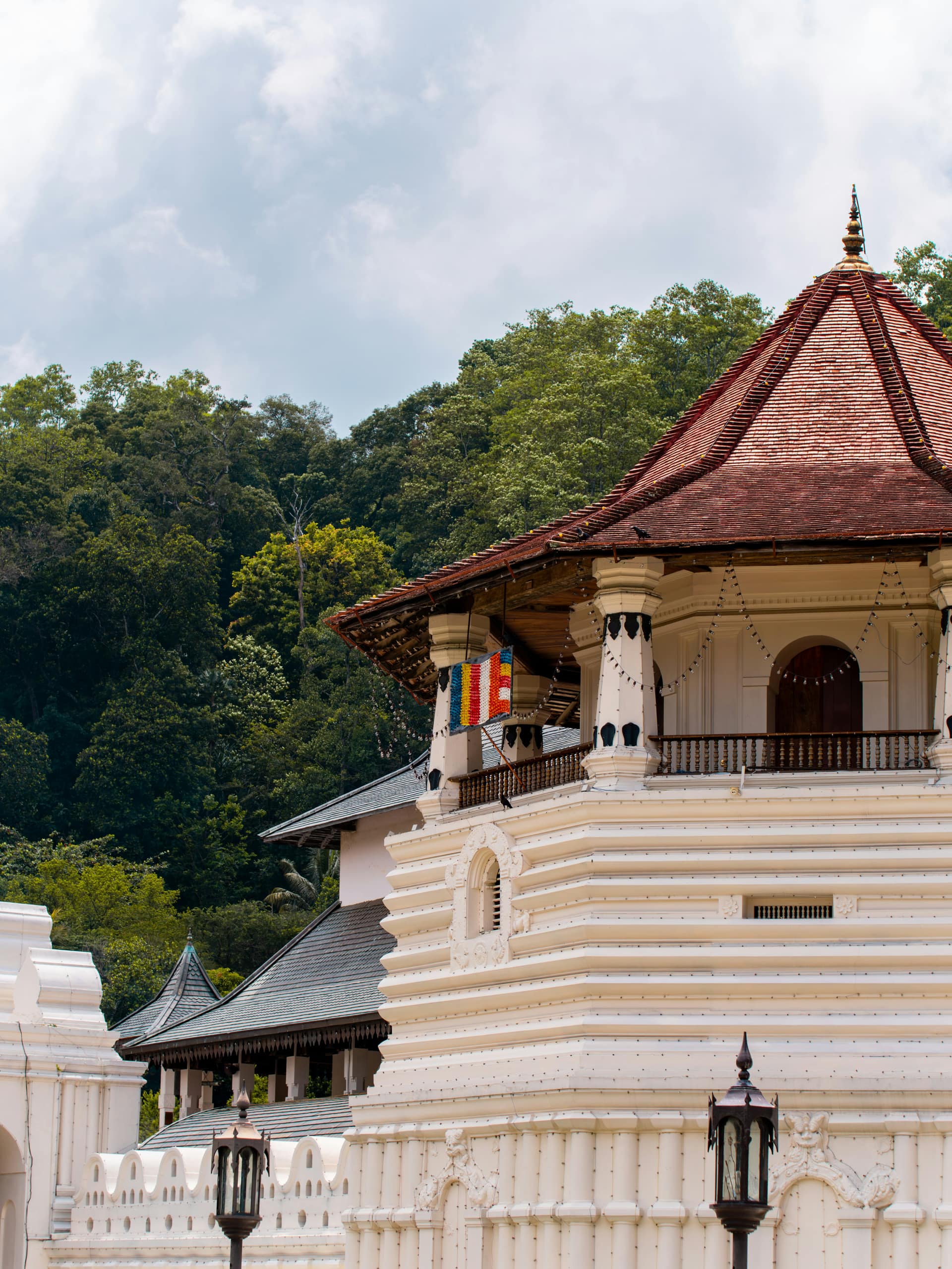
Udawattakele forest, behind the temple, contains several hermitages where monks live and practise. Visitors may walk to them quietly during the day. The Temple of the Sacred Tooth Relic itself has halls where devotees sit in silence, especially at the dawn puja.
- →Buddhist Publication Society: books, pamphlets and advice.
- →Forest hermitages in Udawattakele: visit quietly; do not expect formal teaching.
- →Temple of the Sacred Tooth Relic at dawn: a calm place to sit for half an hour.
- →Malwatta monastery: occasional conversations with English-speaking monks.
Retreat centres in the hills
Retreat centres in the hills around Kandy are where sustained practice happens. One long-established lay centre stands on a tea estate above Galaha, about 25 kilometres south of the city, with simple rooms, vegetarian food and guidance in English. Guests stay from a few days to several weeks.
Structured vipassana courses near Kandy are held at a dedicated centre near Peradeniya. These follow a fixed international format: ten days of complete silence with ten hours of sitting daily. Places must be reserved in advance, and the full course must be completed.
- →Self-paced hill retreat: flexible length, daily group sittings, basic comfort.
- →Ten-day silent course: fixed dates, full silence, booking essential.
- →Monastery stays: possible for committed students by prior arrangement.
What a retreat day is like
A retreat day near Kandy begins early. A bell rings at about 4.30 or 5 in the morning for the first sitting. The day alternates sitting and walking meditation with periods of work, such as sweeping paths, and a talk or discussion in the evening.
Conditions at meditation centres near Kandy are deliberately plain. Rooms are shared or single cells with a thin mattress, water may be cold, and electricity limited. The last meal is at midday, with tea later. Nights in the hills can fall to 15°C, so bring a warm layer.
- →5.00: wake and first sitting.
- →7.00: breakfast.
- →11.30: main meal.
- →Afternoon: sitting, walking and personal practice.
- →6.00: tea, chanting and a talk.
Etiquette, cost and booking
Etiquette at a meditation centre near Kandy is simple and firmly observed. Wear loose clothing that covers shoulders and knees, white if you have it. Men and women are housed separately. Phones are switched off, and reading and writing are discouraged on silent courses.
The cost of meditation near Kandy is whatever you choose to give. Centres survive on dana, and a donation of roughly US$10 to US$20 per day is a fair guide for board and lodging. Lankan Stays & Trails can build a short retreat into a longer itinerary and arrange transport, though the booking itself must come from you.
Is it right for your trip
A meditation stay near Kandy suits travellers with at least three spare days and a real wish to practise. It does not combine well with a tight sightseeing schedule. The contrast with the rest of a holiday is sharp, and many people find the first two days difficult.
Travellers with only a day or two in Kandy can still take something from the tradition. Attend the dawn puja, sit by the lake afterwards, visit Malwatta and buy a short book from the Buddhist Publication Society. An hour of stillness is a reasonable beginning.
- →Choose a retreat if you have three or more days and some prior interest.
- →Choose a drop-in visit if you are curious and short of time.
- →Skip it if you want comfort, conversation or a flexible timetable.
Frequently asked questions
Can foreigners learn meditation in Kandy?
Foreigners are welcome at several meditation centres near Kandy, where instruction is given in English. Some accept beginners for stays of a few days. Structured ten-day courses need advance registration, and all centres expect guests to follow their rules.
How much does a meditation retreat near Kandy cost?
Most meditation centres near Kandy do not charge a fee. They run on voluntary donations for food and lodging. A contribution of about US$10 to US$20 per day is typical for foreign guests, and more is welcome if you can afford it.
Do I need experience to join a retreat in Sri Lanka?
Experience is not required at the lay centres near Kandy, which give basic instruction to newcomers. A ten-day silent course is demanding for a first attempt, though many beginners complete one. Being honest about your experience when you apply helps the teachers.
What should I bring to a meditation centre near Kandy?
Bring loose, modest clothing, preferably white, a warm layer for cool evenings, a torch, a towel, toiletries and insect repellent. A sheet or light sleeping bag is useful. Leave valuables and unnecessary electronics with your hotel or driver.
Can I visit a meditation centre for one day?
Some hill centres near Kandy allow day visitors to join a sitting or speak with a teacher if arranged in advance. Ten-day courses do not admit short-term visitors. Turning up unannounced is discouraged, since it disturbs those in retreat.
Is there a dress code for meditation centres in Sri Lanka?
Meditation centres in Sri Lanka ask for clothing that covers shoulders and knees and is loose enough for sitting on the floor. White or pale colours are traditional. Tight, sleeveless or transparent clothing is not acceptable for men or women.