
Quick answer
February is one of the best months for Mirissa. The weather is dry and sunny, the bay is calm for swimming on most days, and whale watching boats leave the harbour every morning, with good chances of blue whales. Visit Coconut Tree Hill and Parrot Rock early, find Secret Beach for a quieter swim and enjoy seafood on the sand in the evening. Mirissa is busy in February, so book rooms early or stay in Weligama or Talalla nearby.
Key takeaways
- February is dry and calm in Mirissa, with good swimming on most days.
- Whale watching is in season, with frequent blue whale sightings.
- Coconut Tree Hill and Parrot Rock are best visited early in the morning.
- Secret Beach is a quieter cove a short tuk-tuk ride away.
- Mirissa is busy in February, so book early or stay nearby.
Mirissa's weather in February
Mirissa lies on the south coast, which is in its dry season from about December to April. February is one of the most settled months, with long sunny days around 30°C, warm evenings and very little rain. A brief shower in the evening is possible but uncommon.
The sea is calm on most days. The middle of the bay is the most sheltered and best for swimming, while the edges and the stretch near Parrot Rock can have more movement. Swell picks up on some days, so follow local advice and swim where others are swimming.
Sunrise is around 6.30 and sunset around 6.20. Early mornings are the coolest and calmest part of the day, which is why whale watching boats, photographers and swimmers all head out early.
- →Dry and sunny, around 30°C.
- →Calm bay on most days.
- →Sunrise about 6.30, sunset about 6.20.
Whale watching from Mirissa
Mirissa's whale season runs roughly from December to April, when boats head to the deep water south of Dondra Head. February is in the heart of the season. Blue whales are the main attraction, and sperm whales, Bryde's whales, spinner dolphins and flying fish are also seen on many trips.
Boats leave the harbour around 6 to 7am and return around midday. Trips can last four to five hours, depending on where the whales are. The sea is usually calm in February, but seasickness is still possible, so take tablets if you are prone to it.
Choose an operator that follows responsible whale watching practices, keeps a sensible distance and does not chase or surround the animals. Sightings are very common in February but are never guaranteed.
- →Season: roughly December to April.
- →Boats leave around 6 to 7am.
- →Choose a responsible operator.
The beach, Parrot Rock and Coconut Tree Hill
Mirissa's main beach curves for about a kilometre, with restaurants and guesthouses along its length. In February it is busy, especially in the middle. Parrot Rock, a small rocky island at the western end, can be climbed at low tide for views along the coast.
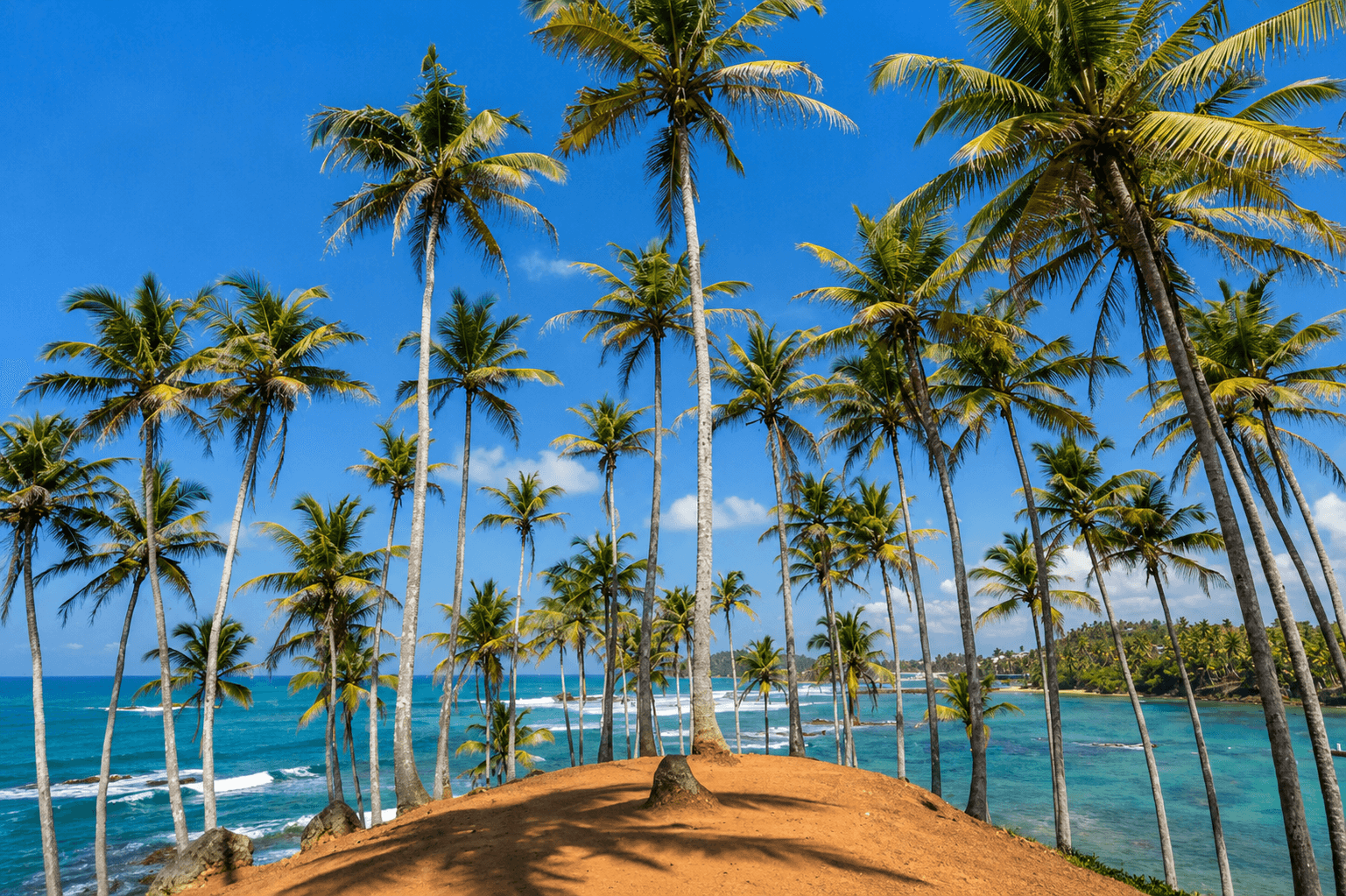
Coconut Tree Hill, a headland covered in palms at the eastern end, is one of the most photographed spots on the south coast. It is busiest at sunset. Visiting at sunrise or early in the morning gives the best light and fewer people.
Turtles are sometimes seen feeding near the rocks, and snorkelling is possible on calm days near Parrot Rock, though visibility varies.
- →Main beach: lively, busiest in the middle.
- →Parrot Rock: climb at low tide.
- →Coconut Tree Hill: go at sunrise.
Secret Beach and quieter corners
Secret Beach is a small cove west of the main bay, reached by tuk-tuk and a short walk. It has calm water in a natural rock pool, good for swimming and snorkelling, and is much quieter than Mirissa's main beach, especially in the morning.
Weligama, about 15 minutes away, has a wide bay with gentle surf and a less crowded beach. Talalla and Dikwella, further east, are quiet bays with boutique stays.
Staying a little away from the main beach, in the hills behind the bay or on the road towards Weligama, gives quieter nights while keeping Mirissa's restaurants and whale watching within reach.
Evenings in Mirissa
After sunset, Mirissa's beachfront comes alive. Restaurants set tables on the sand and display the day's catch, which you choose and have grilled. Bars play music, and some host beach parties at weekends.
In February, popular restaurants fill quickly. Booking ahead or eating early helps. Remember that alcohol is not sold on poya days, including the Navam full moon in February.
For a quieter evening, choose a restaurant at the eastern end of the beach or one of the smaller places in the lanes behind it.
- →Fresh seafood on the beach.
- →Livelier at weekends.
- →No alcohol sales on poya days.
Where to stay and tips
Mirissa has guesthouses, boutique hotels and a few larger resorts. Book three to six months ahead for February, especially for beachfront rooms. If Mirissa is full, Weligama, Talalla and Dikwella are good alternatives within a short drive.
Mirissa is about two and a half hours from the airport by expressway and about an hour from Galle. Yala and Udawalawe are within reach for safari, about two to three hours away.
The planners at Lankan Stays & Trails often suggest two or three nights in Mirissa or nearby in February, with whale watching on the first morning and a beach day to follow.
Frequently asked questions
Is February a good time to visit Mirissa?
Yes. February is one of the best months for Mirissa. The weather is dry and sunny, the bay is calm for swimming on most days, and whale watching is in season. It is also one of the busiest months, so book rooms early or stay nearby.
Can I see whales in Mirissa in February?
Yes. February falls in the heart of Mirissa's whale season, which runs roughly from December to April. Blue whales are seen on many trips, along with sperm whales and dolphins. Sightings are very common but never guaranteed, as these are wild animals.
Is the sea calm in Mirissa in February?
Usually, yes. The middle of the bay is the most sheltered and good for swimming on most days. The edges can have more movement, and swell picks up occasionally. Follow local advice, swim where others are swimming and avoid swimming after drinking.
Is Mirissa crowded in February?
Yes, it is one of the busiest beaches on the south coast in February, especially in the middle of the bay and at Coconut Tree Hill at sunset. Visiting viewpoints early, using Secret Beach and staying a little away from the main beach help.
What time do whale watching boats leave Mirissa?
Most boats leave the harbour around 6 to 7am and return around midday. Trips last four to five hours depending on where the whales are. An early night before the trip helps, and taking seasickness tablets is wise if you are prone to it.
When is the best time to visit Coconut Tree Hill?
At sunrise or early in the morning, when the light is soft and few people are there. Sunset is the busiest time. Coconut Tree Hill is at the eastern end of Mirissa's beach and is a short walk from most guesthouses.
Where should I stay if Mirissa is full?
Weligama, about 15 minutes away, has a wide bay and gentle surf. Talalla and Dikwella, further east, are quiet bays with boutique stays. All are within easy reach of Mirissa's harbour for whale watching and its restaurants for evenings out.