
Quick answer
Negombo in January is dry and sunny, with calm seas and days of about 30 to 31°C. It is the ideal first or last night near the airport. Visit the fish market and lagoon early, take a boat trip through the mangroves, see St Mary's Church and enjoy seafood at sunset. The beach is good for a relaxed day, though the south coast is better for a longer stay.
Key takeaways
- Negombo is about twenty minutes from the international airport.
- January brings dry weather and calm seas.
- The fish market is best early in the morning.
- Lagoon boat trips explore mangroves and fishing villages.
- Negombo suits one or two nights, not a long beach stay.
Negombo's weather in January
Negombo, on the west coast, is dry in January, with days of about 30 to 31°C, warm nights and calm seas. Rain is rare, and the sunsets over the ocean are often spectacular.
The beach is wide and long, and the sea is generally calm enough for swimming in January, though currents can form. Swim where locals swim and follow any flags.
Mosquitoes can be active around the lagoon at dusk, even in the dry season, so use repellent and wear light long sleeves in the evening.
- →Dry and sunny, about 30°C.
- →Calm seas for swimming.
- →Mosquitoes at dusk near the lagoon.
Things to see in Negombo
The Negombo fish market is one of the busiest on the island. Boats land their catch early in the morning, and fish is laid out to dry on the beach in long rows. Visit early for the most activity.
Negombo is known as Little Rome for its many Catholic churches. St Mary's Church, with its painted ceiling, is the most impressive. Many churches are busy on Sunday mornings.
The Dutch Canal, built in the colonial era, runs through Negombo towards Colombo. Boat trips along it and through the lagoon pass fishing villages and mangroves.
Angurukaramulla Temple, with its large seated Buddha and dragon-mouth entrance, is a short ride from the beach. The old Dutch Fort gateway near the lagoon mouth is a reminder of the town's colonial past and the cinnamon trade.
- →Fish market early in the morning.
- →St Mary's Church.
- →Dutch Canal and lagoon boat trips.
The lagoon and mangroves
Negombo's lagoon is a rich habitat for birds, crabs and fish. Boat trips through the mangroves are a calm way to spend a morning or late afternoon, with herons, kingfishers and cormorants often seen.
January is a good month for birds, with migrant species present. Early morning trips offer the best light and the most activity.
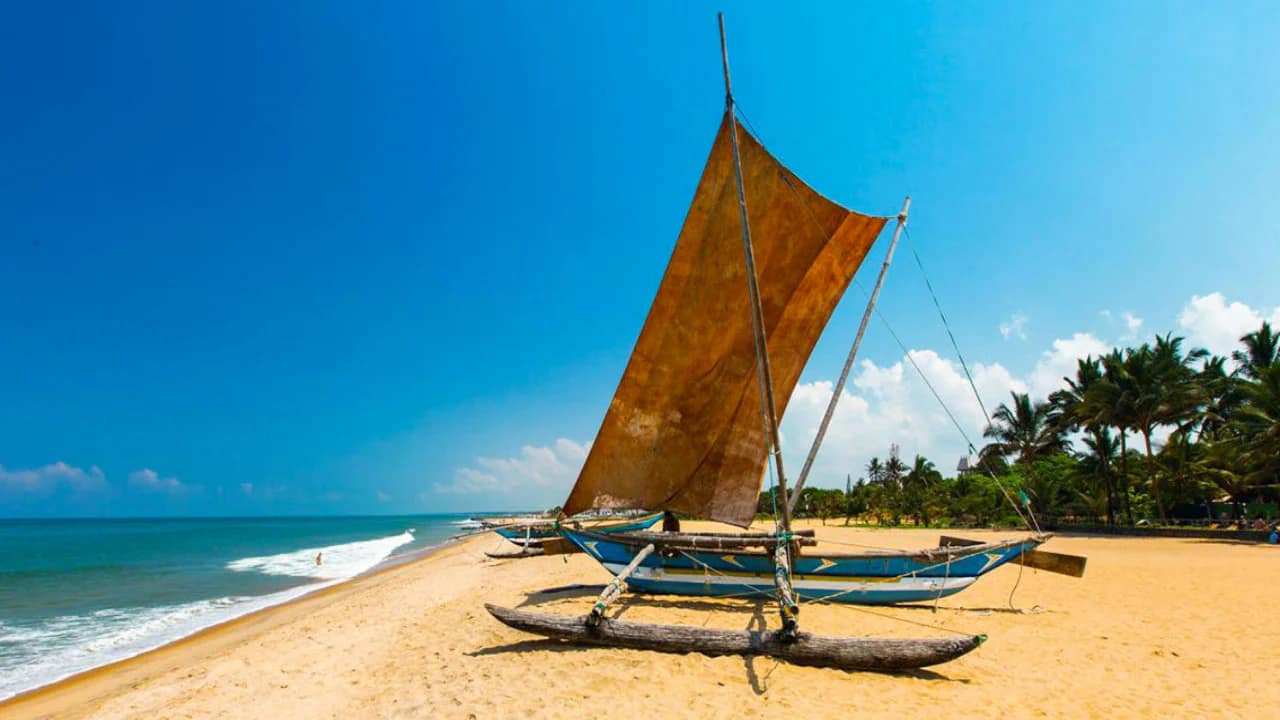
Traditional outrigger canoes, called oruwa, are still used by fishermen on the lagoon. Some boat trips include a stop at a fishing village to see how nets are made and repaired.
- →Mangrove boat trips.
- →Migrant birds in January.
- →Traditional oruwa canoes.
A first or last night
Negombo is ideal after a long flight. It is close to the airport, quieter than Colombo and has hotels for every budget along the beach. A sunset walk and seafood dinner make a gentle start to a trip.
For a last night, it means a short, stress-free transfer to the airport. Many travellers spend their final afternoon on the beach before an evening flight.
Lankan Stays & Trails often starts January routes with one night in Negombo, followed by an early drive to the Cultural Triangle, which avoids Colombo's traffic and makes the most of the dry morning light.
Food in Negombo
Seafood is the highlight. Beachfront restaurants display the day's catch for diners to choose, with prawns, crab, calamari and fish grilled or curried.
Negombo's Catholic heritage shows in local dishes and bakeries. Look for breudher and love cake in some bakeries, especially around Christmas and New Year.
Fresh fruit stalls sell pineapple, papaya, bananas and king coconut. A fresh king coconut on arrival is the classic welcome to Sri Lanka.
Lagoon crab is a Negombo speciality, served as a rich curry or with pepper sauce. Many restaurants buy it fresh from fishermen each morning, and January's calm conditions mean a steady supply.
- →Fresh seafood on the beach.
- →Bakeries with local cakes.
- →King coconut and fresh fruit.
Moving on from Negombo
From Negombo, the Cultural Triangle is about four hours by road, Kandy about three hours and the south coast about three hours via the expressway.
Kalpitiya, about two and a half hours north, offers dolphin watching in January and is a good add-on for a longer west coast stay.
If you are staying for the Duruthu Perahera at Kelaniya, Negombo is a convenient base, about 40 minutes from the temple.
- →Cultural Triangle: about four hours.
- →South coast: about three hours.
- →Kalpitiya: about two and a half hours.
Frequently asked questions
Is Negombo worth visiting in January?
Yes, for one or two nights. Negombo is dry and calm in January and close to the airport. The fish market, lagoon boat trips, churches and seafood dinners make it more than a transit stop. For a longer beach stay, the south coast is better.
Can you swim in Negombo in January?
Generally, yes. The sea is calm in January, and the wide beach is good for swimming, though currents can form. Swim where locals swim and follow any flags or advice. Hotel pools are a good alternative for families with young children.
How far is Negombo from the airport?
Negombo is about twenty minutes from Bandaranaike International Airport, depending on traffic. This makes it an ideal first or last night, avoiding the longer drive into Colombo and making early or late flights much easier.
What is the fish market in Negombo like?
It is one of the busiest fish markets on the island. Boats land their catch early in the morning, and fish is laid out to dry on the beach. Visit early for the most activity, wear old shoes and expect strong smells and plenty of bustle.
Is Negombo a good base for the Duruthu Perahera?
Yes. Negombo is about 40 minutes from the Kelaniya Raja Maha Vihara, where the Duruthu Perahera is held around the January full moon. A driver can take you there and back in the evening, avoiding a late drive across the island.
How many nights should I spend in Negombo?
One night is enough for most travellers as a first or last stop near the airport. Two nights allow time for the fish market, a lagoon boat trip, St Mary's Church and a relaxed beach day before or after the rest of your trip.