
Quick answer
An ODI series trip to Colombo and Pallekele usually takes about 10 to 12 days: arrive and drive about three hours to Kandy, watch the Pallekele games with days for the Temple of the Tooth, Peradeniya and the hills in between, move to Colombo by road or rail in about three to four hours, then watch the Premadasa games with days for Pettah, Galle Face, Mount Lavinia or a day trip to Galle. Games are usually two or three days apart.
Key takeaways
- Australia's 2022 ODI series in Sri Lanka had two games at Pallekele and three at the R Premadasa Stadium in Colombo.
- Kandy is about three hours from Colombo's airport, and Pallekele about 30 to 40 minutes from Kandy.
- Day-night ODIs in Sri Lanka usually start around 2.30 pm local time.
- Kandy to Colombo takes about three to four hours by road or about 2.5 to 3 hours by train.
- ODI series games are usually two or three days apart, leaving full days free between them.
The shape of an ODI series trip
An ODI series split between Pallekele and Colombo, like Australia's 2022 series with two games at Pallekele and three in Colombo, takes about 10 to 12 days to follow from start to finish. Games are usually two or three days apart, often day-night, starting around 2.30 pm.
That rhythm leaves mornings free on match days and whole days between games. The trip divides naturally into a Kandy week and a Colombo week, with a scenic move between them.
Venues and order change each tour, so confirm the schedule before booking.
- →Kandy leg: Pallekele games and the hills.
- →Colombo leg: Premadasa games and the city.
- →About 10 to 12 days in total.
The Kandy leg
Kandy, about three hours by road from Colombo's airport, is the base for the Pallekele games. The ground is about 30 to 40 minutes east of the city, and a tuk-tuk, taxi or driver takes fans out on match days, with time for a morning in town before the start.
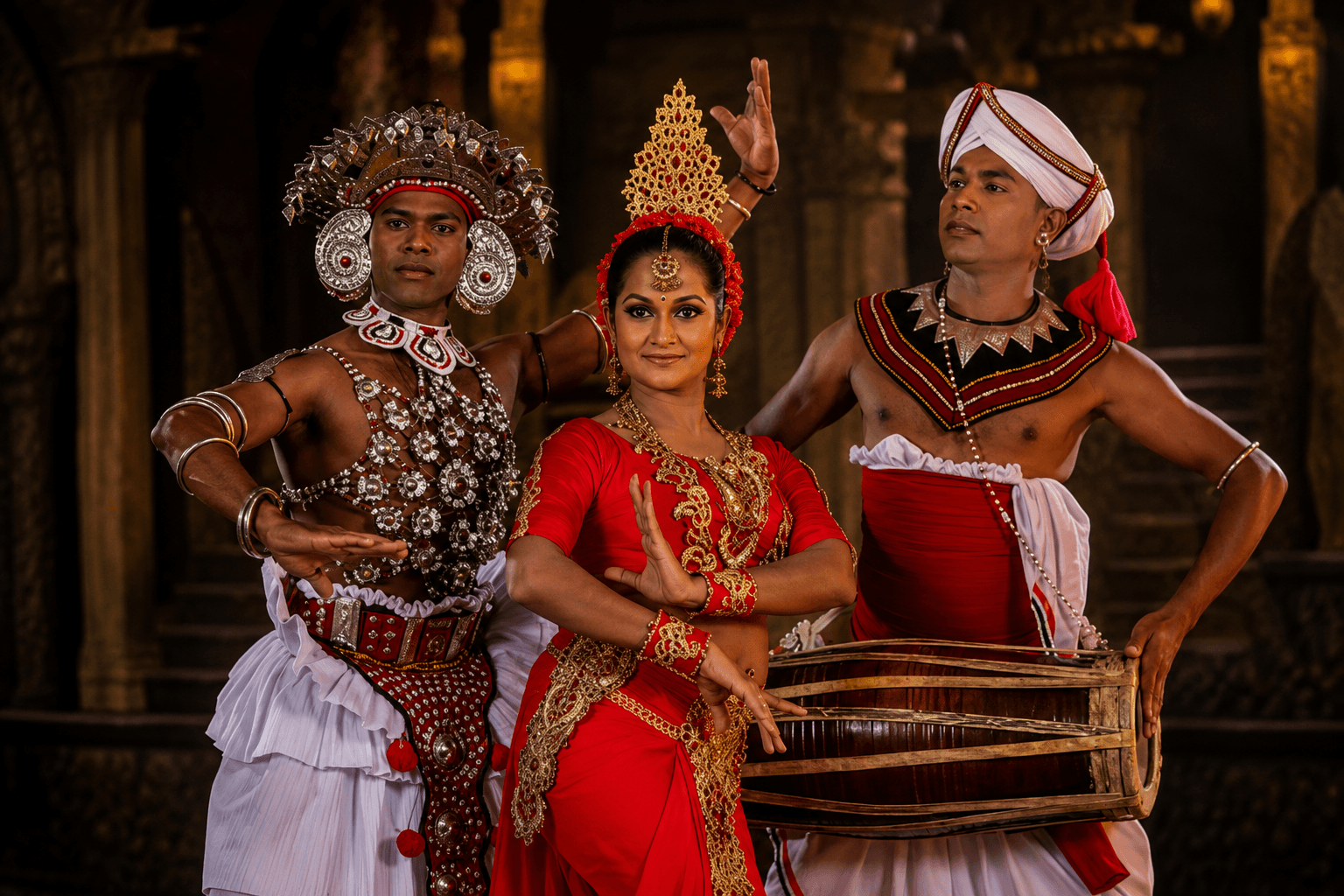
Between games, Kandy has a full list of sights: the Temple of the Sacred Tooth Relic, the lake walk, the Royal Botanic Gardens at Peradeniya, the Udawattakele forest and the evening Kandyan dance shows. A day in the Knuckles Range or a tea estate in the Hanthana hills adds the countryside.
Kandy is also the base for a side trip to Sigiriya, about two to two and a half hours north, if the gap between games allows an overnight.
- →Temple of the Tooth: evening puja.
- →Peradeniya: two to three hours.
- →Knuckles or Hanthana: a day in the hills.
The move to Colombo
The move from Kandy to Colombo is a good travel day. By road, with a driver, it takes about three to four hours, with stops at the Kadugannawa pass, a spice garden and the Kelaniya temple on the edge of Colombo. By train, it takes about 2.5 to 3 hours and drops through the hills with fine views.
Travel the morning after the last Pallekele game, and arrive in Colombo by mid-afternoon, leaving the next day free before the first game there.
- →Road: three to four hours, with stops.
- →Train: about 2.5 to 3 hours.
- →Travel the morning after a game.
The Colombo leg
In Colombo, stay in Colombo Fort, Kollupitiya or along the Galle Road, about 15 to 45 minutes from the R Premadasa Stadium depending on traffic. On match days, spend the morning on one sight, rest at the hotel and reach the ground by about 1.30 pm.
Between games, Colombo has Pettah's bazaars, the Dutch Hospital, Gangaramaya Temple, the National Museum, Geoffrey Bawa's house and Galle Face Green at sunset. Mount Lavinia's beach is about 30 minutes south, and Galle, about two hours by expressway, is a full day trip.
Lankan Stays & Trails builds ODI trips with a driver for the whole series, so match-day pickups, the move between venues and the day trips are all handled.
- →Match days: one morning sight, then rest.
- →Free days: Pettah, museums, Mount Lavinia.
- →Day trip: Galle Fort, about two hours.
Day-night match days
Day-night ODIs in Sri Lanka usually start around 2.30 pm and finish around 10 to 11 pm. Arrive at the ground early to avoid queues, bring water and sunscreen for the afternoon, and a light layer for the evening.
After the game, roads near the ground are busy for an hour or more, so agree a pickup point with your driver, or walk to a quieter road before booking a ride.
Frequently asked questions
How long is an ODI series in Sri Lanka?
A five-match ODI series in Sri Lanka usually runs over about 10 to 12 days, with games two or three days apart. Australia's 2022 series had two games at Pallekele and three at the R Premadasa Stadium in Colombo. Shorter series, of two or three games, take about a week.
Where should you stay for ODIs at Pallekele?
Most fans stay in Kandy, about 30 to 40 minutes from Pallekele International Cricket Stadium. Kandy has the most hotels and restaurants, and is close to the Temple of the Tooth and Peradeniya. Book early, because the city fills up, especially in July and August.
What time do ODIs start in Sri Lanka?
Day-night ODIs in Sri Lanka usually start around 2.30 pm local time and finish around 10 to 11 pm. Day games start earlier, usually around 10 am. Start times change by series, so check the official schedule for each match.
How do you get from Kandy to Colombo for the ODIs?
The easiest way is by road with a private driver, about three to four hours, with stops at the Kadugannawa pass, a spice garden and the Kelaniya temple. The train takes about 2.5 to 3 hours and is scenic, but means carrying luggage to and from the stations.
What can you do between ODIs in Colombo?
Between ODIs in Colombo, explore Pettah and the Dutch Hospital, visit Gangaramaya Temple and the National Museum, tour Geoffrey Bawa's house, swim at Mount Lavinia or take a day trip to Galle Fort, about two hours away by expressway.
Can you see Sigiriya during an ODI series?
You can if there is a gap of at least two days between games at Pallekele. Sigiriya is about two to two and a half hours north of Kandy, so stay one night, climb the rock at 7 am and return to Kandy by the afternoon of the next day.
Is it worth following a whole ODI series?
Following a whole ODI series is a good way to see both Kandy and Colombo, with games every two or three days and free days to explore. It is less tiring than a Test series, with afternoons and evenings at the cricket and mornings free.