
Quick answer
Nuwara Eliya, at altitude in Sri Lanka's hill country, has evening temperatures that can drop to roughly 10 to 15 degrees Celsius, noticeably cooler than anywhere else on a 10-day Sri Lanka itinerary and closer to a mild Swiss autumn evening than a tropical one. Swiss travellers should pack at least one warm layer, a fleece or light jumper, long trousers and closed shoes for evenings around days 6 and 7, alongside the lightweight clothing needed for the rest of the trip.
Key takeaways
- Nuwara Eliya sits at altitude in Sri Lanka's hill country, and its evening temperatures can drop to roughly 10 to 15 degrees Celsius, unlike the warm coast and Cultural Triangle.
- Ella, the alternative hill-country base on this route, is milder than Nuwara Eliya but still noticeably cool after dark, especially around an early train arrival.
- A single fleece or light jumper, packed alongside tropical clothing, covers the cold-weather need for this route without adding much bulk.
- The hill-country stop typically falls on days 6 and 7 of the 10-day itinerary, directly between the warm Cultural Triangle and the hot safari and coastal legs.
- Many hill-country guesthouses and hotels do not run central heating, so an extra layer for indoor evenings is worth packing alongside outdoor wear.
Why Nuwara Eliya gets cold in a tropical country
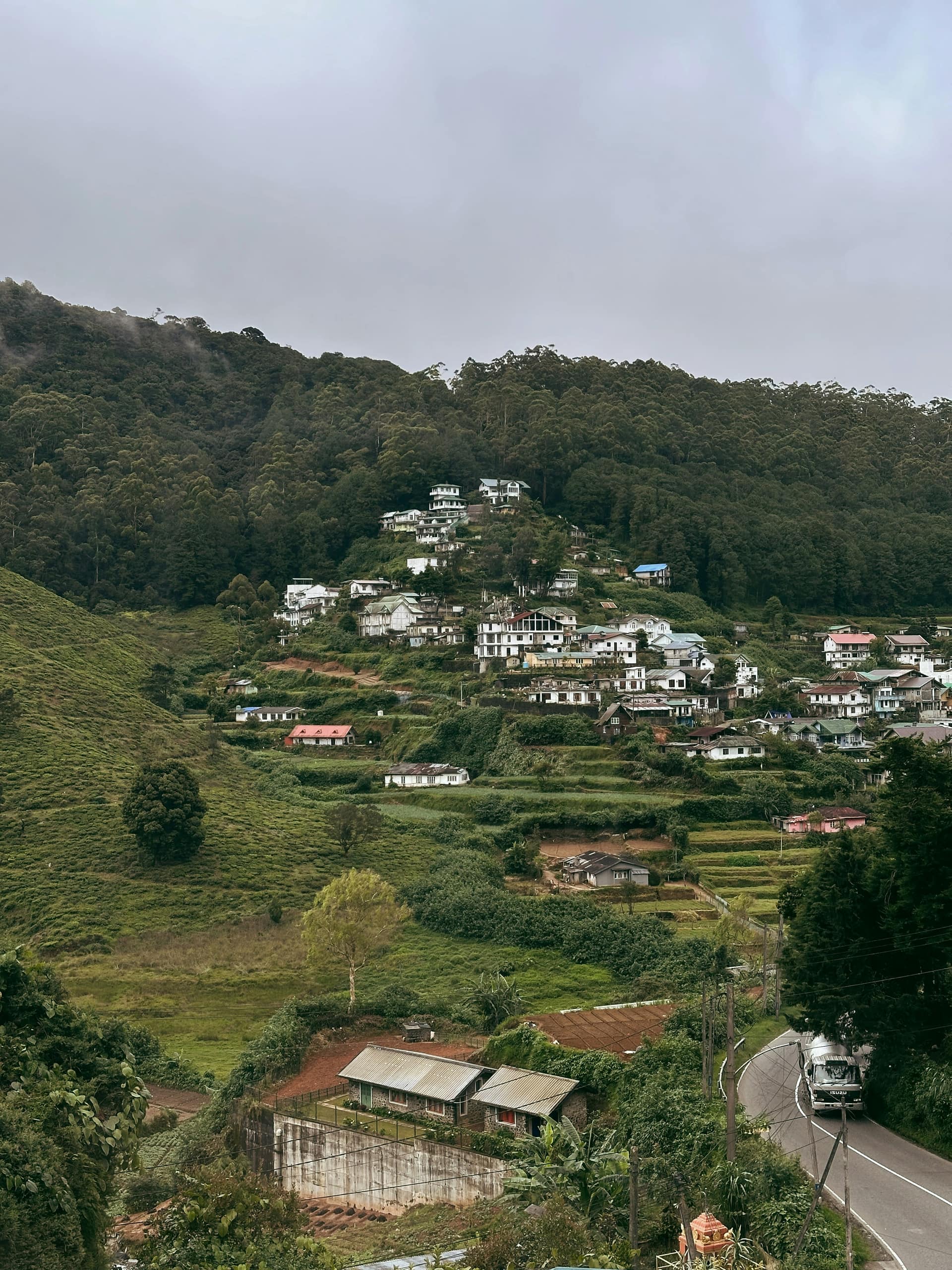
Nuwara Eliya sits at altitude in Sri Lanka's central hill country, and altitude, not latitude, is what drives its climate. While the coast and Cultural Triangle stay warm and humid year-round, Nuwara Eliya's elevation means the air simply holds less heat, particularly once the sun goes down.
The result is a town nicknamed 'Little England' by colonial planters for a reason: cool mornings, mild days and evenings that can feel genuinely cold by Sri Lankan standards, roughly 10 to 15 degrees Celsius after dark. For a Swiss traveller, this is a familiar range, closer to an autumn evening in Zurich than anything tropical.
Ella, the other common hill-country base on this route, sits at a lower elevation than Nuwara Eliya and is correspondingly milder, but it is still noticeably cooler than the coast, especially in the early morning around a scenic train departure.
- →Nuwara Eliya evenings: roughly 10 to 15 degrees Celsius, cool enough to need a proper layer.
- →Ella evenings: milder than Nuwara Eliya but still noticeably cool after dark.
- →Daytime in both towns is generally mild and comfortable, rarely requiring more than a light layer.
Where this fits into the 10-day route
On the standard 10-day itinerary, the hill-country stop falls on days 6 and 7, after the transfer from Kandy and before heading south towards the safari and the coast. This means the cold snap is sandwiched between two genuinely hot legs of the trip, which is exactly why it is easy to underpack for.
Travellers arriving from the warm Cultural Triangle and Kandy sometimes assume the whole country runs at a similar temperature, and only realise the gap once the sun sets on day 6. Packing for it in advance, rather than improvising on arrival, avoids an unnecessary shopping trip mid-trip.
What to actually pack
The goal is not a full winter wardrobe, since the cold spell is short and confined to two nights and mornings within a ten-day trip that is otherwise warm. One or two warm items, packed to layer over what you are already carrying for the rest of the route, is generally enough.
Closed shoes are worth including specifically for Nuwara Eliya and Ella, since sandals become uncomfortable once the evening temperature drops and many hill-country activities, tea plantation walks or the Ella Rock area among them, suit sturdier footwear anyway.
- →A fleece or light jumper: the single most useful item for hill-country evenings.
- →A light rain jacket or windbreaker: doubles as an extra warmth layer and covers hill-country drizzle.
- →Long trousers: more comfortable than shorts once the temperature drops after dark.
- →Closed shoes or trainers: useful for cool evenings and any hill-country walking.
- →A light scarf or buff: a small, low-bulk item that adds noticeable warmth on a cool evening.
A layering strategy that works for the whole trip
Rather than packing separate wardrobes for the hot and cool legs, most Swiss travellers do better layering: lightweight, breathable clothing as the base throughout, with the one or two warm items added only for days 6 and 7. This keeps overall luggage manageable across a ten-day trip that otherwise stays warm.
It also means the warm layer sees genuine use rather than sitting unused in a suitcase for eight of the ten days, which matters given how little checked-baggage space is worth spending on single-purpose items on a trip this length.
- →Base layer: lightweight, breathable clothing worn for the Cultural Triangle, safari and coast.
- →Add layer: fleece or jumper added only for the hill-country evenings on days 6 and 7.
- →Footwear swap: closed shoes for hill-country evenings, sandals for the rest of the trip.
It is not just the outdoors that gets cold
Many guesthouses and smaller hotels in Nuwara Eliya and Ella do not run central heating, relying instead on the building's construction and the occasional fireplace in common areas. This means indoor evenings can feel nearly as cool as outdoors, particularly late in the evening.
Packing something comfortable enough to wear indoors after dinner, rather than assuming a heated room will handle it, is a small adjustment that makes the two hill-country nights considerably more comfortable.
Planning it into the wider trip
Because the cold is confined to a specific, predictable two-to-three-day window on the route, it is one of the easier logistics points to plan around rather than worry about. Confirming which hill-country base, Ella or Nuwara Eliya, your itinerary uses helps decide how much warm clothing to bring, since Nuwara Eliya runs noticeably cooler than Ella.
Lankan Stays & Trails routes this 10-day itinerary through the hill country as a matter of course and can advise on the expected temperature range for specific travel dates, since the gap between the warmest and coolest days on this route is larger than most first-time visitors from Switzerland expect.
Frequently asked questions
How cold does it get in Nuwara Eliya?
Nuwara Eliya's evenings can drop to roughly 10 to 15 degrees Celsius, noticeably cooler than the rest of Sri Lanka because of its altitude in the hill country. Daytime temperatures are generally mild and comfortable rather than cold.
Do I need warm clothes for Sri Lanka?
Only for the hill-country stop, typically days 6 and 7 on a 10-day itinerary. One fleece or light jumper covers the need, since the rest of the route, the coast, Cultural Triangle and safari areas, stays warm throughout.
Is Ella as cold as Nuwara Eliya?
No, Ella sits at a lower elevation and is milder than Nuwara Eliya, but it is still noticeably cool after dark, particularly around an early scenic train departure, so a warm layer is still worth packing for Ella evenings.
What shoes should I bring for the Sri Lanka hill country?
Closed shoes or trainers work best for Nuwara Eliya and Ella evenings and for hill-country walking, since sandals become uncomfortable once the temperature drops and many activities in the area suit sturdier footwear.
Do hotels in Nuwara Eliya have heating?
Not always. Many guesthouses and smaller hotels rely on the building's construction rather than central heating, so indoor evenings can feel nearly as cool as outdoors, and packing something warm to wear indoors is worth doing.
How many warm items should I pack for a 10-day Sri Lanka trip?
One or two is generally enough: a fleece or light jumper plus perhaps a light rain jacket or scarf. The cold spell is confined to two or three days out of ten, so a full winter wardrobe is unnecessary.
Why is a tropical country cold in the hill country?
Altitude, not latitude, drives Nuwara Eliya's climate. Its elevation in Sri Lanka's central hill country means the air holds less heat than the coast, giving it noticeably cooler evenings despite the country's tropical location overall.