
Quick answer
For the 10-day Sri Lanka itinerary, pack lightweight, breathable clothing for the humid coast and Cultural Triangle, at least one long-sleeved top and long trousers or a shawl for temple visits at Dambulla and Kandy's Temple of the Tooth, and one warmer layer such as a fleece or light jumper for cool hill-country evenings around Nuwara Eliya. Modest coverage of shoulders and knees is expected at religious sites throughout the trip, regardless of gender.
Key takeaways
- Temple visits on this route, including Dambulla's cave temples and Kandy's Temple of the Tooth, require shoulders and knees covered, and shoes and hats are removed before entry.
- Coastal and Cultural Triangle temperatures on this route are warm and humid, generally suiting lightweight, breathable natural fabrics such as cotton or linen over synthetic materials.
- Nuwara Eliya evenings, roughly on days 6 and 7 of the standard route, are noticeably cooler, closer to a mild Swiss autumn evening, and call for at least one warmer layer.
- A single lightweight shawl or sarong works as both a temple cover-up and a light layer for an air-conditioned car or hotel room, reducing the total volume of clothing needed.
- Modest dress at religious sites applies to all travellers regardless of gender, and shorts or sleeveless tops are turned away at the more significant temples on this route.
The core wardrobe for this route
Because this trip covers ten days across several distinct climates, a layering approach works better than packing separate outfits for each stop. Lightweight cotton or linen tops and trousers or skirts form the base for the coast and Cultural Triangle, with a warmer layer and a temple-appropriate cover-up added to that base rather than packed as separate categories.
Natural, breathable fabrics generally outperform synthetic sportswear in Sri Lanka's humidity, particularly across multiple wears between laundry opportunities, which this route's guesthouse stops generally allow for every few days. Quick-drying fabric is still worth prioritising for at least a few items, given how humid conditions can slow drying time even for cotton.
- →Lightweight cotton or linen tops and bottoms form the base wardrobe for the coast and Cultural Triangle.
- →Natural fabrics generally handle Sri Lanka's humidity better than synthetic sportswear over several days of wear.
- →A few quick-drying items are worth including given how slowly cotton can dry in humid conditions.
Dressing for temples: Dambulla and the Temple of the Tooth
This route includes two significant religious sites, Dambulla's cave temples on the Cultural Triangle days and Kandy's Temple of the Tooth in the evening of day 5, both of which expect shoulders and knees covered for all visitors, regardless of gender. Shoes are removed before entering either site, so footwear that slips on and off easily is more practical than laced trainers on these days.
A single lightweight shawl or sarong is the most efficient solution here, since it doubles as a cover-up over a sleeveless top or shorts and takes up almost no luggage space, avoiding the need to pack a separate full outfit purely for temple visits. Loose, long trousers are a comfortable alternative to a shawl and work well in the heat while still meeting the dress code.
- →Shoulders and knees covered is expected at Dambulla and the Temple of the Tooth, for all travellers regardless of gender.
- →Shoes are removed before entry, so slip-on footwear is more practical than laced shoes on temple days.
- →A lightweight shawl or sarong is an efficient, compact solution for meeting the dress code without a dedicated outfit.
Coast and Cultural Triangle: dressing for heat and humidity
The south coast on days 9 and 10, and the Cultural Triangle around Sigiriya earlier in the trip, are both warm and humid, calling for the lightest, most breathable clothing in the whole wardrobe. Loose-fitting tops and shorts or skirts work well for daytime sightseeing, with swimwear and light beachwear for the coastal finish.
The Sigiriya Rock climb in particular benefits from moisture-wicking, breathable clothing given the physical exertion involved and the heat that builds through the morning, alongside a hat and sunglasses for the exposed sections near the top. A light, breathable long-sleeved layer is also worth having for sun protection on this climb, doubling as cover for the evening's Temple of the Tooth visit later in the route.
- →Loose, breathable clothing suits daytime sightseeing in the heat and humidity of the coast and Cultural Triangle.
- →The Sigiriya climb benefits from moisture-wicking fabric, a hat and sunglasses given the exertion and exposure involved.
- →Swimwear and light beachwear are needed for the south-coast finish on days 9 and 10.
Hill country: the layer most travellers forget
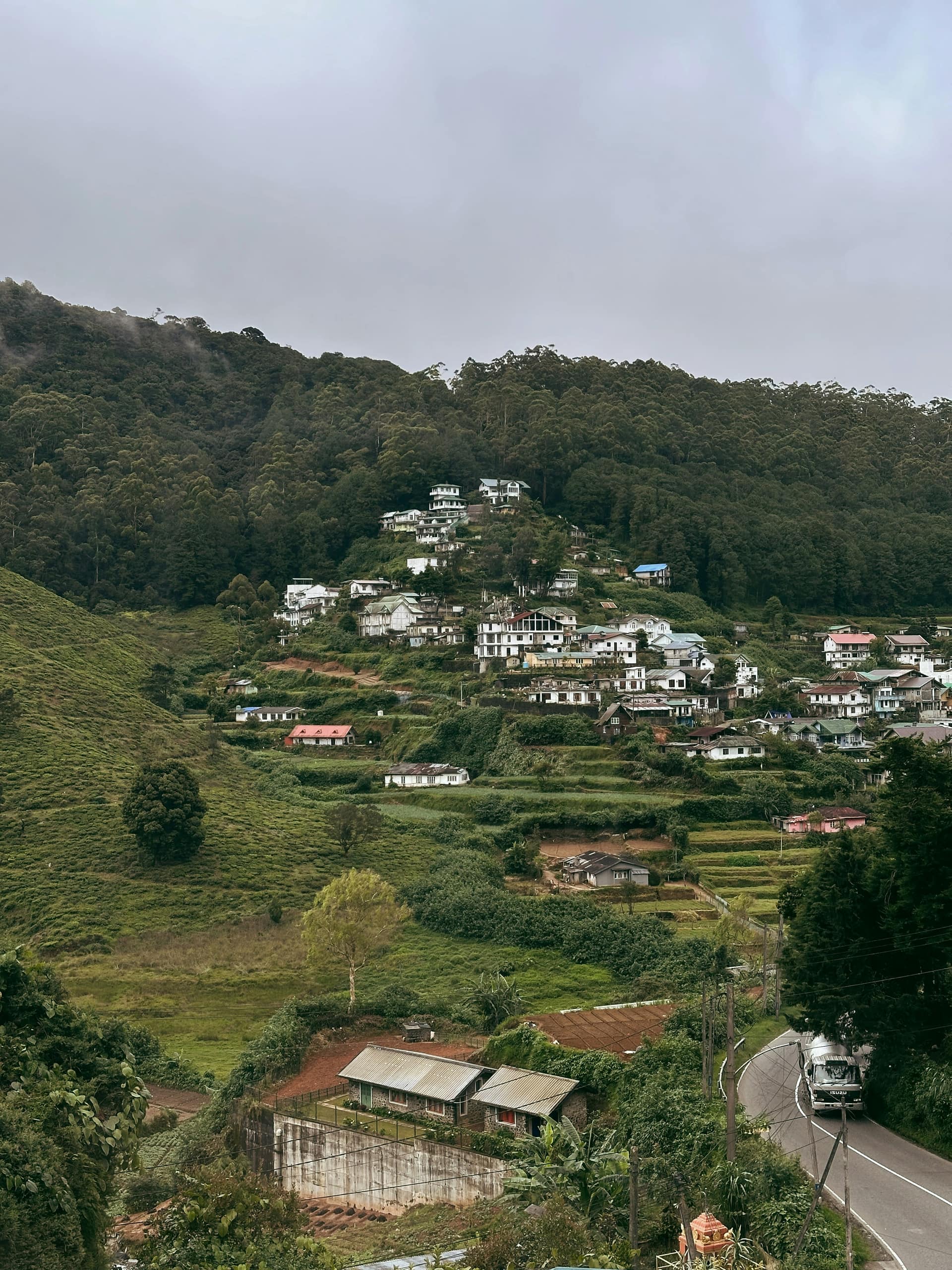
Nuwara Eliya, visited on roughly days 6 and 7 of the standard route, sits at altitude and has noticeably cooler evenings than anywhere else on the trip, closer to a mild Swiss autumn evening than a tropical one. Ella is milder but still cool after dark, particularly around an early scenic train departure or an evening out.
At least one warm layer, a fleece, light jumper or a packable jacket, is worth including specifically for this stretch of the route, since it is easy to assume the whole trip stays tropical and pack accordingly. This is the one climate shift on the itinerary that most surprises first-time Swiss visitors, even though the actual temperature is mild by Swiss standards.
- →Nuwara Eliya evenings call for a genuine warm layer, not just a light cardigan.
- →Ella is milder than Nuwara Eliya but still cool enough after dark to need a light layer.
- →This climate shift, rather than the coastal heat, is the part of the wardrobe most first-time Swiss travellers underestimate.
Practical extras worth including
A rain jacket or compact umbrella earns its place in the bag given Sri Lanka's two monsoon systems, even outside the wettest months, since a short shower is possible at almost any time of year on this route. A wide-brimmed hat is useful across nearly every stop, from the Sigiriya climb to a day on safari to the beach finish, and is one of the more versatile single items to pack.
Rather than packing separately for every stop, building the wardrobe around a small set of versatile, layerable pieces, lightweight base layers, one warm layer, one temple-appropriate cover-up, keeps the total luggage manageable across a trip that genuinely spans three climates in ten days. Lankan Stays & Trails routinely briefs Swiss travellers on this exact layering approach before departure, since it removes most of the guesswork around what actually gets used.
- →A compact rain jacket or umbrella is worth including regardless of season, given the possibility of a short shower.
- →A wide-brimmed hat is useful across nearly every stop on the route, from Sigiriya to the safari to the beach.
- →Building the wardrobe around versatile, layerable pieces keeps total luggage manageable across three distinct climates.
Frequently asked questions
What should I wear to temples in Sri Lanka?
Shoulders and knees covered, for all travellers regardless of gender, is expected at religious sites on this route including Dambulla's cave temples and Kandy's Temple of the Tooth. Shoes come off before entry, so slip-on footwear is practical, and a lightweight shawl works well as a cover-up.
Is Sri Lanka hot enough for shorts and t-shirts?
Yes, for most of the route. The coast and Cultural Triangle are warm and humid, suiting lightweight, breathable clothing, though shorts and sleeveless tops need a cover-up at temple sites and a warmer layer is still needed for cool hill-country evenings.
Do I need warm clothes for Sri Lanka?
Yes, for the hill-country stretch specifically. Nuwara Eliya, visited around days 6 and 7 on this route, has noticeably cooler evenings closer to a mild Swiss autumn evening, so at least one fleece or light jumper is worth packing.
What fabric is best for a Sri Lanka trip?
Lightweight, breathable natural fabrics such as cotton or linen generally handle Sri Lanka's humidity better than synthetic sportswear over multiple days of wear, though a few quick-drying items are still useful given how slowly cotton can dry in humid conditions.
Can I wear shorts on the Sigiriya climb?
Shorts are practical for the climb itself given the heat and exertion, but pack a light long-sleeved layer or covering for sun protection near the exposed top section, and note that shorts alone are not appropriate at the temple sites visited elsewhere on the route.
How many warm layers do I need for this trip?
One is generally sufficient. A single fleece, light jumper or packable jacket covers the cool hill-country evenings around Nuwara Eliya and Ella, roughly days 6 and 7, without needing multiple warm items for a trip that is otherwise warm to hot.
Do women need to cover their hair in Sri Lankan temples?
Not generally at the Buddhist temples on this route, including Dambulla and the Temple of the Tooth, though covering shoulders and knees is required for all visitors. It is worth checking locally if visiting any additional religious sites of a different faith.