
Quick answer
Phones and small cameras are usually allowed at Sri Lankan grounds, but large professional lenses may be restricted, so check the ground rules before bringing one. The classic shot is Galle International Stadium from the fort ramparts, best in the golden hour. Under lights at the Premadasa, use a fast lens or night mode. Ask before photographing people, keep gear dry in a mid-year tour and carry spare batteries.
Key takeaways
- Phones and small cameras are usually allowed; large lenses may be restricted.
- The classic view of Galle's ground is from the fort ramparts.
- Late afternoon light is best for the ground and the fort.
- Ask before photographing people, especially monks and children.
- Drones need permission and are not allowed near grounds.
Camera rules at the grounds
Rules vary by ground and series. Phones and compact cameras are almost always allowed, and many fans bring mirrorless cameras with modest zoom lenses. Large telephoto lenses, tripods and professional equipment are often restricted to accredited media, so check with the ground or ticket terms before bringing one.
Video recording of play for commercial use is not permitted, and broadcasters protect their rights. Personal photos and short clips for friends are fine.
Security staff at the gate make the final call, so keep your kit simple to avoid problems.
- →Phones and compact cameras: usually fine.
- →Large lenses and tripods: often restricted.
- →Personal use only.
Galle from the ramparts
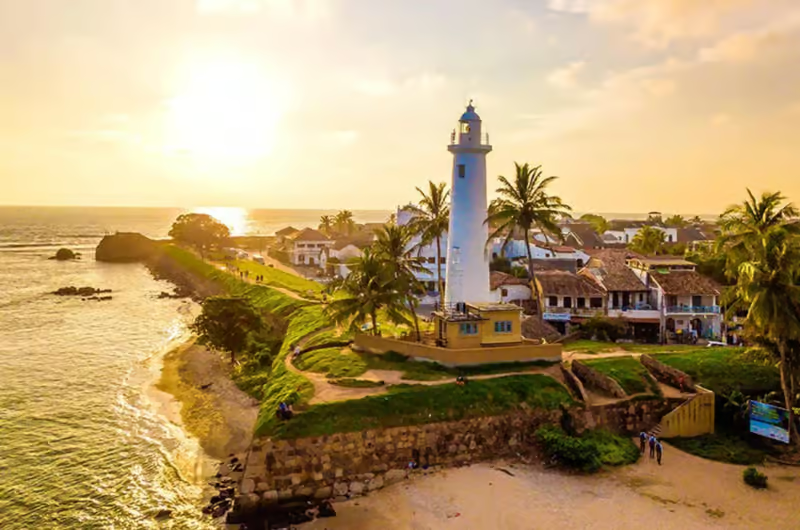
The most famous cricket photograph in Sri Lanka is taken from the ramparts of Galle Fort, looking down over the ground with the sea and the harbour beyond. The bastions near the clock tower give the best angle, and on a match day they fill with spectators.
Late afternoon, when the sun lowers over the sea, the light is warm and the shadows are long. Early morning, before play, the ground is quiet and the light soft.
Lankan Stays & Trails often suggests a walk along the ramparts at the end of a day's play, when the light is at its best.
- →Ramparts near the clock tower.
- →Late afternoon for warm light.
- →Early morning for a quiet ground.
Under lights
Day-night matches at the R Premadasa Stadium in Colombo, Pallekele and Dambulla make dramatic photographs, with the floodlights against a dark sky and a full crowd. Phones with night mode handle this well; with a camera, use a fast lens, a higher ISO and keep still.
The moment the lights take over from the sunset, around 6 to 7 pm, gives the best mix of colour in the sky and light on the field.
Fast action under lights is hard to freeze, so focus on the crowd, the ground and the atmosphere rather than every ball.
- →Phone night mode works well.
- →Sunset to lights is the best moment.
- →Capture the crowd as well as the play.
Photographing people
Sri Lankan fans are usually happy to be photographed, and many will ask for photos with visiting Australians. Ask first, especially with families and children, and show them the picture afterwards.
Outside the ground, ask before photographing monks, and never pose with your back to a Buddha statue, which is considered disrespectful. Avoid photographing military sites, police and security checkpoints.
A friendly gesture and a smile usually get a yes.
- →Ask before photographing people.
- →Never pose with your back to a Buddha.
- →No photos of military or security sites.
Protecting your gear
Heat, humidity and rain are hard on cameras. In a mid-year tour, carry a rain cover or a dry bag for showers in Galle and Colombo. Moving from air-conditioned rooms into humid air causes lenses to fog, so let the camera warm up in its bag first.
Carry spare batteries and memory cards, as long days drain them, and a power bank for your phone. Keep gear out of direct sun when not in use.
Drones need permission to fly in Sri Lanka and are not permitted at or near grounds during matches.
- →Rain cover for mid-year tours.
- →Let lenses warm up to avoid fog.
- →Spare batteries and cards.
Shots worth taking
Beyond the play, look for the band in the stands, fans in face paint, food stalls, the scoreboard, the fort's walls and the sea. A sequence from arrival to stumps tells the story of the day better than any single shot.
Before and after the match, the streets around the ground are full of colour too: flag sellers, tuk-tuks decked in team colours, families heading in with picnic bags. A few shots of the walk to the gate round out the story.
Frequently asked questions
Can you bring a camera to the cricket in Sri Lanka?
Phones and compact cameras are almost always allowed at Sri Lankan grounds, and many fans bring mirrorless cameras with modest zoom lenses. Large telephoto lenses, tripods and professional equipment are often restricted to accredited media. Check the ground and ticket rules before you go.
Where is the best place to photograph Galle cricket ground?
The ramparts of Galle Fort, especially the bastions near the clock tower, give the classic view of the ground with the sea and harbour beyond. Late afternoon light is warm and flattering; early morning is quiet and soft.
How do you photograph cricket under lights?
Use your phone's night mode or a camera with a fast lens and a higher ISO, and keep still. The best moment is around sunset, when the floodlights take over and the sky still has colour. Focus on the ground and the crowd rather than freezing every ball.
Can you fly a drone over a Sri Lankan cricket ground?
No. Drones need permission to fly in Sri Lanka and are not permitted at or near grounds during matches. Flying one without approval can lead to confiscation and fines. Leave the drone at home or check the rules carefully before bringing it.
Is it OK to photograph Sri Lankan fans?
Yes, most Sri Lankan fans are happy to be photographed, and many will ask for photos with visiting Australians. Ask first, especially with families and children, and show them the picture afterwards. A smile and a gesture usually get a yes.
How do you protect a camera from rain and humidity in Sri Lanka?
Carry a rain cover or a dry bag, especially in a mid-year tour. Let the camera warm up in its bag after leaving an air-conditioned room, to avoid lens fog. Keep gear out of direct sun and carry silica gel packs in your bag.
What should you avoid photographing in Sri Lanka?
Avoid photographing military sites, police and security checkpoints. Never pose with your back to a Buddha statue, and ask before photographing monks. At the ground, do not record play for commercial use, as broadcast rights are protected.