
Quick answer
In Sri Lanka, always ask permission before photographing a person, especially monks, workers and children, rather than shooting candidly the way street photography norms in the US might allow. Most archaeological and religious sites, including Sigiriya and active temples, restrict or ban drones outright and may charge extra or require prior permission for tripods and professional camera gear, so confirm the current rules at the ticket counter on arrival. Never pose with your back to a Buddha statue, and photograph wildlife from a respectful distance rather than approaching for a closer shot.
Key takeaways
- Asking permission before photographing a person, particularly monks, workers and children, is expected in Sri Lanka, a stricter norm than typical candid street photography in the US.
- Drones are restricted or banned outright at most archaeological and religious sites, including Sigiriya, and flying one without checking current rules can result in confiscation.
- Tripods and professional-looking camera gear sometimes require an extra fee or advance permission at ticketed sites; confirm this at the entrance rather than assuming.
- Posing with your back to a Buddha statue for a photograph is considered seriously disrespectful at every Buddhist site, regardless of how casual the setting looks.
- Wildlife photography in national parks such as Yala and Wilpattu is done from the vehicle at a respectful distance, never by approaching an animal for a closer shot.
Asking before you photograph people
Photographing a person in Sri Lanka, whether a monk at a temple, a worker in a tea field, or a child in a village, works best with a quick, polite request first, a habit less automatic in US street photography culture where candid shots of strangers in public are broadly accepted. A smile, a gesture toward the camera, and a moment's pause for a yes or no covers almost every situation.
Children specifically deserve extra caution: photographing a child without a parent or guardian's clear consent is best avoided altogether, regardless of how charming the moment looks through the viewfinder.
- →Ask before photographing any person, using a gesture toward the camera if there's a language gap.
- →Never photograph a monk without asking first, and expect some to decline politely.
- →Avoid photographing children without a parent or guardian's clear, visible consent.
Camera rules at temples and sacred sites
Photography is generally permitted in the outer grounds of most Sri Lankan temples, but inner shrine rooms and specific statues sometimes prohibit cameras entirely, marked by a sign at the entrance rather than a verbal warning. Checking for a posted sign before raising a camera avoids an awkward correction from temple staff.
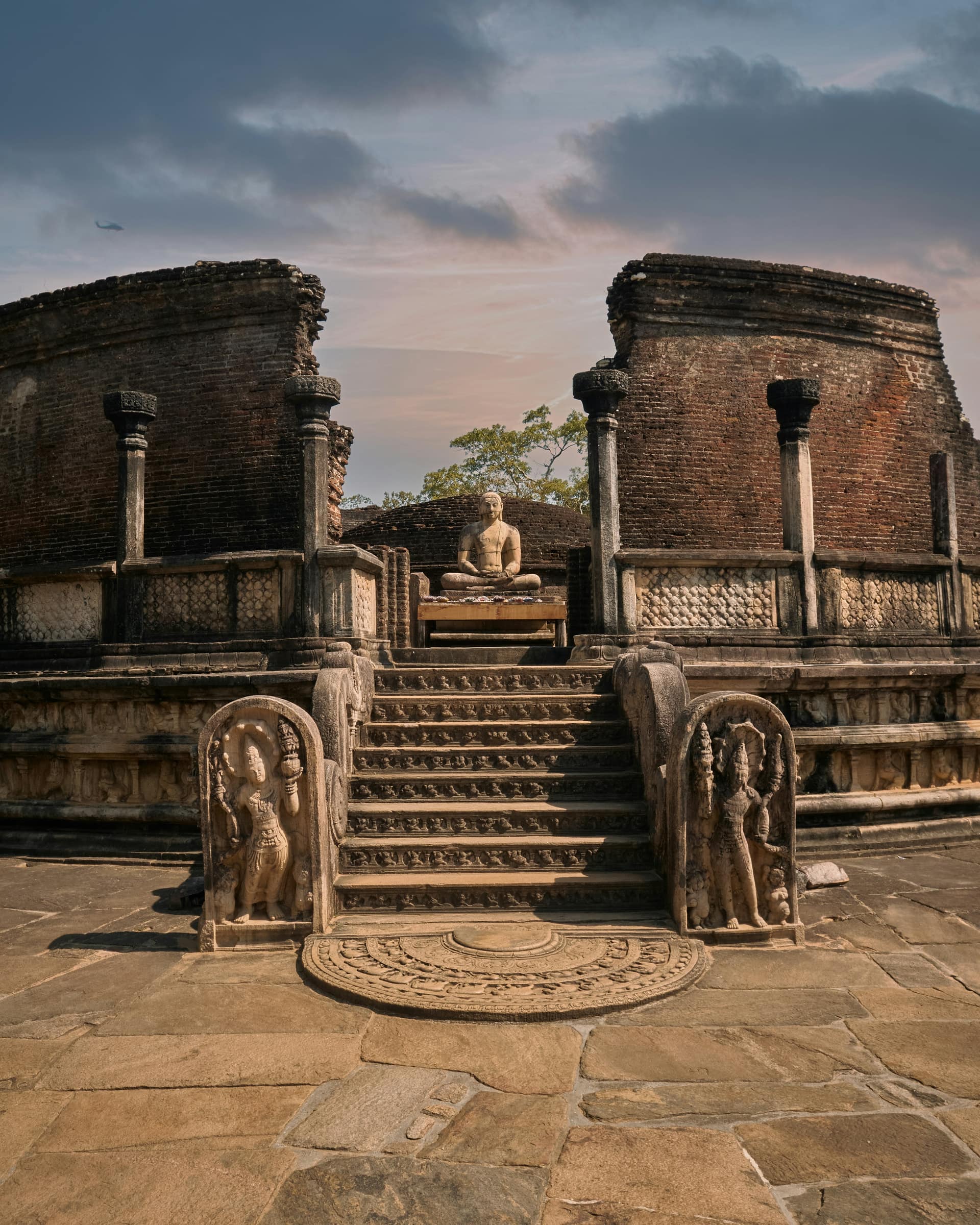
The rule that matters most across every site: never pose with your back to a Buddha statue for a photograph. It's treated as a serious offence rather than a minor faux pas, and it's the single most common photography mistake American visitors make without any intent to disrespect the site.
Drones, tripods and ticketed archaeological sites
Sigiriya, Dambulla and most other ticketed archaeological sites either ban drones outright or require advance permission from the relevant heritage authority, and flying one without clearance risks confiscation of the equipment as well as the footage. Rules shift periodically, so confirm the current drone policy before travel rather than relying on older trip reports.
Tripods and larger, more professional-looking camera setups can also attract an additional fee or a separate permit requirement at some ticketed sites, distinct from the standard entry ticket. Asking at the ticket counter on arrival is the reliable way to confirm what applies on the day.
- →Assume drones are restricted or banned at ticketed archaeological and religious sites until confirmed otherwise on arrival.
- →Check whether tripods or professional camera gear require an extra fee or permit before setting up.
- →Confirm current photography rules at the ticket counter rather than relying on older online reports.
Wildlife photography etiquette
Wildlife photography in Sri Lanka's national parks, Yala and Wilpattu chief among them, is done from within the safari vehicle at a respectful distance, never by approaching an animal on foot for a closer angle. Guides and drivers position vehicles for a clear shot without crowding wildlife, and following their lead rather than requesting a closer approach is both safer and more respectful.
Flash photography is generally discouraged around wildlife, particularly nocturnal species and birds, since it can startle or disorient animals unnecessarily for the sake of a single image.
Why the extra step is worth it
A moment spent asking permission or checking a sign rarely costs the shot, and it consistently changes the interaction from transactional to genuinely warm, people photographed with consent tend to offer better, more natural expressions than those caught off guard. It also avoids the handful of publicised incidents where careless photography at a sacred site led to a visitor being asked to leave.
This applies as much to phone cameras as to dedicated equipment. The etiquette is about the act of photographing without consent, not the size of the camera doing it.
Planning photography into the itinerary
Building in a little extra time at each major site to ask, check signage, and confirm drone or tripod rules avoids most friction without meaningfully cutting into the visit itself. Our guides brief every guest on photography and temple etiquette together, since the two overlap at nearly every cultural stop on a typical Sri Lanka itinerary.
For the fuller etiquette expected once inside a Buddhist site, including conduct around monks and the donation box, see our guide to behaving at Buddhist sites in Sri Lanka.
Frequently asked questions
Is it OK to take photos of people in Sri Lanka?
Ask first, especially with monks, workers and children. Candid street photography of strangers, common in the US, is less broadly accepted in Sri Lanka, and a quick, polite request usually gets a yes without costing the shot.
Can you fly a drone at Sigiriya?
Generally no without advance permission from the relevant heritage authority; most ticketed archaeological and religious sites restrict or ban drones outright. Rules shift periodically, so confirm the current policy before travel rather than assuming an older report still applies.
Can you take photos inside Sri Lankan temples?
Usually yes in the outer grounds, but inner shrine rooms sometimes prohibit cameras, marked by a posted sign. The rule that applies everywhere is never posing with your back to a Buddha statue, which is considered seriously disrespectful.
Do you need a permit for a tripod in Sri Lanka?
At some ticketed archaeological sites, yes, tripods and professional-looking camera gear can require an extra fee or separate permission distinct from the standard entry ticket. Confirming at the ticket counter on arrival is the reliable way to check what applies.
Is it rude to photograph monks in Sri Lanka?
It's rude to photograph a monk without asking first. Many monks are happy to be photographed once asked, but treating the moment as candid or incidental, without a request, is read as inconsiderate rather than simply opportunistic.
How close can you get to wildlife for photos in Sri Lanka?
Photography is done from within the safari vehicle at a respectful distance in parks like Yala and Wilpattu, never by approaching on foot. Guides position the vehicle for a clear shot, and following their lead is both safer and more respectful.
Is it OK to photograph children in Sri Lanka?
Only with a parent or guardian's clear, visible consent. Photographing a child without permission is best avoided altogether, regardless of how appealing the moment appears, and this is one of the firmer etiquette lines to observe.