
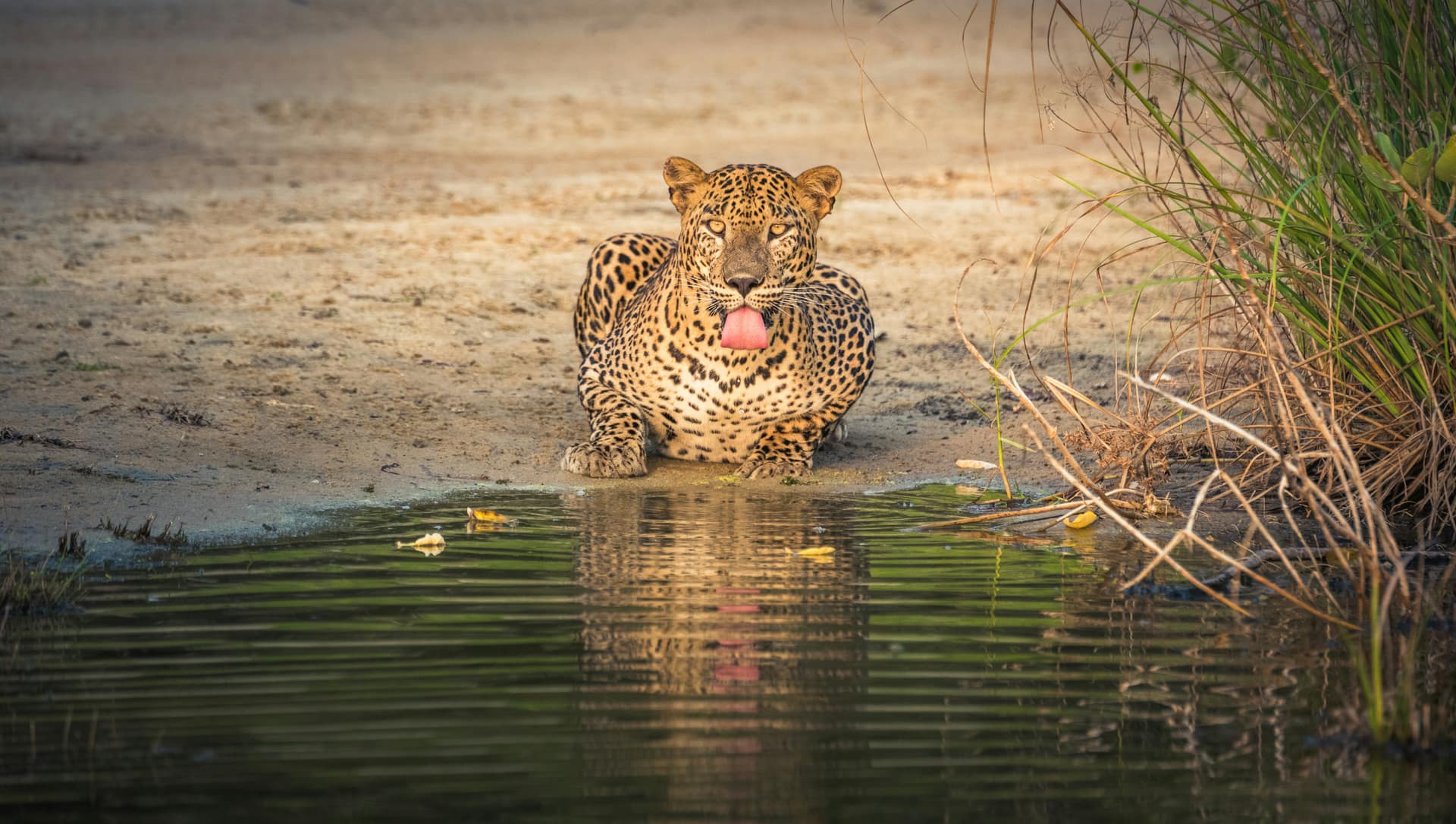
Quick answer
A private dry-zone jungle walk in Sri Lanka takes place on foot in the buffer zones and community forest areas bordering national parks such as Yala or Wilpattu, rather than inside the parks themselves where walking is generally restricted, guided by an experienced tracker trained to read pugmarks, scat and alarm calls. Walks typically run two to three hours in the cooler morning hours, offering a slower, more attentive way to understand the same dry-zone scrub habitat explored by vehicle elsewhere in a safari itinerary.
Key takeaways
- Walking is generally restricted inside Sri Lanka's core national park areas for safety reasons, so guided jungle walks take place instead in buffer zones, community forests and private reserve land bordering the parks.
- An experienced tracker reads pugmarks, scat, scratch marks and alarm calls from deer and monkeys, skills far easier to apply and explain on foot at a slow pace than from a moving vehicle.
- Walks typically run two to three hours in the cooler morning hours, when animal activity and animal sign are both easier to find before the day's heat sets in.
- This is a genuinely different register of wildlife experience from a jeep safari, focused on reading a landscape's recent history, what passed through overnight, rather than seeking a direct sighting of a specific animal.
- Safety briefings and strict guide instructions (staying close, moving quietly, no sudden movement) matter more on foot than in a vehicle, and a private walk allows a guide's full attention on a single small group.
Why walking happens outside the parks themselves
Walking is generally restricted inside the core areas of Sri Lanka's national parks for safety reasons, given the presence of potentially dangerous wildlife such as elephants and leopards. Guided jungle walks instead take place in buffer zones, community forest areas and private reserve land bordering parks such as Yala or Wilpattu, where controlled, guided access on foot is permitted.
These buffer areas share much of the same dry-zone scrub habitat as the parks proper, so the walk still explores genuinely wild terrain, just approached differently and with different safety protocols than a vehicle safari.
What a tracker does differently on foot
On foot, a tracker can point directly to pugmarks in soft ground, scratch marks on tree bark, scat identifying a recent animal's presence, and interpret alarm calls from deer and monkeys with far more precision than is practical from a moving vehicle.
The result is less about seeing a specific animal and more about reading the landscape's recent history: what passed through overnight, where it was headed, and what that suggests about current movement patterns in the area.
Timing and typical walk length
Walks typically run two to three hours, scheduled for the cooler morning hours when animal activity and fresh sign are both easier to find before the day's heat sets in and reduces movement.
A slow, deliberate pace is standard, since the goal is careful observation rather than covering distance, closer in spirit to the pace of a rainforest walk than a fast-moving safari drive.
- →Typical duration: two to three hours, in the cooler morning window.
- →Pace: slow and deliberate, prioritising observation over distance covered.
- →Group size: kept small, generally private, given the safety considerations of walking in wild terrain.
Safety and guide instructions on a walking safari
Safety briefings matter more on foot than in a vehicle: staying close to the guide, moving quietly, avoiding sudden movement, and following instructions immediately if an animal is encountered at closer range than planned are all standard practice.
A private walk, rather than a larger group, allows a guide's full attention on a single small party, generally the safer and more attentive arrangement for this kind of experience.
Fitting a jungle walk into a safari-focused itinerary
A dry-zone jungle walk works well as a complement to, rather than a replacement for, a vehicle safari at Yala or Wilpattu, adding a different, more detailed perspective on the same habitat across a two or three-night wildlife stop.
It suits travellers who want a deeper, more attentive engagement with the landscape itself, not only the animals within it, alongside the more conventional safari drives that form the core of a wildlife-focused stay.
Frequently asked questions
Can you walk inside Sri Lanka's national parks?
Generally no. Walking is restricted inside the core areas of parks such as Yala and Wilpattu for safety reasons, given the presence of potentially dangerous wildlife. Guided walks instead take place in buffer zones and community forest areas bordering the parks.
What does a jungle walk tracker actually do?
An experienced tracker reads pugmarks, scat, scratch marks and alarm calls from deer and monkeys, interpreting a landscape's recent wildlife activity in far more detail than is practical to explain from a moving vehicle.
How long does a private jungle walk take?
Typically two to three hours, scheduled for the cooler morning hours when animal activity and fresh sign are both easier to find, at a slow, deliberate pace focused on observation.
Is a jungle walk safe?
With an experienced guide, clear safety briefings and small group sizes, yes, though it carries different considerations from a vehicle safari, and following the guide's instructions closely matters more on foot.
Is a jungle walk a replacement for a jeep safari?
No, it works best as a complement. A vehicle safari inside a park such as Yala or Wilpattu covers different, protected terrain, while a jungle walk in the buffer zone offers a slower, more detailed perspective on similar habitat.
What should I wear for a dry-zone jungle walk?
Sturdy closed shoes, light long trousers and a hat are sensible, along with sun protection and water, since the walk takes place in open, exposed scrub terrain during the warmer daylight hours.
Does Lankan Stays & Trails arrange private jungle walks?
Yes. We arrange private guided walks with experienced trackers in buffer zones near Yala and Wilpattu, added as a complement to vehicle safaris within a wildlife-focused stay.