
Quick answer
A private tea-estate experience in Sri Lanka typically combines a one- to two-hour guided walk through the tea rows, a working factory tour showing withering, rolling and drying, and a private tasting of two or three grades of Ceylon tea, usually costing roughly USD 15 to 40 per person. Nuwara Eliya, Ella and the estates around Kandy each offer this, and a small number of restored colonial tea-estate bungalows let couples stay overnight on the plantation itself rather than visiting for an afternoon.
Key takeaways
- A typical guided estate walk runs one to two hours and covers how tea is picked, with a private guide explaining the difference between the top two leaves and a bud used for premium tea and coarser picking used for lower grades.
- Factory tours show the full process from withering to rolling, oxidation and drying, and most working factories in the hill country offer a tour alongside their tasting room.
- A private tasting typically covers two or three grades, from a lighter high-grown tea to a stronger low-grown variety, with a guide explaining the difference in altitude and processing.
- Rough costs run USD 15 to 40 per person for the walk, tour and tasting combined, separate from any overnight stay at a tea-estate bungalow.
- A small number of restored colonial-era tea-estate bungalows across the hill country let couples sleep on the plantation itself, typically with home-style meals included rather than a restaurant menu.
The guided walk and factory tour
A tea-estate walk for couples typically starts among the rows themselves, with a private guide, often a tea picker or estate worker, explaining how the top two leaves and a bud are selected by hand for the finest grades while coarser picking goes into lower-grade tea. The walk usually lasts one to two hours and covers a meaningful stretch of the estate, with views back over the surrounding hills built into the route.
The factory tour that typically follows shows the full production process: withering the leaf to reduce moisture, rolling to release the leaf's natural oils, oxidation (the step that turns green leaf into black tea), and final drying and grading. Most working factories in the hill country run these tours through the working day, so a couple sees the actual machinery in use rather than a static museum display.
Some estates limit factory access on certain days for operational reasons, so confirming the tour is running on the day planned, rather than assuming it, avoids disappointment.
- →Walk: one to two hours through the tea rows, with picking technique explained by a working guide.
- →Factory tour: withering, rolling, oxidation and drying shown as a live working process.
- →Confirm the factory tour is running on the planned day, since access can vary.
The private tasting
A private tasting typically presents two or three grades of Ceylon tea side by side, commonly a lighter, more floral high-grown tea from the cooler upper estates and a stronger, maltier low-grown tea from lower altitude, letting a couple taste the difference altitude and processing make on the same basic leaf. A good tasting host explains grading terms such as orange pekoe in plain language rather than assuming prior knowledge.
Couples who enjoy the tasting often buy a small quantity of loose tea directly from the estate shop afterwards, which tends to be fresher and more specific to that estate than tea bought later at an airport or general souvenir shop.
Staying at a restored tea-estate bungalow
A small number of colonial-era planter's bungalows across the hill country have been restored as small guest stays, typically with just a handful of rooms, wood-panelled interiors, and views directly over the estate they sit on. Staying overnight here, rather than visiting a working estate for an afternoon, lets a couple wake up inside the landscape they toured the previous day.
Meals at these bungalows are commonly home-style, taken in a shared dining room or on a veranda, and sourced from the estate and surrounding area, which is a different, quieter register from a resort restaurant menu. Log fires are common in the evenings, since the hill country cools noticeably after dark.
This kind of stay suits a couple who want one deliberately slow, low-key night mid-itinerary, rather than a base for extensive day-to-day sightseeing, since most bungalows sit some distance from other attractions.
- →Restored tea-estate bungalows: small room counts, wood-panelled interiors, estate views.
- →Meals are typically home-style, served communally rather than from a restaurant menu.
- →Best suited to one slow, contemplative night rather than a multi-day sightseeing base.
Where to do this
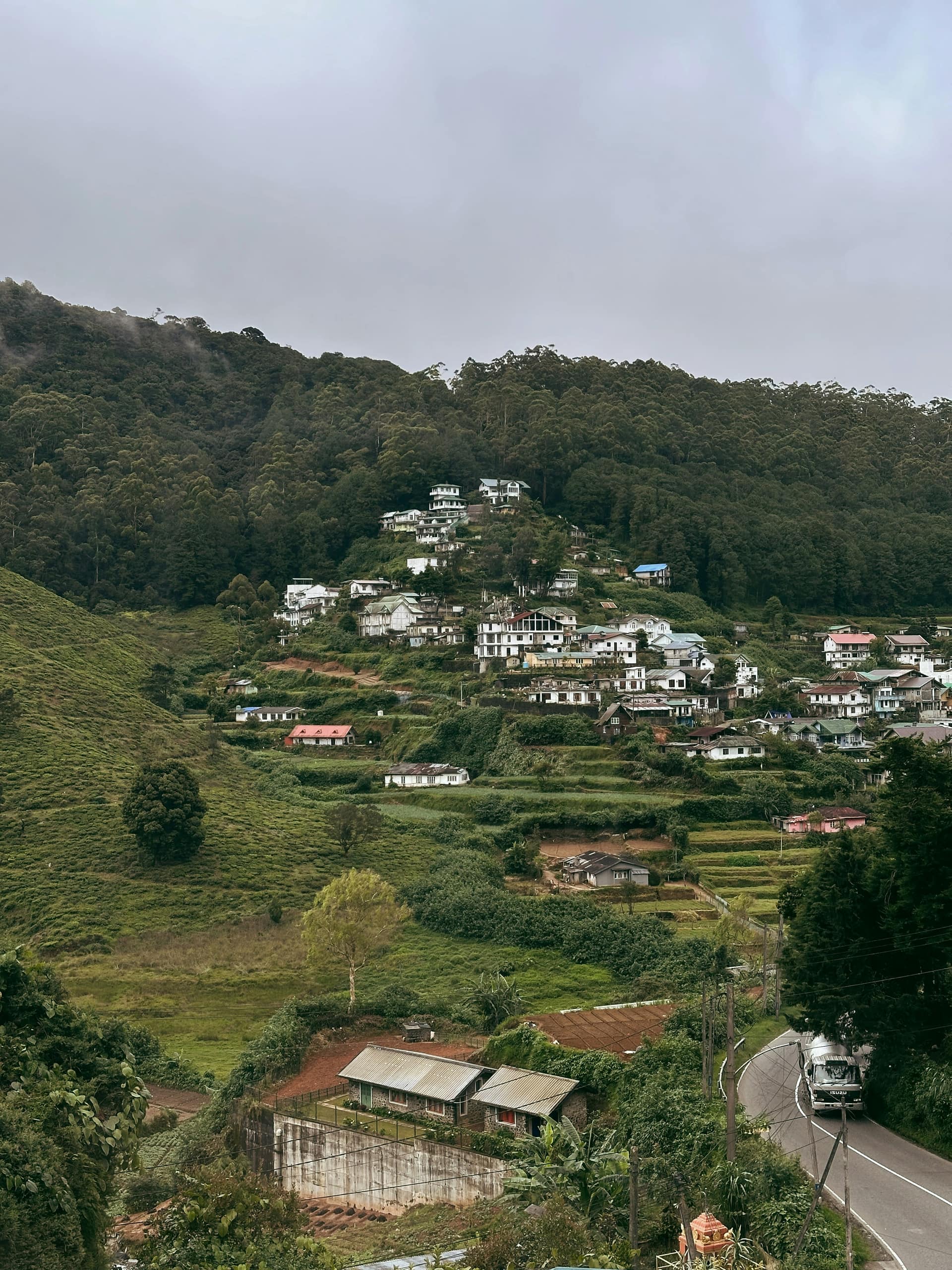
Nuwara Eliya sits at the highest altitude of the main hill-country tea areas and produces some of Ceylon tea's most prized high-grown leaf, with several estates offering visitor walks and tours close to the town itself. Its cooler climate, often described locally as reminiscent of a temperate country, adds to the atmosphere of the walk.
Ella has a more compact, walkable concentration of tea estates close to the town, making it an easy half-day addition to a stay built primarily around the Nine Arch Bridge and the surrounding hikes. Kandy's surrounding hills offer a lower-altitude alternative, useful for couples based there rather than travelling further up into the hills.
- →Nuwara Eliya: highest altitude, prized high-grown tea, cooler climate.
- →Ella: compact and walkable, easy to combine with the town's other hikes.
- →Kandy: lower-altitude estates, convenient for couples based in the city itself.
Fitting a tea-estate day into the trip
A tea-estate walk, tour and tasting fits comfortably into a single morning or afternoon and pairs naturally with a hill-country stay that already includes the Kandy to Ella train, since both experiences draw on the same landscape. Couples wanting a full slow day should build in the bungalow overnight rather than treating tea as a two-hour stop between other activities.
Lankan Stays & Trails arranges both the day visit and the overnight tea-estate bungalow stay as part of a wider hill-country itinerary, matched to how much time a couple wants to spend at this particular pace.
Frequently asked questions
How much does a tea-estate tour cost in Sri Lanka?
A guided walk, factory tour and tasting combined typically costs roughly USD 15 to 40 per person, separate from any overnight stay at a tea-estate bungalow. Confirm the current rate directly with the estate, since it varies by location and inclusions.
What is the best place for a tea-estate tour in Sri Lanka?
Nuwara Eliya offers the highest-altitude estates and some of Ceylon tea's most prized leaf, while Ella has a more compact, walkable concentration close to town. Kandy's surrounding hills provide a lower-altitude alternative for couples based in the city.
Can you stay overnight at a tea estate in Sri Lanka?
Yes, a small number of restored colonial-era planter's bungalows across the hill country offer overnight stays directly on working estates, typically with a handful of rooms and home-style meals. These suit one slow, contemplative night rather than a multi-day sightseeing base.
What happens on a tea factory tour in Sri Lanka?
A typical tour shows the full production process: withering the leaf, rolling, oxidation, which turns green leaf into black tea, and final drying and grading. Most working factories in the hill country run tours through the working day alongside a tasting room.
What is the difference between high-grown and low-grown Ceylon tea?
High-grown tea, from the cooler upper estates around Nuwara Eliya, tends to be lighter and more floral, while low-grown tea from lower altitude is generally stronger and maltier. A private tasting typically presents both side by side so the difference is easy to taste.
How long does a tea-estate walk take?
A typical guided walk through the tea rows lasts one to two hours, often followed by a factory tour and tasting that extends the visit to roughly half a day in total. Confirm timing with the specific estate, since walk length varies by terrain and route.
Is a tea-estate visit worth it for couples who don't drink tea?
Yes, most couples find the walk and factory tour interesting on their own terms, since the appeal is as much the scenery and process as the tasting itself. The tasting portion can generally be shortened or skipped if preferred.