
Quick answer
Privileged access to Sri Lanka's cultural sites is genuinely arrangeable in some forms, particularly early entry ahead of general opening at sites such as Sigiriya, private guided visits to temples during normal hours, and respectful, pre-arranged meetings with artisans or craftspeople. It is not generally possible to arrange private after-hours access to a functioning religious site or a guaranteed audience with a senior monk, since these are living places of worship governed by their own schedules, not commercial venues that can be booked exclusively.
Key takeaways
- Early entry ahead of general opening, most notably at Sigiriya, is a genuinely arrangeable form of privileged access that avoids the bulk of day-tour crowds.
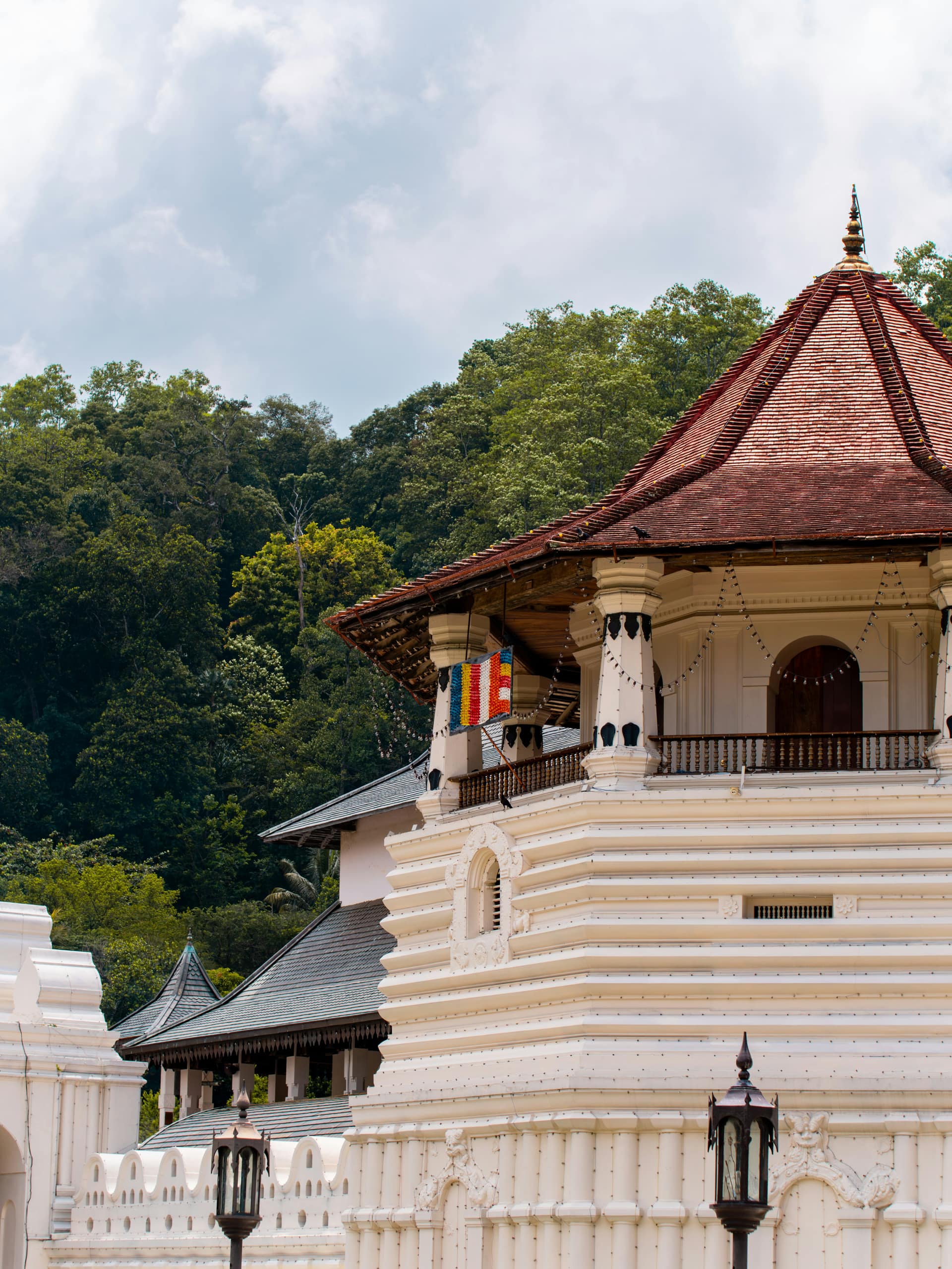
- A private guided visit to a temple such as Kandy's Temple of the Tooth, with a knowledgeable guide explaining ritual and history, is arrangeable during normal opening hours but does not mean exclusive after-hours access to a working religious site.
- Meeting artisans and craftspeople, mask carvers, batik workers, traditional weavers, can be arranged respectfully and is one of the more genuinely rewarding forms of privileged access on a luxury trip.
- Poya, the monthly full moon religious holiday, changes access and behaviour at many temples, and dates shift each year with the lunar calendar, so they should always be checked against travel dates.
- A senior monk's time or an invitation into a monastery's private quarters cannot be purchased or guaranteed in advance, and any operator claiming otherwise should be treated with caution.
What genuinely privileged access means here
The phrase privileged access covers a wide range of things in luxury travel marketing, and in Sri Lanka it is worth separating what is a genuine, respectfully arranged logistical advantage from what would require treating a living religious site as a private venue. The honest version is mostly about timing, guiding quality and respectful introductions, not about buying exclusivity over a sacred space.
This distinction matters for a Swiss traveller weighing a luxury trip specifically because Sri Lanka's most significant cultural sites, the Temple of the Tooth, Sigiriya, the ancient stupas of Anuradhapura, remain active places of worship, pilgrimage or heritage significance, not attractions that operate purely on a commercial booking system.
Early access that genuinely works
Early entry ahead of general opening is the clearest and most reliable form of privileged access in Sri Lanka, and it is most commonly arranged at Sigiriya, where a pre-dawn or early-morning ascent avoids both the day's heat and the bulk of tour-group traffic that builds through the late morning. This requires advance arrangement through a permitted operator and is genuinely worth the earlier start.
Similar early-morning timing can work well at other Cultural Triangle sites and at some temples during quieter parts of the day, though the degree of genuine exclusivity varies by site, and it should be treated as reduced crowding rather than a guarantee of having a landmark entirely to oneself.
- →Sigiriya: pre-dawn or early-morning entry, arranged through a permitted operator, is the most established form of early access on the island.
- →Other Cultural Triangle sites: early timing reduces crowds but does not guarantee exclusivity.
- →Temples during quieter hours: a knowledgeable guide can time a visit around the busiest ritual periods, though the temple itself remains open to all worshippers.
Private guided visits to temples and heritage sites
A private guide who can explain the history, ritual and architecture of a site such as the Temple of the Tooth in Kandy, or the ancient city of Anuradhapura, adds genuine depth to a visit and is straightforward to arrange, distinct from joining a scheduled group tour. This is where most of the real value in privileged cultural access actually sits: the depth and pacing of the visit, rather than any claim of exclusive entry.
Correct terminology and respectful behaviour matter here: removing shoes and hats before entering, dressing with shoulders and knees covered, and following a guide's direction on where photography is and is not appropriate, since some inner sanctums and ritual areas are closed to visitors regardless of arrangement.
Meeting artisans and craftspeople
Introductions to mask carvers, batik artists, traditional weavers or a temple's resident craftspeople, arranged respectfully and ideally with some form of fair compensation or purchase involved, are one of the more genuinely rewarding forms of privileged access available on a luxury trip. These meetings tend to work best when kept small, a private visit rather than a group stop, and when there is genuine time for conversation rather than a rushed photo opportunity.
This is an area where responsible framing matters: a visit should support the craftsperson's livelihood and be conducted on their terms, not treated as a curiosity to observe. A good local guide or driver-guide will generally know which introductions are genuinely welcomed rather than merely tolerated for tourism.
What is honestly not arrangeable
After-hours private access to a functioning religious site, or a guaranteed audience with a senior monk, cannot be purchased or reliably arranged, since these are living institutions governed by their own religious calendar and internal decisions, not commercial venues with a booking system. Any operator claiming to guarantee this kind of access should be treated with real scepticism.
What can genuinely happen, an informal, respectful encounter with a monk willing to talk during normal visiting hours, is possible but circumstantial, not something that can be promised in advance. Setting expectations honestly before the trip avoids disappointment that a purchased itinerary somehow failed to deliver something it was never truly able to guarantee.
- →Not arrangeable: exclusive after-hours access to a working temple or monastery.
- →Not arrangeable: a guaranteed audience with a senior monk.
- →Genuinely possible but circumstantial: an informal, respectful conversation during normal visiting hours, if a monk is willing.
Planning around poya days and site timing
Poya, the monthly full moon public holiday, brings different behaviour and, at some sites, different access rules, with larger numbers of local worshippers and, on occasion, restricted visitor access to certain areas. Poya dates shift each year with the lunar calendar, so they should always be checked against specific travel dates rather than assumed.
We at Lankan Stays & Trails plan cultural site visits around realistic timing, early entry where genuinely available, a private guide for depth, and honest expectations about what cannot be arranged, since trust in this part of a trip matters more than the promise of exclusivity that cannot actually be delivered.
Frequently asked questions
Can I get early access to Sigiriya before it opens to the public?
Pre-dawn or early-morning entry to Sigiriya can be arranged through a permitted operator and is the most established form of early access in Sri Lanka, avoiding both the heat and the bulk of later crowds. This should be arranged in advance rather than assumed on the day.
Can I arrange a private after-hours visit to a Sri Lankan temple?
Generally no. Sri Lanka's major temples are functioning religious sites governed by their own schedules, not commercial venues that can be booked exclusively. A private guided visit during normal opening hours is arrangeable, but exclusive after-hours access is not.
Can I meet a monk in Sri Lanka?
An informal, respectful conversation with a monk during normal temple visiting hours is possible but circumstantial, not something that can be guaranteed in advance. A guaranteed audience with a senior monk cannot be arranged or purchased.
What should I wear to visit a Sri Lankan temple?
Shoulders and knees covered, and shoes and hats removed before entering, is the standard rule at Buddhist and Hindu sacred sites, including the Temple of the Tooth in Kandy. A private guide can advise on any site-specific expectations.
Can I meet artisans and craftspeople in Sri Lanka?
Yes, respectfully arranged introductions to mask carvers, batik artists or traditional weavers are genuinely possible and are one of the more rewarding forms of privileged cultural access, particularly when kept small and conducted on the craftsperson's own terms.
What is poya and how does it affect temple visits?
Poya is Sri Lanka's monthly full moon religious holiday, bringing larger numbers of local worshippers and, at some sites, changed visitor access. Poya dates shift each year with the lunar calendar and should be checked against specific travel dates.
Is it worth paying extra for privileged cultural access in Sri Lanka?
It can be, particularly for genuinely arrangeable elements such as early entry to Sigiriya or a knowledgeable private guide, both of which meaningfully improve the depth and comfort of a visit. Claims of exclusive access to a living religious site should be treated with scepticism.