
Quick answer
A rain plan for a wildlife and beach holiday in Sri Lanka starts with flexibility: keep a spare morning at Mirissa for the whale boat, swap beach and safari days when storms hit, and remember that safaris still run in light rain, when animals are often active. Wet beach days suit Galle Fort's museums and cafés, a cooking class, an Ayurveda treatment or a tea estate visit. Rain in the dry season is usually short, often in the afternoon.
Key takeaways
- Safaris in Yala and Udawalawe run in light rain, and wildlife is often active afterwards.
- Whale boats are cancelled in rough seas, so a spare morning at Mirissa is the key protection.
- Rain on the south coast from December to April is usually short and often in the afternoon.
- Galle Fort, cooking classes, spas and tea estates make good wet-day alternatives.
- A private driver makes it easy to swap days when the forecast changes.
Principles of a rain plan
The principles of a rain plan for a wildlife and beach holiday are simple: protect the activities that depend on weather, keep spare time near them, and have wet-day alternatives ready. Whale watching is the most weather-dependent; safaris less so; beach days are the easiest to move.
The classic route already builds this in, with a back-up morning at Mirissa and beach days that can absorb changes. A driver who watches the forecast makes reshuffling easy.
Checking the marine forecast the evening before the whale boat, and asking the operator in the morning, saves a wasted early start. Good operators cancel when conditions are unsafe rather than heading out into heavy swell.
- →Protect: whale watching.
- →Spare time: a back-up morning at Mirissa.
- →Alternatives: indoor options for wet beach days.
Safaris in the rain
Safaris in the rain are often better than expected. Jeeps run in light rain, and many have roll-down covers. Animals are often active after a shower, and the light and colours can be beautiful. Heavy storms may shorten a drive, but complete cancellations are rare.
Yala's tracks can flood after heavy rain, and some sections close. Drivers know which routes are passable. Bring a light rain jacket and a waterproof bag for cameras.
The Yala in the rainy season page on this site covers wet-season safaris in more detail.
Rain also brings different animals out. Frogs, butterflies and birds become more active, and leopards sometimes rest on rocks to dry off after a shower. Some photographers prefer the dramatic skies and soft light of the wetter months.
- →Light rain: drives continue, animals active.
- →Heavy storms: drives may be shortened.
- →Bring: rain jacket, waterproof camera bag.
When the whale boat is cancelled
When the whale boat is cancelled, the spare morning saves the day. On the classic route, day eight at Mirissa is kept free before the move to Unawatuna, so a cancelled trip on day seven can move to day eight.
If both mornings are rough, operators usually refund or rebook. Snorkelling at Unawatuna or a lagoon boat trip offer other water-based wildlife.
Wet beach days
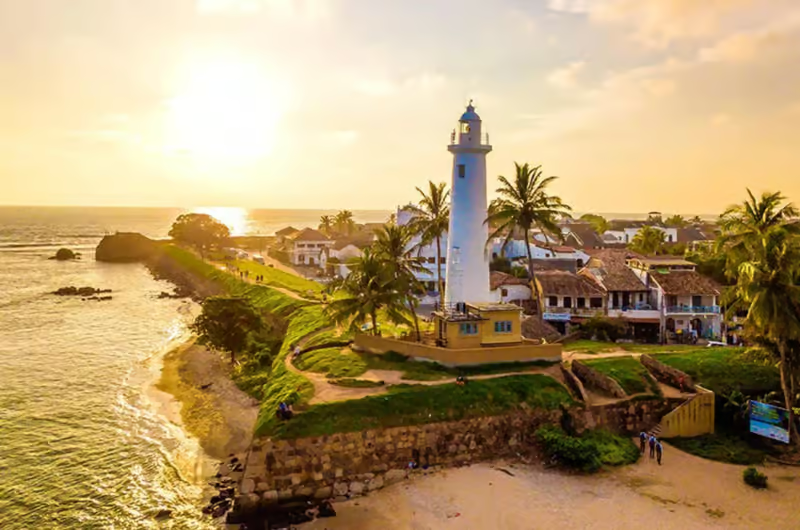
Wet beach days have plenty of alternatives on the south coast. Galle Fort's museums, galleries and cafés are a good half day. Cooking classes in Unawatuna and Mirissa teach rice and curry. Ayurveda treatments and spas are relaxing in the rain.
Inland, Handunugoda tea estate near Ahangama, the Kottawa rainforest and Mulkirigala rock temple near Tangalle make good outings when the beach is grey.
Lankan Stays & Trails drivers keep a list of wet-day options at each beach base and suggest them as the forecast changes.
Turtle watches at Rekawa usually go ahead in light rain, and nesting can continue in wet weather. Heavy storms may cancel the night, so a second evening at Tangalle is a useful back-up.
- →Galle Fort: museums, galleries, cafés.
- →Cooking classes and Ayurveda.
- →Tea estates and rainforest walks.
Rain by season
Rain by season on the route follows the monsoons. From December to April, the south coast is in its dry season, with occasional short showers. October and November are inter-monsoon months, with more frequent afternoon storms. From May to September, the south-west monsoon brings heavier rain to the south coast.
The best rain plan is choosing the right season: December to April for the south coast route, May to September for the east coast version.
Even in the wettest months, there are usually dry spells long enough for a drive or a swim.
- →December to April: dry, short showers.
- →October and November: afternoon storms.
- →May to September: monsoon on the south coast.
Frequently asked questions
Do safaris run in the rain in Sri Lanka?
Yes. Jeeps run in light rain, and wildlife is often active after a shower. Heavy storms may shorten a drive, and some tracks in Yala close after heavy rain, but complete cancellations are rare.
What happens if whale watching is cancelled?
Operators usually rebook you on the next available morning or refund. The classic wildlife and beach route keeps a spare morning at Mirissa for exactly this reason. Snorkelling is another option if the sea stays rough.
What can you do on a rainy day on the south coast?
Visit Galle Fort's museums and cafés, take a cooking class, enjoy an Ayurveda treatment, or head inland to a tea estate or the Kottawa rainforest. Rain in the dry season is usually short, so the beach may be back by afternoon.
Does it rain in Sri Lanka in February?
Rarely on the south coast. February is in the dry season for the south and west, with long sunny spells. Short showers are possible but uncommon. Pack a light rain jacket anyway.
Is October rainy on the south coast?
Often, yes. October is an inter-monsoon month, with frequent afternoon storms on both coasts. Mornings are often clear, so plan safaris and swims early. Indoor alternatives are worth planning. Sea conditions vary daily.
Should I buy travel insurance for weather?
Travel insurance that covers cancelled activities and missed connections is worth checking, especially in shoulder months. Most policies do not cover weather-related disappointment, but some cover prepaid activities that are cancelled.
Can the route be reversed if storms are forecast?
Yes. With a private driver, the order of the coast stops and the safari days can be swapped at short notice. That flexibility is one of the main advantages of a driver on this route.