
Quick answer
Yala's rainy season runs roughly October to January, during the north-east monsoon. Rain falls in heavy showers, often in the afternoon, rather than all day. The park turns green, waterholes refill, migrant birds arrive and visitor numbers are lower, especially in November. Wildlife spreads out, so leopards are harder to find, and some tracks can be muddy or closed. It suits birders, photographers who want green landscapes and travellers who value quiet over leopard odds.
Key takeaways
- Yala's rainy season runs roughly October to January, when the north-east monsoon brings most of the park's annual rain.
- Rain in Yala usually falls in heavy showers, often in the afternoon, so morning drives are usually possible.
- The rainy season turns Yala green and refills waterholes, which spreads wildlife out and makes leopards harder to find.
- Migrant birds arrive in Yala from roughly October, making the rainy season one of the best times for birding.
- Visitor numbers in Yala are lower in November and early December, before the Christmas holidays bring crowds back.
When the rainy season is in Yala
Yala National Park gets most of its rain from the north-east monsoon, roughly October to January. The first rains often arrive as the park reopens after its annual closure in mid-October, and the wettest weeks usually fall in November and December.
Rain in Yala comes in heavy showers rather than all-day downpours, often in the afternoon. Mornings are frequently dry, which is good news for dawn drives.
- →Season: roughly October to January.
- →Wettest: usually November and December.
- →Pattern: heavy showers, often in the afternoon.
How the rain changes Yala
The rains transform Yala. Brown scrub turns green, dry waterholes become lakes and the dust settles. Frogs call from every pool, peafowl display and the park smells of wet earth.
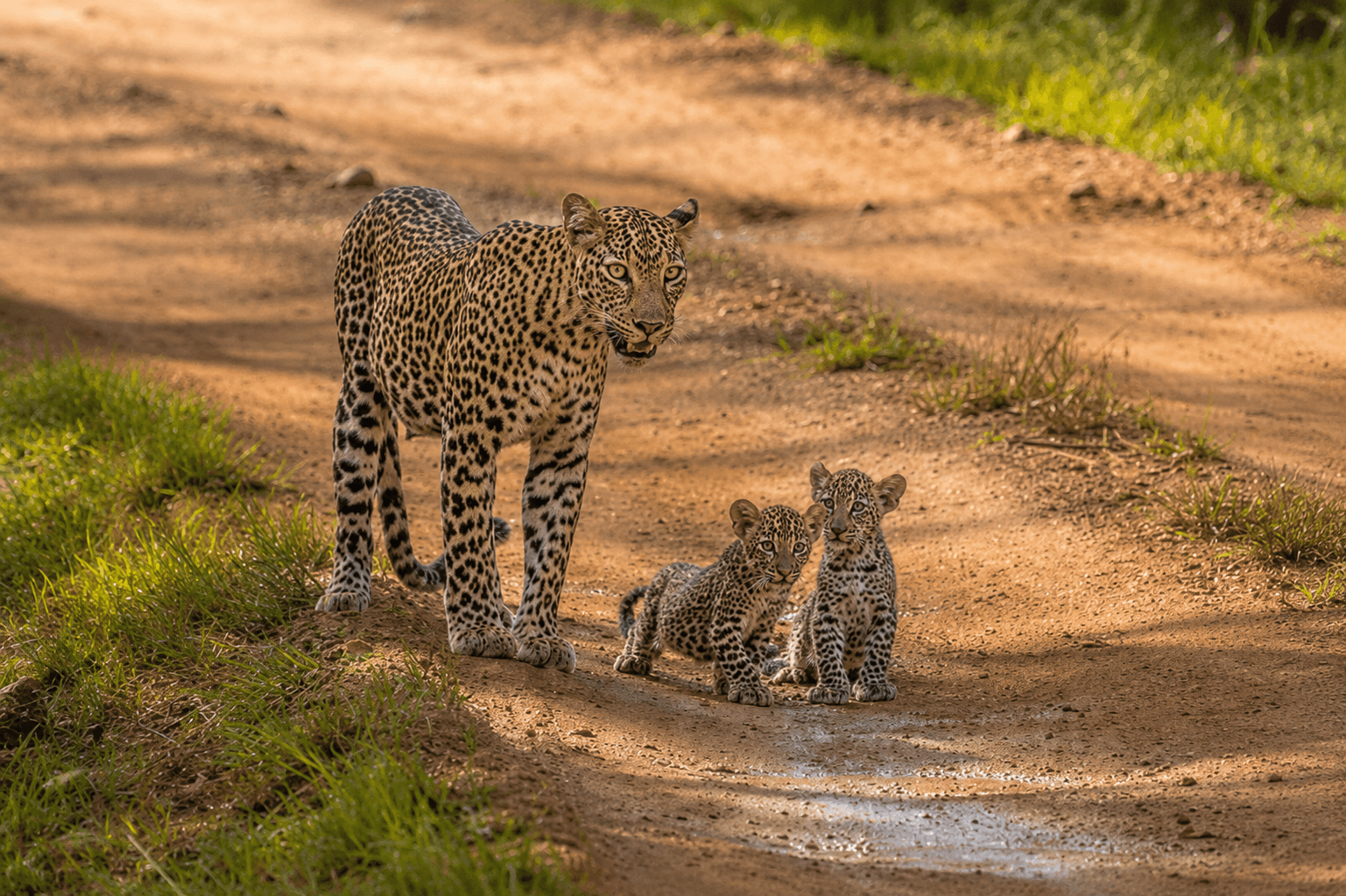
With water everywhere, animals no longer need to gather at a few waterholes, and they spread out into dense green scrub. Leopards are harder to find, and elephants and buffalo can be anywhere.
The case for a rainy-season safari in Yala
The rainy season has real advantages. Migrant birds arrive from roughly October, swelling numbers on the lagoons and in the scrub. Visitor numbers are lower, especially in November and early December, and the light after rain is clear and beautiful.
For photographers, green landscapes, dramatic skies and reflections in full waterholes make very different pictures from the dry season's dust.
- →Migrant birds from roughly October.
- →Fewer jeeps, especially in November.
- →Green landscapes and dramatic skies.
- →Cooler temperatures after rain.
The drawbacks of the rainy season
Leopard sightings are harder in the rainy season, because animals are dispersed and vegetation is thick. Some tracks become muddy or close after heavy rain, and an afternoon drive can be cut short by a downpour.
Open jeeps offer limited protection, so bring a light rain jacket and a cover for your camera. Mosquitoes are more active after rain, especially near lodges.
- →Leopards harder to find.
- →Some tracks muddy or closed.
- →Afternoon drives can be rained off.
- →More mosquitoes.
Who should visit Yala in the rainy season
The rainy season suits birders, photographers who want green landscapes, repeat visitors who have already seen leopards and anyone who values quiet over leopard odds. It suits less well first-time visitors who have come mainly for a leopard.
Lankan Stays & Trails books morning drives in the rainy season, when the weather is usually dry, and keeps afternoons flexible. Because Sri Lanka has two monsoons, the west and south coasts are in their best season at the same time.
Frequently asked questions
Is Yala good in the rainy season?
Yala is good in the rainy season for birds, green landscapes and quiet, but leopards are harder to find because animals spread out and vegetation is thick. It suits birders, photographers and repeat visitors more than first-timers hoping for a leopard.
Does it rain all day in Yala in November?
Usually not. Rain in Yala during the north-east monsoon falls in heavy showers, often in the afternoon, rather than all day. Mornings are frequently dry, so dawn drives usually go ahead. Some days are wetter than others.
Is Yala open in the rainy season?
Yes. Yala is open through the rainy season, roughly October to January, after the annual closure ends around mid-October. Some tracks may close temporarily after heavy rain, and drives can be cut short by downpours.
Can you see leopards in Yala in the rainy season?
Yes, but it takes more effort. With water everywhere, leopards and their prey spread out, and thick green vegetation hides them. Sightings still happen, especially on dawn drives, but two or three drives are more important than in the dry season.
What should I bring for a Yala safari in the rain?
Bring a light rain jacket, a waterproof cover or bag for your camera, insect repellent and a towel. Open jeeps offer limited protection, though many have a canopy. Afternoon drives are more likely to be rained off than morning ones.
Is the rainy season a good time for birding in Yala?
Yes, one of the best. Migrant birds arrive in Yala from roughly October and stay until around April, swelling numbers on the lagoons and in the scrub. Resident birds are breeding and displaying, and the green landscape makes a fine backdrop.