
Quick answer
Ritigala is a rewarding December visit for travellers who want a quiet, atmospheric site. The north-east monsoon brings showers, mostly in the afternoon, so the forest is lush and the streams and ancient bathing pond are full. Paths can be slippery and leeches appear after rain, so go in the morning, wear closed shoes and consider leech socks. The ruins take about two hours, and Ritigala fits easily between Sigiriya, Habarana and Anuradhapura.
Key takeaways
- December is Ritigala's green season, with lush forest and full streams.
- Showers fall mostly in the afternoon, so mornings are best.
- Paved paths get slippery and leeches appear after rain.
- The site is rarely crowded, even in late December.
- Ritigala is about 45 minutes from Habarana.
What you see at Ritigala
The monastery was used by the Pamsukulika monks, who wore rags taken from cemeteries and lived a life of strict simplicity. Unlike most monastic sites in Sri Lanka, Ritigala has almost no images or decoration. Instead there are elegant double platforms joined by stone bridges, meditation walks and a remarkable network of paved paths through the forest.
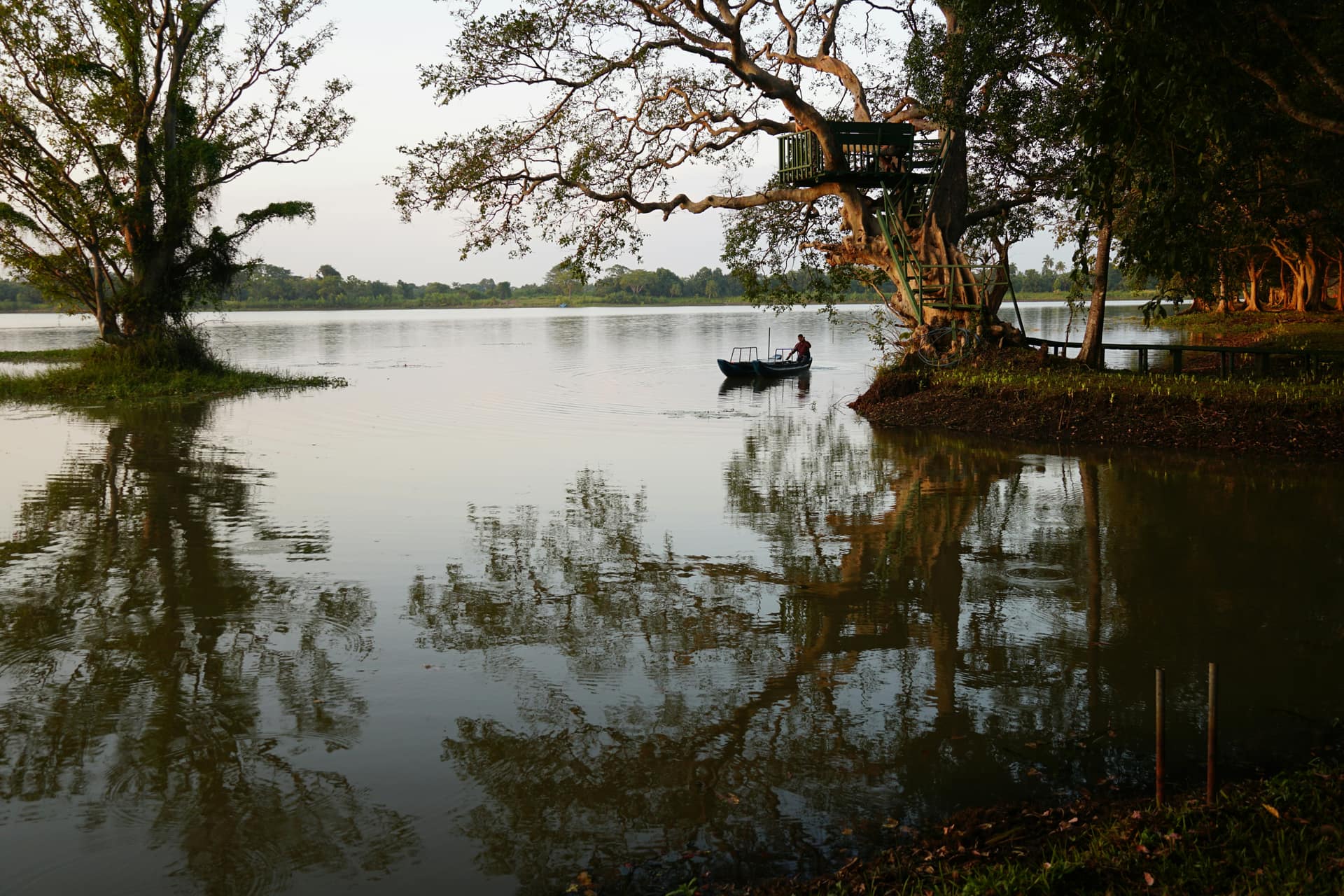
The visit starts at a large ancient pond, the Banda Pokuna, with stone steps leading down to the water. From there a paved path climbs gently through the trees to a series of platforms, a hospital building with stone baths and a stone grinding area. The forest and the ruins blend together in a way that is quite unlike the open sites of Polonnaruwa.
Ritigala is also a strict nature reserve, and only the monastery area at its base is open to visitors. The upper slopes, with their unusual plant life, are protected.
- →Banda Pokuna, the ancient pond.
- →Double platforms and stone bridges.
- →Paved meditation paths through the forest.
December weather and trail conditions
Like the rest of the north-central province, Ritigala receives its main rains from the north-east monsoon between October and January. December mornings are often bright and humid, and showers tend to arrive in the afternoon. The forest canopy offers some shelter in light rain but little in a heavy downpour.
After rain the paved paths and stone steps are slippery, and moss grows on the stones. Closed shoes with good grip are much better than sandals. The walk is not long or steep, but it is uneven in places, so take your time.
Leeches are active in the wet season, especially on damp ground near the streams. Leech socks or tucking trousers into socks helps, and a little salt or insect repellent makes it easier to remove any that attach. They are harmless, if unpleasant.
- →Mornings: usually the driest time.
- →Paths: slippery after rain.
- →Leeches: active, wear socks and closed shoes.
Timing and getting there
Ritigala is about 45 minutes from Habarana and around an hour from Sigiriya, reached by a minor road off the main Habarana to Anuradhapura highway. It works well as a morning visit on the way from Sigiriya to Anuradhapura, or as a half-day trip from a Habarana base.
Arrive early in the morning for the driest conditions and the best birdlife. The forest is home to many bird species, and monkeys are often seen near the pond. A local guide at the entrance can point out details of the ruins that are easy to miss.
There are few facilities at the site, so bring water and snacks. Allow about two hours for a relaxed visit, including the walk to the hospital building and back.
Crowds in December
Ritigala is one of the least visited sites in the Cultural Triangle, and that remains true in late December, when Sigiriya and Dambulla are at their busiest. You may share the forest with only a few other visitors, which adds to the sense of stillness that drew the monks here.
The planners at Lankan Stays & Trails often suggest Ritigala to December travellers who have seen the headline sites and want a quieter morning, especially on festive dates when the main rock fortresses are crowded.
Because the site is quiet, it is also respectful to keep voices low. It was built for meditation, and the atmosphere is part of what makes it special.
- →Rarely crowded, even at peak season.
- →Best for travellers who have seen the main sites.
- →Keep voices low in the forest.
Combining Ritigala with other places
A December day can combine Ritigala in the morning with an afternoon elephant safari at Hurulu or Kaudulla, both close by. Herds are more scattered in December than during the summer gathering, but sightings are still common.
Alternatively, continue to Anuradhapura after Ritigala and visit the great stupas in the late afternoon, when showers have often passed. Or return to Sigiriya and climb Pidurangala the next morning. Ritigala sits naturally in all of these routes.
- →Afternoon safari at Hurulu or Kaudulla.
- →Continue to Anuradhapura.
- →Back to Sigiriya for an early climb.
Frequently asked questions
Is Ritigala worth visiting in December?
Yes, for travellers who enjoy quiet, atmospheric sites. December is the green season, with lush forest and full streams, and very few visitors. Paths are slippery and leeches appear after rain, so go in the morning, wear closed shoes and consider leech socks.
How long does Ritigala take?
About two hours for a relaxed visit to the pond, platforms, paved paths and hospital building, plus the drive. Allow a half day from Habarana or Sigiriya. There are few facilities, so bring water and snacks.
Are there leeches at Ritigala in December?
Often, especially on damp ground after rain. Wear closed shoes and leech socks or tuck your trousers into your socks. Insect repellent or a little salt helps remove them. They are harmless, though unpleasant, and should not stop you visiting.
How far is Ritigala from Sigiriya?
About an hour by road, or around 45 minutes from Habarana. Ritigala sits just off the Habarana to Anuradhapura road, so it fits well on a transfer between Sigiriya and Anuradhapura or as a half-day trip from a Habarana base.
Can I climb Ritigala mountain?
No. Ritigala is a strict nature reserve, and only the monastery area at its base is open to visitors. The protected upper slopes have unusual plant life and are closed. The monastery walk itself is gentle, with paved paths and some uneven steps.
Is Ritigala crowded at Christmas?
No. Ritigala is one of the quietest sites in the Cultural Triangle, even in late December. It makes a peaceful alternative on festive dates when Sigiriya and Dambulla are busy, and you may share the forest with only a few visitors.
What should I bring to Ritigala in December?
Closed shoes with grip, leech socks, insect repellent, a light rain jacket, water and snacks. Clothing that covers shoulders and knees is respectful at a monastic site. A camera is welcome, and binoculars are useful for the forest birds.