
Quick answer
The Cultural Triangle in November and December is the wettest time of the year in the dry zone, with frequent heavy showers from the inter-monsoon and north-east monsoon, though many mornings are dry. Highs are around 28 to 31°C. The landscape is green and the tanks fill. December's Unduvap poya honours Sanghamitta's arrival with the Bo sapling, drawing pilgrims to Anuradhapura. Late December is peak season, so book early. Plan sites for the mornings and keep backup indoor options.
Key takeaways
- November and December are the wettest months in the Cultural Triangle, with frequent heavy showers.
- Daytime highs in the Cultural Triangle fall to around 28 to 31°C in November and December.
- Unduvap poya, usually in December, commemorates Sanghamitta's arrival with the Bo sapling and draws pilgrims to the Sri Maha Bodhi.
- Late December is peak season, and hotels in Sigiriya and Habarana fill early for Christmas and New Year.
- November is often quieter and better value, before the December peak.
Weather
November and December bring the main rains to the Cultural Triangle. The inter-monsoon thunderstorms of October continue into November, and the north-east monsoon follows, bringing frequent showers into December. Many mornings are dry, with rain building in the afternoon, but some days are wet throughout.
Temperatures are lower, with highs around 28 to 31°C, and humidity is higher. The landscape is green, tanks fill, and the air is fresh after storms.
Sigiriya's steps and rock can be slippery, and staff may pause access in storms. Morning climbs are the best plan.
The rains of November and December are vital for the dry zone, filling the ancient tanks and supporting the main rice season. Travellers who come now see the Cultural Triangle at its greenest, with lotus flowers on the tanks and birds everywhere. For many, that colour more than makes up for a few wet afternoons.
- →Frequent showers, often in the afternoon.
- →Highs around 28 to 31°C.
- →Green landscape, full tanks.
- →Slippery rock after rain.
Unduvap poya
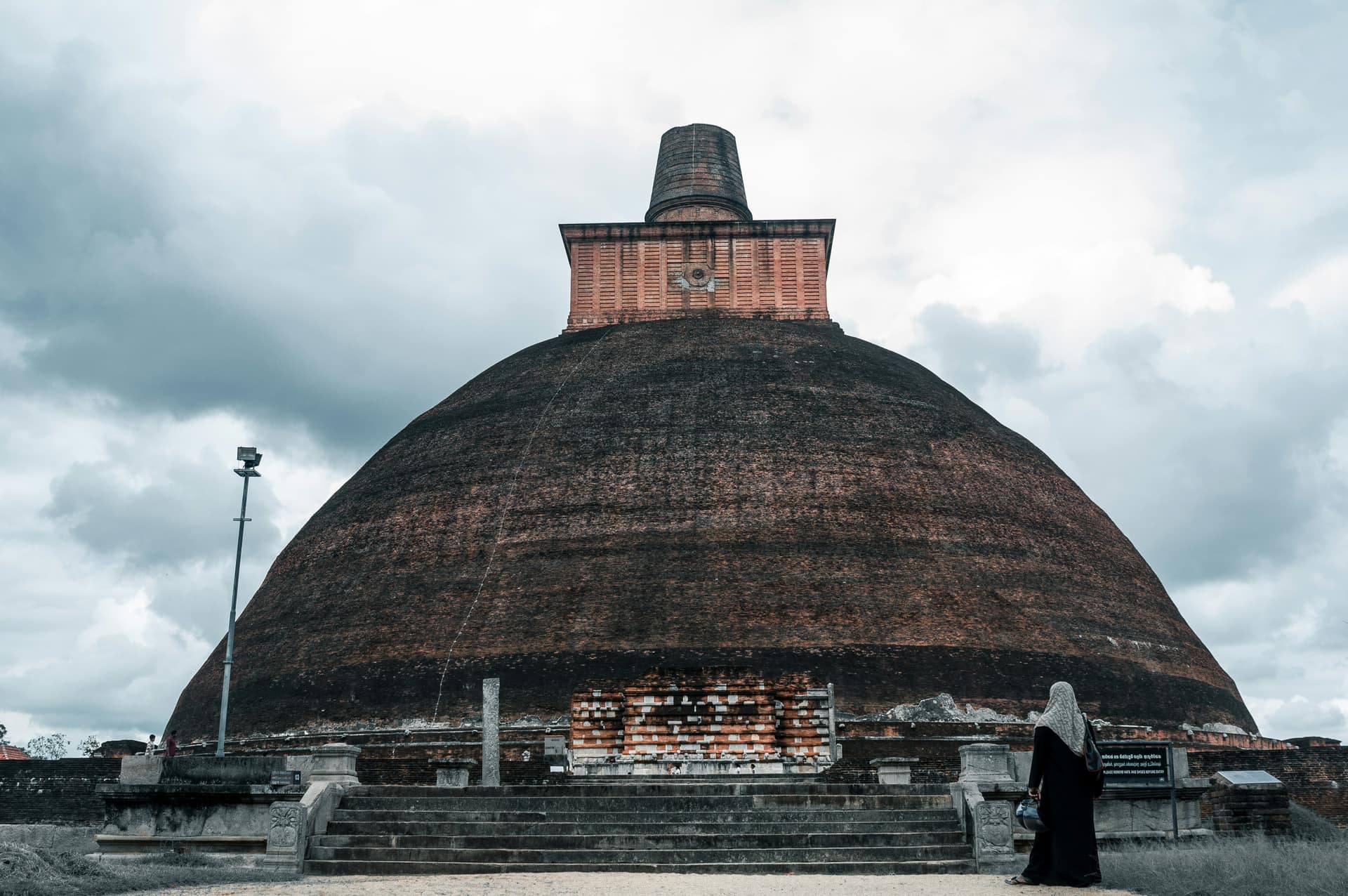
Unduvap poya, usually in December, commemorates the arrival of Sanghamitta, daughter of Emperor Ashoka, who brought a sapling of the Bo tree to Anuradhapura in the 3rd century BC. The Sri Maha Bodhi becomes a focus for pilgrims, with offerings, chanting and oil lamps.
For visitors, an evening at the Sri Maha Bodhi on Unduvap is moving. Dates follow the lunar calendar and shift each year, so check before planning. Alcohol sales stop on poya days.
Unduvap is a good time to see how central the Sri Maha Bodhi is to Sri Lankan Buddhism. Pilgrims come from across the island, many dressed in white, and the oil lamps lit around the tree at dusk make the scene unforgettable.
- →Honours Sanghamitta and the Bo sapling.
- →Pilgrims at the Sri Maha Bodhi.
- →Dates shift each year.
Crowds and prices
November is often quiet in the Cultural Triangle, with lower prices before the peak. December builds steadily, and the weeks from about mid-December to early January are among the busiest of the year, with high prices and full hotels.
Book Christmas and New Year stays early. Lankan Stays & Trails often suggests November for travellers who want calm sites and value, and accepts some rain as the trade-off.
The Christmas and New Year weeks bring both foreign and domestic visitors to Sigiriya, Dambulla and Polonnaruwa. Queues on Sigiriya's narrow sections are common from mid-morning. Arriving at opening time or late in the afternoon helps, as does choosing quieter alternatives such as Medirigiriya or Ritigala on the busiest days.
- →November: quieter, better value.
- →Mid-December onwards: peak.
- →Book Christmas stays early.
Planning around rain
Planning around rain in the Cultural Triangle in November and December is mostly about mornings. Start sites early, when skies are often clearer, and keep afternoons flexible. Museums in Anuradhapura and Polonnaruwa, Dambulla's caves and village cookery classes make good wet-weather options.
Pack an umbrella, quick-drying clothes and trainers with grip. Insect repellent matters more, as mosquitoes increase after rain.
Flooding occasionally affects roads in the dry zone after very heavy rain, especially in low-lying areas near tanks. Drivers follow local news and adjust routes. Allow extra time for transfers, and avoid tight connections on travel days in November and December.
- →Mornings for open sites.
- →Museums and caves for wet afternoons.
- →Umbrella and grippy shoes.
- →Repellent for mosquitoes.
Planning a visit
A Cultural Triangle stay in November or December pairs well with the south and west coasts, which come into season from roughly December. November can still be wet on both coasts, so build in flexibility.
An extra night in the Cultural Triangle helps, giving a spare morning in case rain spoils one day.
Frequently asked questions
Is December a good time to visit the Cultural Triangle?
Yes, with flexibility. December is one of the wetter months, but many mornings are dry and the landscape is green. Late December is peak season, so book hotels early. It pairs well with the south and west coasts, coming into season.
How much does it rain in the Cultural Triangle in November?
November is one of the wettest months, with frequent heavy showers and thunderstorms, often in the afternoon. Some days are wet throughout. Plan sites for the morning and keep afternoons flexible.
What is Unduvap poya?
Unduvap poya, usually in December, commemorates the arrival of Sanghamitta with a sapling of the Bo tree in the 3rd century BC. Pilgrims gather at the Sri Maha Bodhi in Anuradhapura. Dates shift each year with the lunar calendar.
Can I climb Sigiriya in the rain?
Usually, but steps and rock can be slippery, and staff may pause access to the summit in storms. Climb in the morning, wear trainers with grip and carry a light rain jacket.
Is November cheaper for the Cultural Triangle?
Usually. November is quieter than the December to February peak, with lower hotel prices and calmer sites. The trade-off is more rain, so plan flexibly and choose a hotel with good indoor spaces.
What should I do on a rainy day in the Cultural Triangle?
Visit the Anuradhapura or Polonnaruwa museums, Dambulla's sheltered caves, a village cookery class or a spa. Many afternoon storms pass quickly, so you may still catch a late-afternoon site visit.
Is Christmas busy in the Cultural Triangle?
Yes. The weeks from mid-December to early January are among the busiest of the year, with high prices and full hotels. Book well ahead, start sites at opening time and consider quieter alternatives such as Medirigiriya on the busiest days.