
Quick answer
Sitamarhi in Bihar is honoured as one of the places where Sita appeared from the earth, with Punaura Dham and the Janaki temple at its heart, and Sita Navami celebrated with great devotion. The Seetha Amman Temple at Seetha Eliya, Sri Lanka, honours her captivity in Ashok Vatika. Sitamarhi lies in the warm Gangetic plains; Seetha Eliya in cool, misty hills. Sitamarhi celebrates her birth; Seetha Eliya her endurance. Many Maithil families hope to visit both.
Key takeaways
- Sitamarhi honours Sita's appearance from the earth in tradition.
- Punaura Dham and the Janaki temple are Sitamarhi's main shrines.
- The Seetha Amman Temple honours her captivity in Ashok Vatika.
- Sitamarhi lies in the plains; Seetha Eliya in cool hills.
- Many Maithil families hope to visit both places.
Two moments in Sita's life
In tradition, King Janaka was ploughing a field as part of a ritual when he found the infant Sita in the furrow. Sitamarhi, whose name is often explained as connected to Sita, is honoured as one of the places where this happened, with Punaura Dham marking the spot for many devotees.
Seetha Eliya marks a much later and harder moment, when Sita, carried off by Ravana, waited in Ashok Vatika. Here, tradition says, she met Hanuman and received Rama's ring.
For pilgrims, moving from Sitamarhi to Seetha Eliya is moving from Sita's beginning to her greatest trial.
- →Sitamarhi: appearance from the earth.
- →Seetha Eliya: captivity and hope.
- →From beginning to trial.
Sitamarhi and Janakpur
Sitamarhi is one of two main places honoured as Sita's birthplace. The other is Janakpur, just across the border in Nepal. Both lie in the historic region of Mithila, and many devotees honour both without seeing a contradiction.
In Sitamarhi, Punaura Dham, a few kilometres from the town, has a temple and a sacred pond associated with Sita's appearance. The Janaki temple in the town centre is also an important shrine.
Seetha Eliya faces no such rival in Sri Lanka as the main Ashok Vatika site, though Hakgala and other places share the tradition.
- →Sitamarhi and Janakpur both honoured.
- →Punaura Dham: temple and sacred pond.
- →Seetha Eliya: the main Ashok Vatika site.
Setting and climate
Sitamarhi lies in the flat, fertile Gangetic plains of north Bihar, hot in summer, cool in winter and fed by rivers that flood in the monsoon. Fields of rice and wheat surround the town, echoing the story of the furrow.
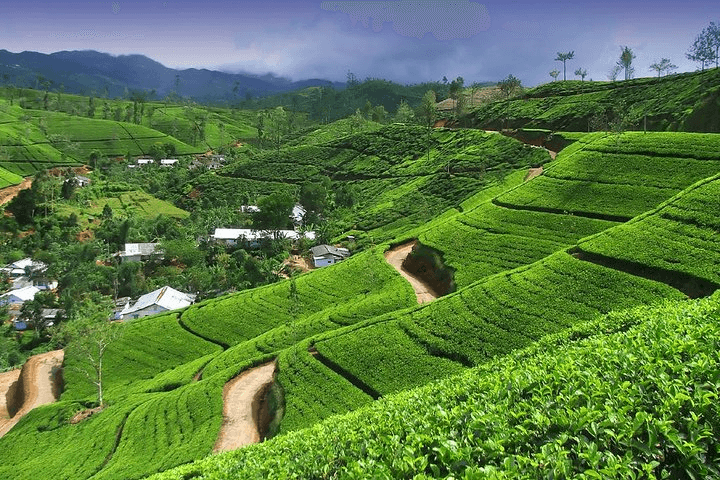
Seetha Eliya lies high in Sri Lanka's central hills, cool all year, with mist, forest and a cold mountain stream. Tea estates and vegetable terraces climb the slopes around it.
The landscapes could hardly be more different, and both suit their chapter of the story: fertile earth for birth, a secluded grove for captivity.
Weather shapes the visits too. Sitamarhi is best visited between October and March, avoiding the heat of summer and the monsoon floods. Seetha Eliya is most comfortable from January to April, the driest stretch in the Sri Lankan hills, though it can be visited all year.
Worship and festivals
Sitamarhi's great festival is Sita Navami, when pilgrims gather at Punaura Dham and the Janaki temple. Vivah Panchami is also important, and the region's Maithili songs and Madhubani art are full of Sita.
At Seetha Eliya, worship follows South Indian Tamil practice, with daily pujas, archanas and festival days including Sita Navami, Navaratri and Vivah Panchami.
North Indian pilgrims from Bihar will find the style of worship different but the devotion the same.
- →Sitamarhi: North Indian worship, Maithili songs.
- →Seetha Eliya: South Indian Tamil rites.
- →Sita Navami honoured at both.
Getting there
Sitamarhi is in north Bihar, reached by road or rail from Patna and Muzaffarpur, and close to the Nepal border and Janakpur. Many pilgrims combine the two.
The Seetha Amman Temple requires a flight to Colombo and a long drive into the hills, or a stay in Nuwara Eliya. For families from Bihar, the trip usually means connecting via Delhi, Kolkata, Chennai or Bengaluru.
Our guide for pilgrims from Bihar covers the route in detail.
Pilgrims combining a visit to Sitamarhi with Janakpur usually spend two or three days in the region. A Sri Lankan pilgrimage, by contrast, needs at least five to seven days to cover Seetha Eliya and the other Ramayana sites without rushing.
Visiting both
Many Maithil families visit Sitamarhi regularly and dream of Sri Lanka as a once-in-a-lifetime pilgrimage. Bringing sindoor, a thread or water from Punaura Dham to offer at Seetha Eliya links the two places.
Some families time the Sri Lankan trip around Sita Navami after celebrating it at home in previous years.
Lankan Stays & Trails can plan the Sri Lankan pilgrimage with Hindi-speaking guides who understand North Indian customs.
- →Sitamarhi: regular pilgrimage.
- →Sri Lanka: a once-in-a-lifetime trip.
- →Carry an offering from Punaura Dham.
Frequently asked questions
Is Sitamarhi Sita's birthplace?
Sitamarhi in Bihar is honoured as one of the places where Sita appeared from the earth, with Punaura Dham marking the spot for many devotees. Janakpur in Nepal is also honoured as her birthplace. Both lie in the historic region of Mithila.
How is Sitamarhi different from the Seetha Amman Temple?
Sitamarhi honours Sita's appearance from the earth, in the warm plains of Bihar, with North Indian worship. The Seetha Amman Temple honours her captivity in Lanka, in cool Sri Lankan hills, with South Indian Tamil rites.
Can I travel from Sitamarhi to Seetha Eliya?
Yes, but it is a long journey: road or rail to Patna, a flight via an Indian hub to Colombo, then a five to six hour drive to Nuwara Eliya. Most families plan the Sri Lankan pilgrimage as a separate trip of a week or more.
What festival is celebrated at both?
Sita Navami, celebrating Sita's appearance from the earth, is honoured at both, along with Vivah Panchami. In Sitamarhi, Sita Navami is a major festival; at Seetha Eliya it is marked with special pujas and is quieter.
What is Punaura Dham?
Punaura Dham, a few kilometres from Sitamarhi town, is a temple and sacred pond associated by many devotees with the place where Sita appeared from the earth. It is a major pilgrimage site, especially on Sita Navami.
Will worship feel different at Seetha Eliya?
The style differs. Seetha Eliya follows South Indian Tamil rites, with priests chanting in Sanskrit and Tamil, while Sitamarhi follows North Indian practice. The devotion to Sita is the same, and priests welcome pilgrims from Bihar warmly.
What should I bring from Sitamarhi?
Sindoor, a sacred thread or a little water from Punaura Dham make meaningful offerings at Seetha Eliya. Check airline and customs rules for liquids and powders before packing them in your luggage.