
Quick answer
Panchavati in Nashik, Maharashtra, is remembered as the forest hermitage where Rama, Sita and Lakshmana lived during exile, and from where Ravana abducted Sita. Its shrines include Sita Gufa, the Kalaram temple and the Ramkund on the Godavari. The Seetha Amman Temple at Seetha Eliya, Sri Lanka, honours the grove of Ashok Vatika where Ravana held her. Panchavati is busy, urban and riverside; Seetha Eliya quiet, cool and forested. Together they frame Sita's abduction and captivity.
Key takeaways
- Panchavati is remembered as the place of Sita's abduction.
- The Seetha Amman Temple honours her captivity in Ashok Vatika.
- Panchavati has Sita Gufa, the Kalaram temple and Ramkund.
- Panchavati is urban and riverside; Seetha Eliya cool and forested.
- The two sites frame a turning point in the Ramayana.
Abduction and captivity
During their fourteen years of exile, Rama, Sita and Lakshmana lived for a time at Panchavati, a forest of five banyan trees on the Godavari. Here Shurpanakha, Ravana's sister, was humiliated, and Ravana, seeking revenge, lured Rama away with a golden deer and carried Sita off.
Sita was taken across the sea to Lanka. After a first stay, tradition says, she was moved to Ashok Vatika, identified with the valley of Seetha Eliya, where she remained until Rama's victory.
Panchavati and Seetha Eliya therefore mark the start and the long middle of Sita's ordeal.
- →Panchavati: exile, Shurpanakha and the golden deer.
- →The abduction across the sea.
- →Seetha Eliya: the long captivity.
Panchavati today
Panchavati is a busy neighbourhood of Nashik, one of Maharashtra's holy cities. Sita Gufa, a narrow cave where Sita is said to have sheltered, is a popular stop; visitors squeeze down steep steps to a small shrine.
The Kalaram temple, built of black stone, honours Rama, and the Ramkund on the Godavari is a sacred bathing place. Nashik also hosts the Kumbh Mela, held every twelve years.
The atmosphere is lively, urban and crowded, with shops, ghats and pilgrims from across India.
Seetha Eliya today
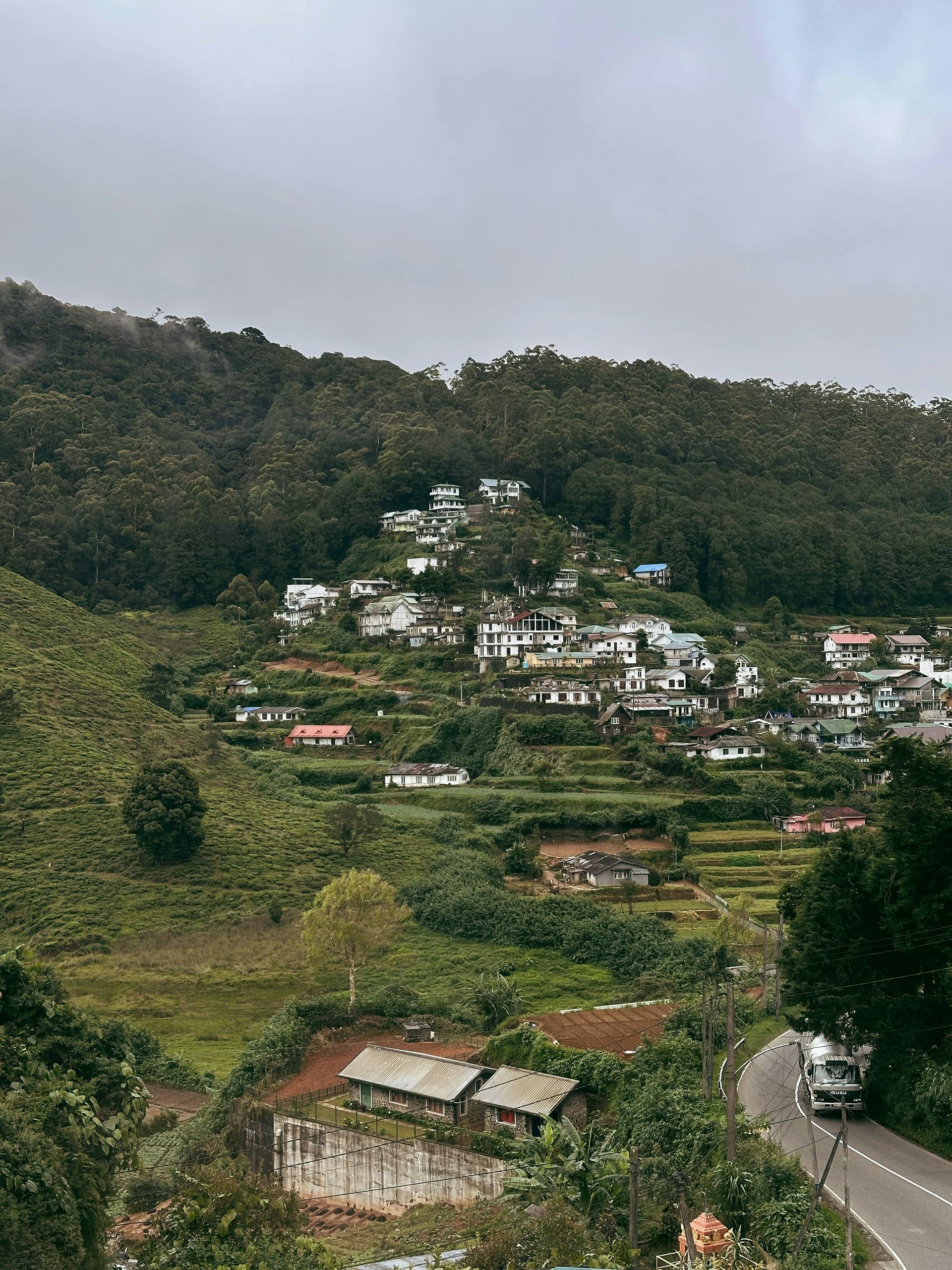
The Seetha Amman Temple is a small kovil beside a cold mountain stream in the Sri Lankan hills, about 15 to 20 minutes from Nuwara Eliya. Its painted figures, the rocks honoured as Hanuman's footprints and the surrounding forest give it a quiet, contemplative character.
Worship follows South Indian Tamil rites, and the temple is busiest when pilgrim groups pass on the way to Ella.
Compared with Panchavati, it is small, rural and cool, and the emotional focus is Sita's endurance rather than the drama of her abduction.
- →Small kovil by a mountain stream.
- →South Indian Tamil rites.
- →Quiet, rural and cool.
Side by side
Setting: Panchavati is an urban riverside neighbourhood in the warm Deccan plateau; Seetha Eliya a forested valley high in the hills. Shrines: Panchavati has several, including Sita Gufa and the Kalaram temple; Seetha Eliya has one compact temple and the stream.
Atmosphere: Panchavati is bustling and crowded; Seetha Eliya calm except at peak hours. Access: Panchavati is easy from Mumbai or Pune; Seetha Eliya needs a flight to Sri Lanka and a drive into the hills.
Both are deeply meaningful, and many pilgrims who have visited Panchavati feel drawn to complete the story in Lanka.
- →Setting: urban riverside vs forested valley.
- →Shrines: several vs one compact temple.
- →Access: easy in India vs a trip abroad.
Sacred waters
Both places have sacred water. At Panchavati, pilgrims bathe at the Ramkund on the Godavari, believed to be where Rama bathed. At Seetha Eliya, devotees touch and sprinkle the water of the stream where tradition says Sita bathed.
The Godavari is broad and busy, lined with ghats; the stream at Seetha Eliya is small, cold and fast. The rituals are similar in spirit, though bathing fully is not part of the visit at Seetha Eliya.
Some pilgrims carry a little Godavari water to Sri Lanka, or Seetha Eliya water home to Nashik, linking the two.
Visiting both
Pilgrims from Maharashtra and western India often know Panchavati well and plan Sri Lanka as a special trip. The flight from Mumbai or Pune to Colombo, via a hub if needed, is short enough for a week-long pilgrimage.
A Sri Lankan route can follow the story onward from Panchavati: Weragantota, where Ravana's chariot is said to have landed, Sita Kotuwa, Seetha Eliya and Divurumpola.
Lankan Stays & Trails can plan that route with Hindi or Marathi-friendly guides where available.
- →Panchavati: familiar to western Indian pilgrims.
- →Sri Lanka: a week-long continuation.
- →Follow the story from Weragantota onward.
Frequently asked questions
What happened at Panchavati in the Ramayana?
Panchavati was the forest hermitage on the Godavari where Rama, Sita and Lakshmana lived during exile. Here Shurpanakha was humiliated, and Ravana lured Rama away with a golden deer before abducting Sita. It is in today's Nashik, Maharashtra.
How is Panchavati different from the Seetha Amman Temple?
Panchavati marks the abduction and is a busy urban riverside area with several shrines. The Seetha Amman Temple marks the captivity and is a small kovil by a cold mountain stream in the Sri Lankan hills, quiet and contemplative.
What is Sita Gufa?
Sita Gufa is a narrow cave at Panchavati where Sita is said to have sheltered. Visitors climb down steep, narrow steps to a small shrine. It can be difficult for elderly or less mobile visitors and very crowded at busy times.
Can I follow Sita's story from Nashik to Sri Lanka?
Yes. After Panchavati, a Sri Lankan route can visit Weragantota, Sita Kotuwa, Seetha Eliya and Divurumpola, following the abduction, captivity and fire ordeal in tradition. Our page on following Sita's journey through Sri Lanka sets out the route.
How do I reach Sri Lanka from Maharashtra?
Fly from Mumbai or Pune to Colombo, direct or via a hub such as Chennai or Bengaluru. From Colombo, drive via Kandy and Ramboda to Nuwara Eliya. Check current entry rules for Indian nationals before travelling.
Can I bathe in the stream at Seetha Eliya?
Full bathing is not part of the usual ritual, and the water is very cold and sometimes fast. Pilgrims touch the water, sprinkle it on their heads and wash their feet. This differs from bathing at the Ramkund in Nashik.
Which is easier for elderly pilgrims?
The Seetha Amman Temple has few steps to its main shrines. Panchavati's Sita Gufa has steep, narrow steps, though other shrines there are easier. The long journey to Sri Lanka is the main challenge for elderly visitors.