
Quick answer
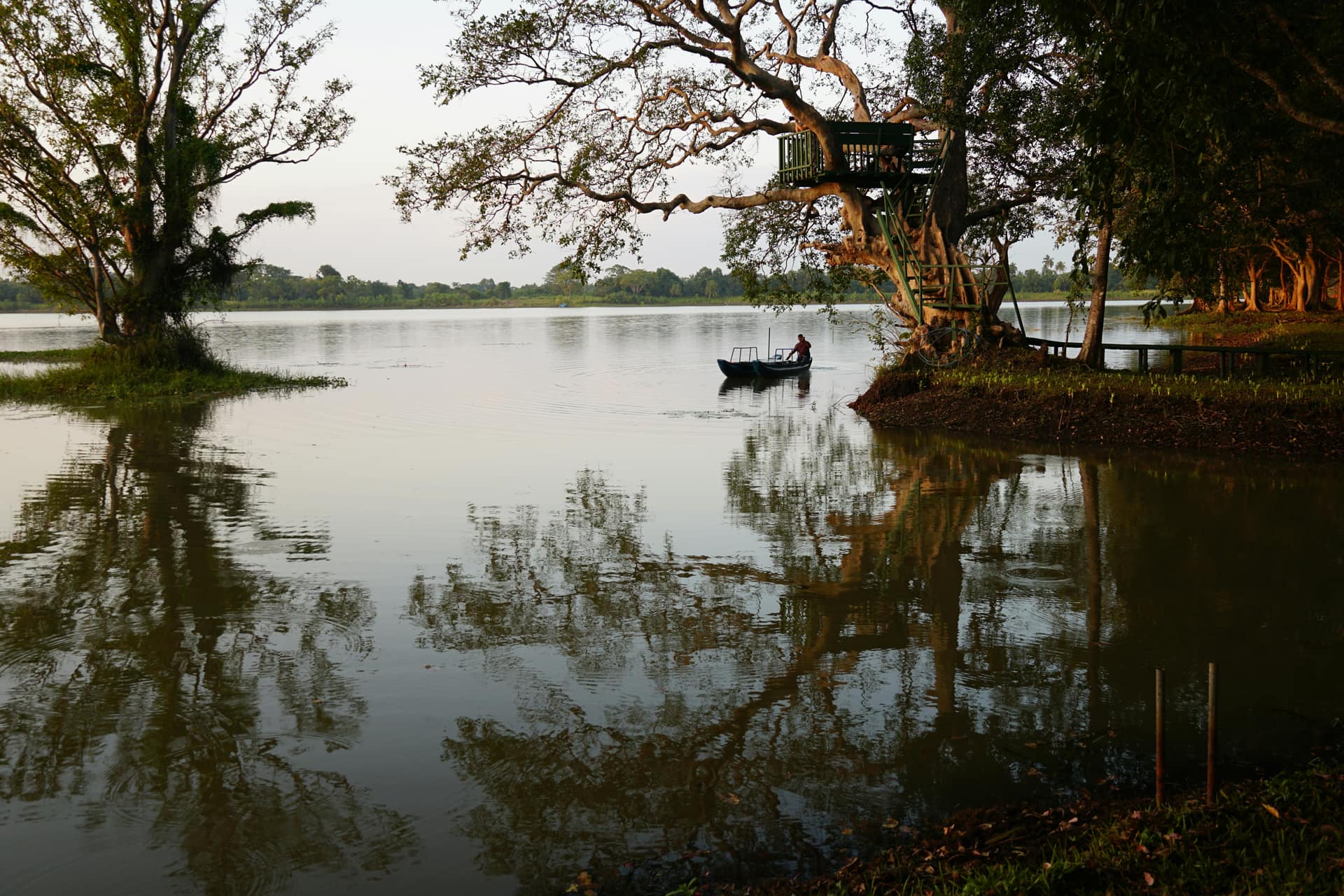
A typical Sigiriya village tour lasts three to four hours and combines a bullock cart ride along a village track, a crossing of a tank on a simple catamaran or dugout, a walk through paddy fields and home gardens, and a rice and curry lunch cooked with a village family, often with a cooking demonstration. The best tours are small, unhurried and pay families fairly. Many operate from Habarana and Hiriwadunna, roughly 30 to 40 minutes from Sigiriya.
Key takeaways
- Sigiriya village tours usually last three to four hours and include a bullock cart, a tank crossing, a field walk and lunch.
- Many village tours operate around Habarana and Hiriwadunna, roughly 30 to 40 minutes from Sigiriya.
- The rice and curry lunch cooked with a village family is usually the most genuine and memorable part.
- Some tours bundle in elephant rides or commission shops, which are worth declining.
- Smaller tours that pay host families directly and fairly are the best choice for visitors and communities.
What happens on a Sigiriya village tour
Most Sigiriya village tours follow a similar sequence, usually in the morning or late afternoon to avoid midday heat. The components vary a little between operators, but the core is consistent.
- →A bullock cart ride along a village track, often 20 to 30 minutes.
- →A crossing of a tank on a simple catamaran or dugout, sometimes with lotus and birds.
- →A walk through paddy fields, chena plots and home gardens.
- →A visit to a village home, often with a demonstration of coconut scraping or grinding.
- →A rice and curry lunch, sometimes with a chance to help cook.
The parts that are worth it
The lunch is usually the heart of a good Sigiriya village tour. A rice and curry meal cooked over a wood fire in a village kitchen, with several vegetable curries, dhal, a sambol and perhaps fish from the tank, served on a lotus or banana leaf, is often better than anything in the hotel.
The walk and the tank crossing are the other highlights, particularly for birdlife: kingfishers, egrets, cormorants and bee-eaters are common. The time spent talking with the family, where language allows, is what visitors remember longest.
Staged or authentic?
Every Sigiriya village tour is to some extent arranged, since families are hosting visitors rather than going about an ordinary day. That is not a problem in itself. The question is whether the experience is respectful and fairly paid.
Signs of a better tour include small group sizes, unhurried time with one family rather than a rushed circuit, real cooking rather than pre-made food, and an operator that is open about how much the family receives. Signs of a worse one include pressure to tip at every stop, add-on elephant rides and a shop at the end.
- →Better: small groups and time with one family.
- →Better: real cooking, not pre-made plates.
- →Better: an operator open about how families are paid.
- →Worse: tipping pressure at every stop.
- →Worse: bundled elephant rides or commission shops.
Choosing a good village tour
Ask your hotel or operator who runs the tour, how many people are in a group, whether elephant rides are included, and how the host families are paid. A good operator will answer easily.
Decline any elephant ride add-on. Captive elephants used for rides face serious welfare problems, and the Cultural Triangle has wild elephants at Minneriya, Kaudulla and Hurulu that are far better seen on a jeep safari.
Fitting a village tour around Sigiriya
A Sigiriya village tour fits neatly into the afternoon after an opening-time climb, or the morning of a second day. It is gentle, mostly flat and good for families, older travellers and anyone who wants a slower half-day.
Lankan Stays & Trails arranges village visits with families we know, in small groups and without elephant rides, and usually places them on the second day of a Sigiriya stay, when the rock is done and nobody is in a hurry.
- →After a morning climb: late afternoon village tour.
- →Second day: morning village tour, afternoon safari.
- →Duration: three to four hours.
- →Suits families and older travellers.
Frequently asked questions
What is a Sigiriya village tour?
A half-day experience of dry-zone rural life, usually combining a bullock cart ride, a crossing of a tank by simple boat, a walk through paddy fields and home gardens, and a rice and curry lunch cooked with a village family.
Is the Sigiriya village tour worth it?
A good one is. The home-cooked lunch, the birdlife on the tank and time with a village family are genuinely memorable. Choose a small, unhurried tour that pays families fairly and does not include elephant rides or commission shops.
How long is a village tour near Sigiriya?
Usually three to four hours, including the bullock cart, boat crossing, walk and lunch. Many operate around Habarana and Hiriwadunna, roughly 30 to 40 minutes from Sigiriya, so add travel time.
Is a Sigiriya village tour good for children?
Yes. The bullock cart, the boat, the animals and the cooking usually appeal to children, and the walking is flat and short. Bring hats, sun cream and insect repellent, and keep children close near the water.
Do Sigiriya village tours include elephant rides?
Some do, as an add-on. We recommend declining them because of the welfare problems facing captive elephants used for rides. See wild elephants on a jeep safari at Minneriya, Kaudulla or Hurulu instead.
Is the food on a village tour safe to eat?
Freshly cooked, hot rice and curry is generally safe. Drink bottled or boiled water, and mention any allergies in advance. Most hosts are used to adjusting spice for visitors when asked.
What should I wear on a village tour?
Light, modest clothing, a hat and shoes you can walk in and slip off at a village home. Bring insect repellent, especially in the late afternoon near the tank, and sun cream for the open fields.