
Quick answer
Skipping Kandy's 2 nights on the 12-day Alps-to-beach itinerary saves roughly 1 to 2 days overall, but complicates the route more than it simplifies it, since Kandy is the boarding point for the roughly 6 to 7 hour scenic railway to hill country; skipping it typically means either a longer direct road transfer from the Cultural Triangle to Nuwara Eliya, or a same-day arrival in Kandy purely to catch the train the next morning without a proper overnight stay.
Key takeaways
- Kandy's 2 nights include the Temple of the Tooth's evening ceremony and a Kandyan dance performance, both lost entirely if Kandy is skipped outright.
- The Kandy-Ella scenic railway begins in Kandy, so skipping the town entirely still typically requires passing through it briefly to board the train.
- A direct road transfer from the Cultural Triangle to Nuwara Eliya, bypassing Kandy as an overnight stop, typically takes considerably longer than the staged Cultural-Triangle-to-Kandy-to-rail approach and loses the scenic railway experience if the train cannot be boarded.
- Skipping Kandy saves roughly 1 to 2 days versus the fixed 12-day route, useful for travellers who have already visited Kandy on a previous trip to Sri Lanka.
- Polonnaruwa's ancient ruins, often visited en route between the Cultural Triangle and Kandy, are also typically dropped or need a separate detour if Kandy is skipped.
Why Kandy is not a simple cut
Kandy sits in the middle of the fixed 12-day route for a specific structural reason beyond its own sights: it is the boarding point for the Kandy-Ella scenic railway, the roughly 6 to 7 hour rail journey that is one of the route's signature experiences. This makes Kandy different from, say, a beach base that could be swapped for another beach base; cutting it touches the mechanics of how the rest of the trip is reached.
Because of this, 'skipping Kandy' in practice usually means one of two things: either passing through Kandy briefly without an overnight stay purely to catch the train, or replacing the rail leg with a direct road transfer to Nuwara Eliya that avoids Kandy altogether. These are quite different variations with different trade-offs.
Kandy also functions as a gentle staging point in temperature and altitude terms, sitting at a modest elevation between the tropical heat of the Cultural Triangle and the noticeably cooler hill country further on. Removing it means travellers move more abruptly from lowland heat to Nuwara Eliya's cooler air, roughly 16 to 20 degrees Celsius by day and colder at night, without the gradual transition the staged route otherwise provides.
What is genuinely lost by skipping Kandy
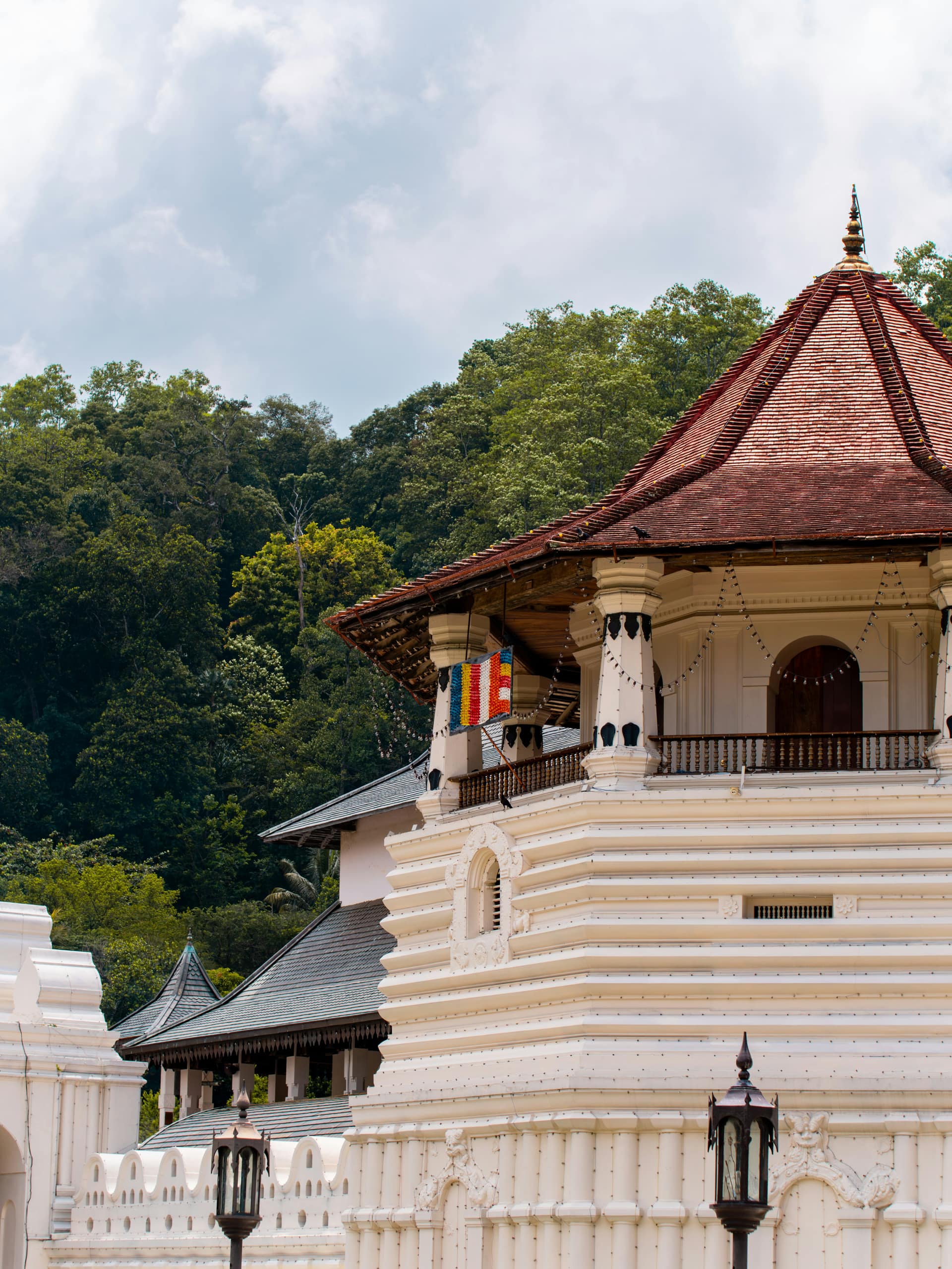
The most obvious loss is the Temple of the Tooth, one of Sri Lanka's most significant Buddhist sites, along with its evening drumming and ceremony, and the traditional Kandyan dance performance typically scheduled for the second Kandy evening in the fixed route. Neither has a direct equivalent elsewhere on the route.
A more subtle loss is pacing: Kandy's 2 relatively relaxed nights function as a buffer between the physically tiring Sigiriya climb and Dambulla visit in the Cultural Triangle and the early start needed for the scenic railway. Removing that buffer generally makes the middle of the trip feel more compressed even if the total day count only drops by 1 or 2.
Beyond the headline sights, Kandy also offers the Royal Botanical Gardens at Peradeniya, a large and well-regarded garden a short drive from the town centre, plus a lively central market and lakeside walk that many travellers use simply to slow down after the Cultural Triangle's more strenuous days. These are lower-profile losses than the Temple of the Tooth, but they add up for travellers who enjoy unstructured wandering between the trip's more scheduled stretches.
- →Temple of the Tooth and its evening ceremony.
- →Kandyan dance performance.
- →A relaxed pacing buffer between the Cultural Triangle and the rail journey.
- →Often, the Polonnaruwa stop, typically visited en route to Kandy.
The two practical ways to skip Kandy
The first approach keeps the scenic railway but drops the overnight stay: travellers transfer from the Cultural Triangle directly towards Kandy on the morning the train departs, board the roughly 6 to 7 hour rail journey to hill country, and never actually stay the night in Kandy town. This preserves the trip's signature rail leg but removes any real time to see Kandy itself beyond a brief pass-through.
The second approach avoids Kandy altogether, including as a rail-boarding point, and instead drives directly from the Cultural Triangle to Nuwara Eliya by road. This route change typically takes considerably longer than the staged version and loses the scenic railway experience entirely, since the train specifically runs from Kandy, not from the Cultural Triangle.
Under Option A, luggage and timing need particular care, since the transfer from the Cultural Triangle has to land in Kandy with enough margin before the train's departure, itself worth confirming rather than assuming, particularly where reserved seats are involved. A private driver-guide can build in a reasonable buffer for this, but it is worth flagging early rather than discovering the tight timing only on the day itself.
- →Option A: skip the Kandy overnight, still catch the train from Kandy the same morning.
- →Option B: skip Kandy and the train, drive directly Cultural Triangle to Nuwara Eliya.
- →Option A preserves the rail leg; Option B does not.
How much time this actually saves
Dropping the Kandy overnight while still catching the train (Option A) typically saves roughly 1 day versus the fixed route, since the 2 Kandy nights become effectively zero, though a partial day is still spent passing through the town. Dropping Kandy and the train together (Option B) can save a further half day of scheduled activity but replaces it with a longer direct road transfer, so the net time saved is smaller than it first appears.
For most travellers, the time saved by skipping Kandy is better spent adding a night elsewhere (hill country or the coast) than simply shortening the overall trip, since Kandy's nights are relatively low-intensity compared with, say, the Cultural Triangle's early starts.
Whether the time saved is worth spending elsewhere depends on what a traveller would otherwise do with the extra day; some redirect it to a third south-coast night, others add it to hill country for a fuller Horton Plains excursion without an early same-day turnaround. Either use of the saved time tends to be more satisfying than simply treating the whole trip as a day shorter.
Who should consider skipping Kandy
This variation suits travellers who have already visited Kandy on a previous trip to Sri Lanka and specifically want to avoid repeating it, or those on a tightly compressed schedule who have already decided the Temple of the Tooth is not a priority for this particular visit. It suits first-time visitors far less well, since Kandy is one of the more historically significant stops on the whole route.
Travellers considering this cut should also read about compressing the route to 9 days more broadly, since a single-night reduction from each stop, rather than eliminating Kandy outright, is often a gentler way to save the same amount of time.
This also suits travellers building a trip primarily around hill country and the coast, with the Cultural Triangle included mainly for Sigiriya rather than a deep interest in ancient history, since Kandy's appeal leans more towards culture and religious heritage than towards landscape, which may simply matter less to that kind of traveller.
A middle-ground alternative: one Kandy night instead of two
Rather than skipping Kandy outright, many travellers find a single overnight stay strikes a reasonable balance: enough time to see the Temple of the Tooth and its evening ceremony, but without the second, more unstructured day that the fixed route otherwise allows. This keeps the rail leg's normal boarding point intact and preserves most of Kandy's headline sight while still saving roughly 1 day overall.
Under this middle-ground version, the Kandyan dance performance and a relaxed lake walk are usually the first things dropped, since the Temple of the Tooth visit is generally considered the more essential of Kandy's activities. This is often a gentler compromise than skipping Kandy entirely, particularly for first-time visitors who want to see the temple without committing two full nights to the town.
- →1 Kandy night: typically keeps the Temple of the Tooth and its evening ceremony.
- →1 Kandy night: usually drops the Kandyan dance performance and the relaxed lake walk.
- →Compare against compressing the whole route to 9 days, which spreads similar cuts across multiple stops rather than concentrating them on one.
Booking this variation
A private driver-guide can run either version of this skip, timing the direct Cultural-Triangle-to-Kandy morning transfer precisely around the scenic railway's departure if Option A is chosen, or planning the longer direct road transfer if Option B is preferred.
Because Option A still depends on securing scenic railway seats from Kandy on a specific date, it is worth confirming train availability before finalising the rest of this variation, since a lack of seats on the intended date could force a rethink of the whole plan rather than just the Kandy portion of it.
We at Lankan Stays & Trails generally advise keeping at least a brief Kandy stop to catch the train from its proper starting point (Option A) rather than losing the scenic railway leg entirely, since it is one of the most distinctive parts of this whole route.
Frequently asked questions
Can I skip Kandy entirely on this 12-day itinerary?
Yes, but it complicates the route more than it simplifies it, since Kandy is the boarding point for the roughly 6 to 7 hour scenic railway to hill country. Most travellers still pass through Kandy briefly to catch the train even if they skip the overnight stay.
How much time do I save by skipping Kandy?
Roughly 1 day if you still catch the scenic railway from Kandy without staying overnight, a little more if you also skip the train for a direct road transfer to Nuwara Eliya, though that replaces the saved time with a longer drive.
What do I lose by skipping Kandy?
Mainly the Temple of the Tooth and its evening ceremony, the traditional Kandyan dance performance, and a relaxed pacing buffer between the tiring Cultural Triangle days and the early start needed for the scenic railway.
Can I still take the Kandy-Ella train if I skip staying in Kandy?
Yes, this is the more common version of skipping Kandy. Travellers transfer to Kandy the same morning the train departs, board the roughly 6 to 7 hour scenic railway, and never actually spend the night in the town.
Is a direct road transfer from the Cultural Triangle to Nuwara Eliya realistic?
It is possible but typically takes considerably longer than the staged Cultural-Triangle-to-Kandy-to-rail approach, and it means losing the scenic railway experience entirely, since that train specifically departs from Kandy.
Who should consider skipping Kandy on this route?
Mainly travellers who have already visited Kandy on a previous Sri Lanka trip or who are on a tightly compressed schedule. First-time visitors generally get more value from keeping at least a brief Kandy stop given its historical significance.