
Quick answer
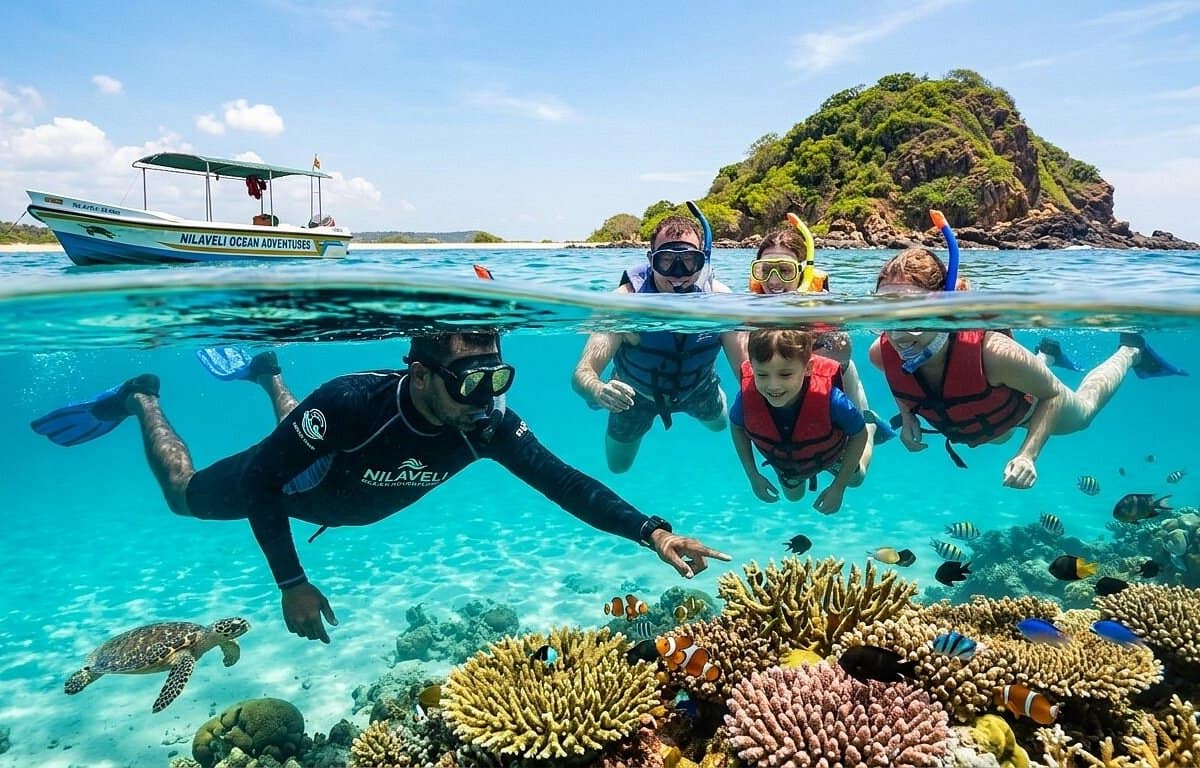
Snorkelling and surfing fit easily into the culture, wildlife and beach route. In roughly December to April, snorkel at Unawatuna, Mirissa's Parrot Rock or the reef near Hikkaduwa in calm conditions, often with turtles. Learn to surf at Weligama, roughly 15 minutes from Mirissa, or Hiriketiya near Tangalle. From May to September, Pigeon Island off Nilaveli has the best reef, and Arugam Bay the best surf. Lessons and gear are easy to arrange on the day.
Key takeaways
- South-coast snorkelling is best in calm conditions from roughly December to April.
- Weligama, roughly 15 minutes from Mirissa, is one of the best places in Asia to learn to surf.
- Hiriketiya, near Dickwella, has gentle waves and a relaxed surf scene.
- Pigeon Island, off Nilaveli, is the best reef on the summer route.
- Arugam Bay is the east coast's surf centre from roughly May to September.
Fitting water sports into the route
The culture, wildlife and beach route has four beach nights, with free time on days 10, 11, 12 and 13. A surf lesson or snorkelling trip fits easily into a morning or afternoon without changing the route. The whale-watching morning on day 13 leaves the afternoon free for a swim or a lesson.
Water sports are weather-dependent, so keep them flexible. Lankan Stays & Trails can arrange lessons and trips locally, choosing the day with the best conditions.
After a long safari day, a gentle snorkel is often the perfect way to relax.
Lessons are cheap, so trying both costs little.
- →Day 10 or 11: Hiriketiya surf or Tangalle snorkel.
- →Day 12: Weligama surf.
- →Day 13 afternoon: Mirissa snorkel.
Snorkelling on the south coast
The south coast's snorkelling is pleasant rather than world-class, with fish, coral and often sea turtles in calm conditions. Unawatuna, near Galle, has a sheltered bay and reef where turtles are often seen. Mirissa's Parrot Rock and the reef areas at the western end of the bay have colourful fish in calm water.
Further west, Hikkaduwa's reef is known for turtles but is a detour from the route. Visibility varies, so ask locally and go in the morning when the sea is calmest. Hire masks and fins from beach shops, or bring your own for a better fit.
Never touch or stand on coral, never feed or chase turtles and use reef-safe sunscreen.
- →Unawatuna: sheltered reef, turtles.
- →Mirissa: Parrot Rock and the western end.
- →Hikkaduwa: turtles, a detour.
- →Mornings are calmest.
Learning to surf
The south coast's surf season, roughly November to April, matches the route's main season, and several beaches are ideal for beginners. Weligama, roughly 15 minutes from Mirissa, has a long, sandy bay with gentle, consistent waves and many surf schools. It is one of the best places in Asia to learn.
Hiriketiya, a small horseshoe bay near Dickwella, roughly 20 to 30 minutes from Tangalle, has a gentle wave at one end and a relaxed café scene. More experienced surfers head to reef breaks at Midigama and Ahangama, west of Weligama.
- →Weligama: long, sandy, gentle waves.
- →Hiriketiya: small bay, relaxed scene.
- →Midigama and Ahangama: for experienced surfers.
Lessons and gear
Surf lessons usually last around two hours, with an instructor, board and rash vest. Most beginners stand up during their first lesson in gentle conditions. Board rental is cheap for those who already surf. Book on the day or the day before through your hotel or a surf school.
Snorkelling gear is easy to hire on the beach, though quality varies. Bring your own mask if you can. Boat snorkelling trips are available from some beaches.
Beginners should choose a school with qualified instructors and a small ratio of students to teachers. Sunburn is the biggest hazard, so wear a rash vest and reef-safe sunscreen and avoid the midday sun.
- →Surf lessons: around two hours.
- →Board and rash vest included.
- →Bring your own mask if possible.
The summer east coast
From roughly May to September, water sports move to the east coast. Pigeon Island National Park, a short boat ride from Nilaveli, has the best reef on the route, with blacktip reef sharks, turtles and colourful coral in calm, clear water. Visits are regulated, and the reef is fragile, so follow the guides' instructions.
Arugam Bay, further south, is Sri Lanka's most famous surf town, in season from roughly May to September. Surfers can swap Pasikudah for Arugam Bay on the summer route.
Pasikudah's shallow bay is good for gentle snorkelling and paddling.
- →Pigeon Island: reef sharks and turtles.
- →Arugam Bay: the east coast's surf centre.
- →Pasikudah: shallow and calm.
Frequently asked questions
Where can I snorkel on the culture, wildlife and beach route?
In roughly December to April, Unawatuna, Mirissa's Parrot Rock and the western end of Mirissa bay are good in calm conditions. From May to September, Pigeon Island off Nilaveli has the best reef. Turtles are often seen at Unawatuna and Pigeon Island.
Can beginners learn to surf on this route?
Yes. Weligama, roughly 15 minutes from Mirissa, is one of the best places in Asia to learn, with gentle, consistent waves and many surf schools. Hiriketiya, near Tangalle, is another good choice. Most beginners stand up in their first lesson.
When is the surf season on the south coast?
Roughly November to April, which matches the route's main season. From May to September, the surf moves to the east coast, centred on Arugam Bay, while the south coast is in monsoon and too rough for beginners.
Is Pigeon Island worth visiting?
Yes, from roughly May to September. Its reef has blacktip reef sharks, turtles and colourful coral in calm, clear water. Visits are regulated and the reef is fragile, so follow guides' instructions and never touch coral.
Do I need to bring snorkelling gear?
Not necessarily, as masks and fins can be hired on most beaches. Quality varies, so bring your own mask for a better fit if you plan to snorkel often. Reef-safe sunscreen and a rash vest are useful. A waterproof phone pouch is handy on boat trips.
Can I surf and do the safaris on the same trip?
Yes. The safaris are in the first half of the trip and the beaches in the second, so a surf lesson fits easily into the beach days. Many travellers find surfing a fun contrast to the early mornings in the parks.