
Quick answer
Pigeon Island, off Trincomalee, is Sri Lanka's most accessible marine reserve for snorkelling, with shallow reef reachable within minutes of the beach, best visited roughly May to September. The south coast around Unawatuna offers gentler, easier reef access best visited roughly December to March. Casual snorkellers need no certification and can join most boat trips directly, while diving beyond a shallow introductory session requires an open-water certification, which couples can also complete locally in three to four days.
Key takeaways
- Pigeon Island Marine National Park, a short boat ride from Trincomalee's Nilaveli beach, protects shallow reef reachable by fin within minutes of entering the water.
- The east coast's snorkelling and diving season runs roughly May to September, opposite the south and west coast's roughly December to March window.
- Unawatuna's reef sits close to shore in relatively calm, shallow water, making it one of the more approachable snorkelling spots for couples with limited experience.
- An open-water diving certification typically takes three to four days to complete locally through a PADI-affiliated dive centre, for couples who want to dive beyond a shallow introductory session.
- Reef sharks, turtles and a wide range of reef fish are commonly reported at both Pigeon Island and the south-coast sites, though sightings of any specific species are never guaranteed.
Pigeon Island's marine reserve
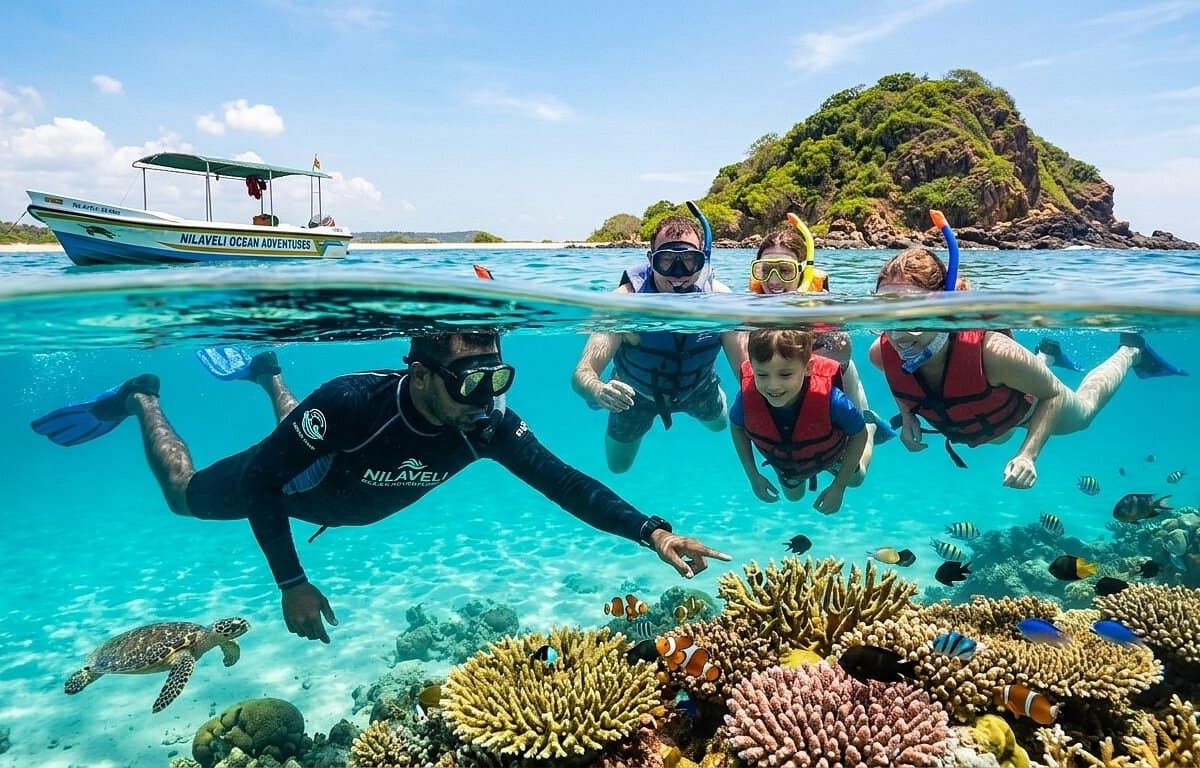
Pigeon Island Marine National Park sits a short boat ride off Nilaveli beach near Trincomalee and is Sri Lanka's most accessible protected reef site, with shallow coral reachable within minutes of entering the water rather than requiring a long swim or boat transfer to a dive site. It is a genuinely good option for couples with limited or no snorkelling experience, since much of the reef sits in water shallow enough to stand in if needed.
Turtles, reef fish in considerable variety, and reported blacktip reef shark sightings in the shallows are all part of what draws visitors here, though as with any wildlife encounter, no operator can guarantee a specific sighting on a given day. Entry to the marine park requires a ticket and, depending on current rules, a mandatory local guide accompanying snorkellers in the water.
Because Pigeon Island sits within a national park, coral touching and standing on reef are actively discouraged and enforced by the accompanying guides, which is worth couples knowing in advance so the etiquette does not come as a surprise mid-swim.
- →Pigeon Island: shallow reef, short boat transfer from Nilaveli, near Trincomalee.
- →Turtles, reef fish and reported reef shark sightings, none of which are guaranteed on a given visit.
- →A marine park ticket and, typically, an accompanying guide are required in the water.
South-coast reef spots
Unawatuna's reef sits close to shore in relatively calm, shallow water, making it one of the more approachable snorkelling spots on the south coast for couples without much prior experience, and it can often be reached directly from the beach rather than requiring a boat. Nearby sites around Mirissa and further along the coast offer boat-based snorkelling and diving trips to slightly deeper reef and occasional wreck sites.
Diving specifically is more developed on the south coast than at Pigeon Island, with several PADI-affiliated dive centres based around Unawatuna and Hikkaduwa offering both introductory dives for beginners and full certification courses. Wreck diving, where local knowledge of specific sites matters considerably, is a notable draw for couples who are already certified divers.
- →Unawatuna: shore-accessible reef, calm and shallow, suited to beginners.
- →South-coast dive centres: established PADI-affiliated operators offering certification and wreck dives.
- →Boat trips from Mirissa reach slightly deeper reef beyond direct shore access.
Seasonal windows for each coast
The south and west coasts, including Unawatuna, are calmest roughly December to March, when visibility and sea conditions are at their best for both snorkelling and diving. Outside this window, the same south-west monsoon that roughens the beaches also reduces underwater visibility considerably.
The east coast, including Pigeon Island and Trincomalee, runs an inverse season of roughly May to September, calm and clear exactly when the south coast is at its roughest. This means a couple travelling in the Canadian summer can still get excellent snorkelling conditions by basing on the east coast instead of assuming the trip is out of season entirely.
Gear and certification realism
Casual snorkelling requires no certification of any kind, and most boat trips and beach outfits either rent basic mask, snorkel and fin sets or allow couples to bring their own, with a reasonable level of comfort in the water being the only real prerequisite. A couple who has snorkelled anywhere before will find nothing unusual about doing so in Sri Lanka.
Diving is a different matter beyond a shallow, closely supervised introductory dive, which most dive centres offer to complete beginners as a one-off taster under an instructor's direct control. Diving independently at depth requires an open-water certification, which typically takes three to four days locally through a PADI-affiliated centre, combining classroom time, pool practice and open-water dives.
Couples who are already certified divers should bring or verify their certification card before travelling, and confirm current requirements such as a dive medical form with the specific dive centre ahead of time, since requirements can vary slightly between operators.
- →Snorkelling: no certification needed, basic gear rented or brought, suits any comfort level in water.
- →Introductory dive: a one-off, closely supervised taster dive, no certification required.
- →Open-water certification: roughly three to four days locally, needed for independent diving at depth.
Planning a snorkelling or diving day
Couples building a two-coast itinerary can realistically fit both experiences in: a south-coast snorkel or dive session during a December to March stay, and a Pigeon Island trip if the itinerary also includes an east-coast stretch roughly May to September. A single-season trip should match the coast visited to the calendar rather than assuming either coast works year-round.
Lankan Stays & Trails arranges snorkelling trips and dive-centre bookings, including certification courses for couples who want to learn together, matched to whichever coast fits the travel dates.
Frequently asked questions
Do you need to be a certified diver to snorkel at Pigeon Island?
No, snorkelling requires no certification, and Pigeon Island's shallow reef is reachable by fin within minutes of entering the water. A marine park ticket and, typically, an accompanying guide in the water are required as part of the park's conservation rules.
When is the best time to visit Pigeon Island for snorkelling?
Roughly May to September is the calmest, clearest window for Pigeon Island and the wider Trincomalee area, opposite the south coast's December to March season. Visiting outside this window generally means rougher seas and reduced underwater visibility.
Where is the best snorkelling on the south coast of Sri Lanka?
Unawatuna is one of the more accessible south-coast snorkelling spots, with a shallow, close-to-shore reef suited to beginners. Boat trips from nearby Mirissa reach slightly deeper reef beyond what is reachable directly from the beach.
How long does it take to get a diving certification in Sri Lanka?
An open-water certification typically takes three to four days locally through a PADI-affiliated dive centre, combining classroom learning, pool practice and open-water dives. Several centres on the south coast around Unawatuna and Hikkaduwa run these courses regularly.
Can beginners try diving in Sri Lanka without certification?
Yes, most dive centres offer a shallow, closely supervised introductory dive for complete beginners under an instructor's direct control, requiring no prior certification. Diving independently at depth beyond this taster does require an open-water certification.
What marine life can you see snorkelling in Sri Lanka?
Turtles, a wide variety of reef fish, and reported reef shark sightings in the shallows are commonly seen at Pigeon Island and south-coast sites such as Unawatuna, though no specific sighting can ever be guaranteed. Coral condition varies by site and season.
Is diving in Sri Lanka good for couples on their first trip together?
Yes, a shallow introductory dive is accessible to complete beginners and makes a memorable shared first experience, while already-certified couples have a genuine choice of reef and wreck sites on the south coast. Confirm current requirements with the dive centre before booking.