
Quick answer
On poya days, the monthly full moon public holidays, south coast temples such as Weherahena, Wewurukannala, Mulkirigala and Kataragama are busy with worshippers in white, and alcohol is not sold in shops, bars or most hotels. Beaches and Galle Fort fill with Sri Lankan families. Vesak in May brings lanterns and free food stalls. The Sinhala and Tamil New Year in mid-April and the Christmas and New Year fortnight are the busiest periods. Poya dates shift each year with the lunar calendar.
Key takeaways
- Poya days fall on each full moon, roughly twelve or thirteen times a year, on dates that shift each year.
- Alcohol is not sold in shops, bars or most hotel bars on poya days.
- Temples are busiest on poya days, with worshippers dressed in white.
- Vesak, usually in May, brings lanterns, decorations and free food stalls called dansal.
- The Sinhala and Tamil New Year in mid-April and Christmas to New Year are the busiest periods on the south coast.
What happens on poya days
Poya days are Buddhist holidays held on each full moon, when many Sri Lankans visit temples, observe precepts and spend time with family. They are public holidays, so schools and many offices close.
Poya days also shape the rhythm of the coast in quieter ways. Fishing boats at some harbours stay in, markets are calmer, and many families make a day trip to the beach after visiting a temple in the morning. For visitors, that means busier sands in the afternoon and quieter roads early.
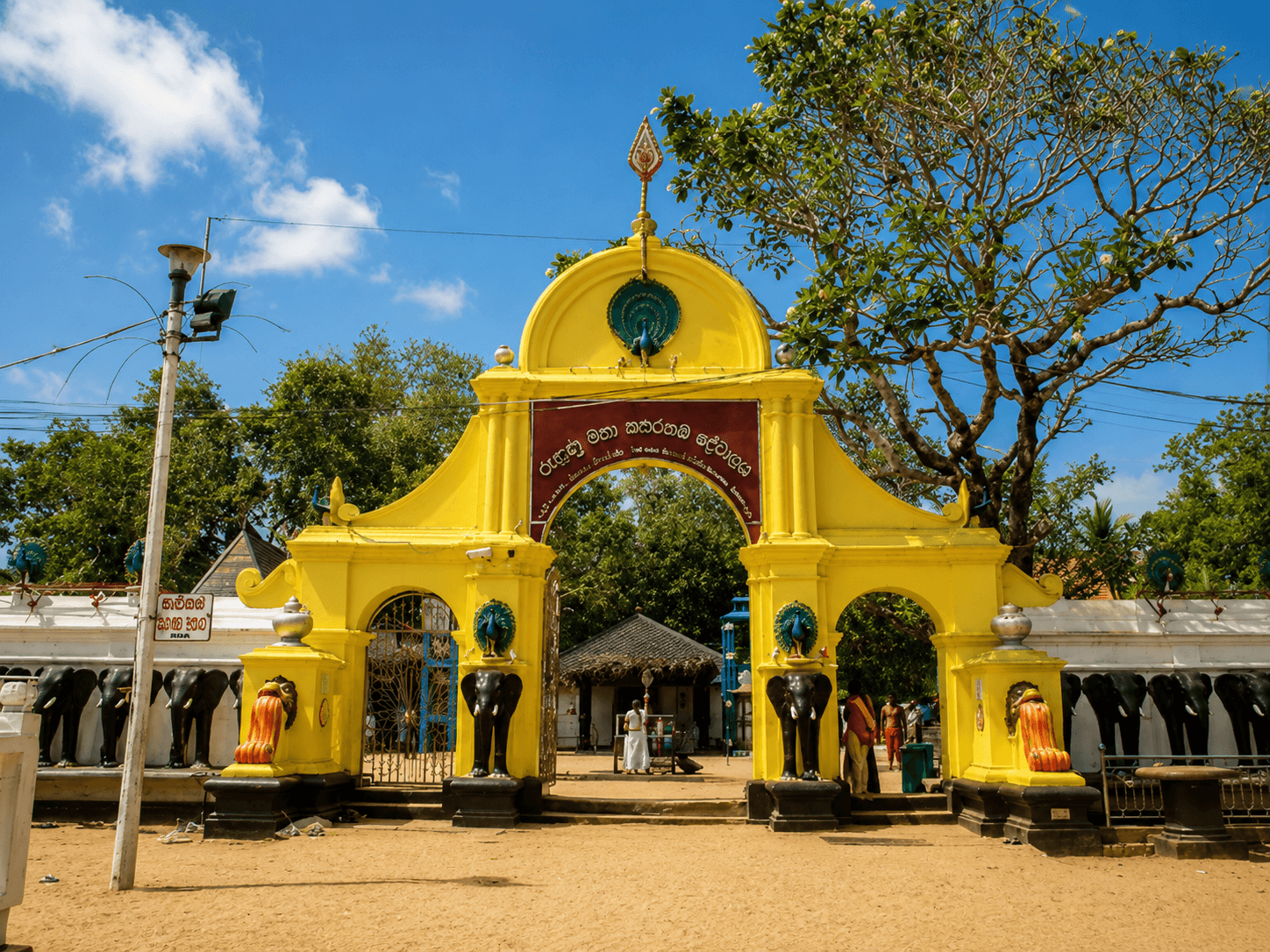
On the south coast, temples such as Weherahena, Wewurukannala, Mulkirigala and Yatagala are busy with worshippers dressed in white, bringing flowers and lighting oil lamps. Alcohol is not sold in shops, bars or most hotel bars, and some restaurants close or serve only soft drinks.
- →Temples: busy, with worshippers in white.
- →Alcohol: not sold on poya days.
- →Beaches: busier with Sri Lankan families.
Sightseeing on poya days
Visiting temples on poya days can be rewarding, with a devotional atmosphere and chanting, but they are crowded, and visitors should be especially respectful. Dress in light colours, keep voices low and avoid photographing people at prayer.
Other sights, such as Galle Fort, beaches and museums, can be busier with domestic visitors. Some museums close on poya days, so check before going. Nature sights, such as lagoons and forests, are usually unaffected.
A good poya day plan is to visit one temple early in the morning, when the atmosphere is calm and devotional, then spend the middle of the day at a lagoon, forest or quieter beach, returning for the evening lamps if you want to see the temple lit up.
- →Temples: devotional and crowded.
- →Museums: some close, so check.
- →Nature: usually unaffected.
Vesak and Poson
Vesak, usually in May, is the most important poya, marking the birth, enlightenment and passing of the Buddha. Towns and villages on the south coast are decorated with lanterns and lights, and dansal, free food stalls, serve drinks and meals to everyone.
Poson, usually in June, marks the arrival of Buddhism in Sri Lanka and is also celebrated with decorations and dansal. Both fall during the south-west monsoon, so evenings can be wet, but the atmosphere is special.
- →Vesak: lanterns, lights and dansal.
- →Poson: decorations and dansal.
- →Dates: shift each year with the lunar calendar.
New Year, Christmas and festival periods
The Sinhala and Tamil New Year, in mid-April, is a major holiday. Sri Lankan families travel to the south coast, beaches and temples are crowded, and some shops and restaurants close for a few days. Book hotels well ahead.
The Christmas and New Year fortnight is the peak season for international visitors, with high prices and busy beaches, Galle Fort and whale boats. Festivals such as the Devinuwara Esala at Dondra and the Kataragama festival, usually in July or August, also bring large crowds.
- →Mid-April: New Year crowds and closures.
- →Late December: peak international season.
- →July and August: festival crowds at Dondra and Kataragama.
Planning around poya days and holidays
Check poya dates before planning a south coast trip, as they shift each year. Plan temple visits for ordinary weekdays if you prefer quiet, or embrace a poya day for the atmosphere. Buy any alcohol you want the day before.
Lankan Stays & Trails checks poya and holiday dates when planning south coast routes, timing busy sights for quieter days and suggesting festival visits when they match a traveller's dates.
- →Check poya dates for your travel year.
- →Buy alcohol the day before if you want it.
- →Book hotels early for mid-April and late December.
Frequently asked questions
What is a poya day in Sri Lanka?
A poya day is a Buddhist holiday held on each full moon, roughly twelve or thirteen times a year. It is a public holiday, when many Sri Lankans visit temples and observe religious precepts. Dates shift each year with the lunar calendar.
Can you buy alcohol on poya days?
No. Alcohol is not sold in shops, bars or most hotel bars on poya days. Some hotels may serve guests privately, but this varies. Buy anything you want the day before.
Are temples open to tourists on poya days?
Yes. Temples welcome visitors on poya days, but they are busy with worshippers, many of whom spend the whole day there. Dress modestly in light colours, keep voices low and avoid photographing people at prayer.
What is Vesak?
Vesak, usually in May, is the most important Buddhist festival in Sri Lanka, marking the birth, enlightenment and passing of the Buddha. Towns are decorated with lanterns and lights, and free food stalls called dansal serve everyone.
Is the south coast busy at Sinhala New Year?
Yes. The Sinhala and Tamil New Year in mid-April brings many Sri Lankan families to the south coast, with crowded beaches and temples and some shops and restaurants closed. Book hotels well ahead.
Do museums close on poya days?
Some do. National museums and some private museums may close on poya days and other public holidays. Check opening days locally before planning a museum visit, and keep a beach, lagoon or nature outing as a fallback.
Is it worth planning a trip around a poya day?
It can be, for travellers interested in Buddhist culture. Temples are at their most atmospheric, with chanting, lamps and families in white. Vesak in May is especially memorable. Those who prefer quiet sightseeing or a drink at sunset may choose to avoid poya days instead.