
Quick answer
Sri Lanka feels less foreign to Turkish visitors than to many other Western or long-haul markets, since hospitality culture, strong tea-drinking habits and a comfortable tolerance for spice all translate reasonably well. The genuine adjustments are Colombo's dense, slow-moving traffic, a noticeably slower general pace of service and daily life, and a religious landscape that's majority Buddhist with significant Hindu, Muslim and Christian communities, quite different from Turkey's overwhelmingly Muslim demographic. None of these are difficult to adjust to, but they are worth expecting rather than discovering on arrival.
Key takeaways
- Sri Lankan hospitality culture, guests treated generously, tea offered readily, feels genuinely familiar to Turkish visitors.
- Sri Lankan cuisine's spice level, particularly in rice and curry, is comfortable for most Turkish palates used to bold, spiced food.
- Colombo's traffic is dense and slow-moving, and journey times should be planned with real buffer rather than assumed distances.
- Sri Lanka is majority Buddhist with significant Hindu, Muslim and Christian minorities, a more religiously mixed landscape than Turkey.
- Service and daily life generally move at a slower pace than Istanbul, which takes most Turkish visitors a day or two to settle into.
What feels familiar to Turkish visitors
Sri Lankan hospitality culture is one of the first things Turkish visitors tend to recognise: guests are treated generously, tea is offered readily and often, and there's a genuine warmth in how strangers, particularly outside the busiest tourist areas, engage with visitors. This isn't identical to Turkish misafirperverlik, but the underlying instinct, that a guest is looked after, translates clearly.
Spice tolerance is another area of overlap. Sri Lankan rice and curry meals are genuinely spicy by many Western standards, but Turkish visitors accustomed to bold, well-seasoned food generally adjust faster than travellers from milder culinary backgrounds, even if the specific spice profile, heavy on curry leaves, cinnamon and chilli, is new.
- →Hospitality: guests looked after generously, tea offered often, a warmth that feels recognisable.
- →Spice tolerance: Sri Lankan curry is genuinely hot, but manageable for most Turkish palates.
- →Tea culture: Sri Lanka's Ceylon tea tradition resonates with Turkey's own strong tea-drinking habits.
Traffic and the pace of daily life
Colombo's traffic is genuinely dense and often slow-moving, closer in feel to the more congested stretches of Istanbul than to Turkey's smaller cities, and journey times within the capital are worth planning with real buffer rather than assuming a distance on a map translates to a quick drive.
Outside Colombo, the pace of daily life, service in restaurants, transactions in shops, general daily rhythm, tends to run slower than most Turkish visitors are used to, even those from Turkey's more relaxed coastal towns. This isn't inefficiency so much as a different cultural default around urgency, and most visitors settle into it within a day or two rather than finding it a lasting frustration.
- →Colombo traffic can be dense and slow; build genuine buffer time into any city-based plans.
- →Restaurant and shop service generally moves slower than in Turkey; this settles into a non-issue within days.
- →Rural and small-town Sri Lanka moves at a noticeably gentler pace than even Turkey's coastal towns.
A different religious landscape
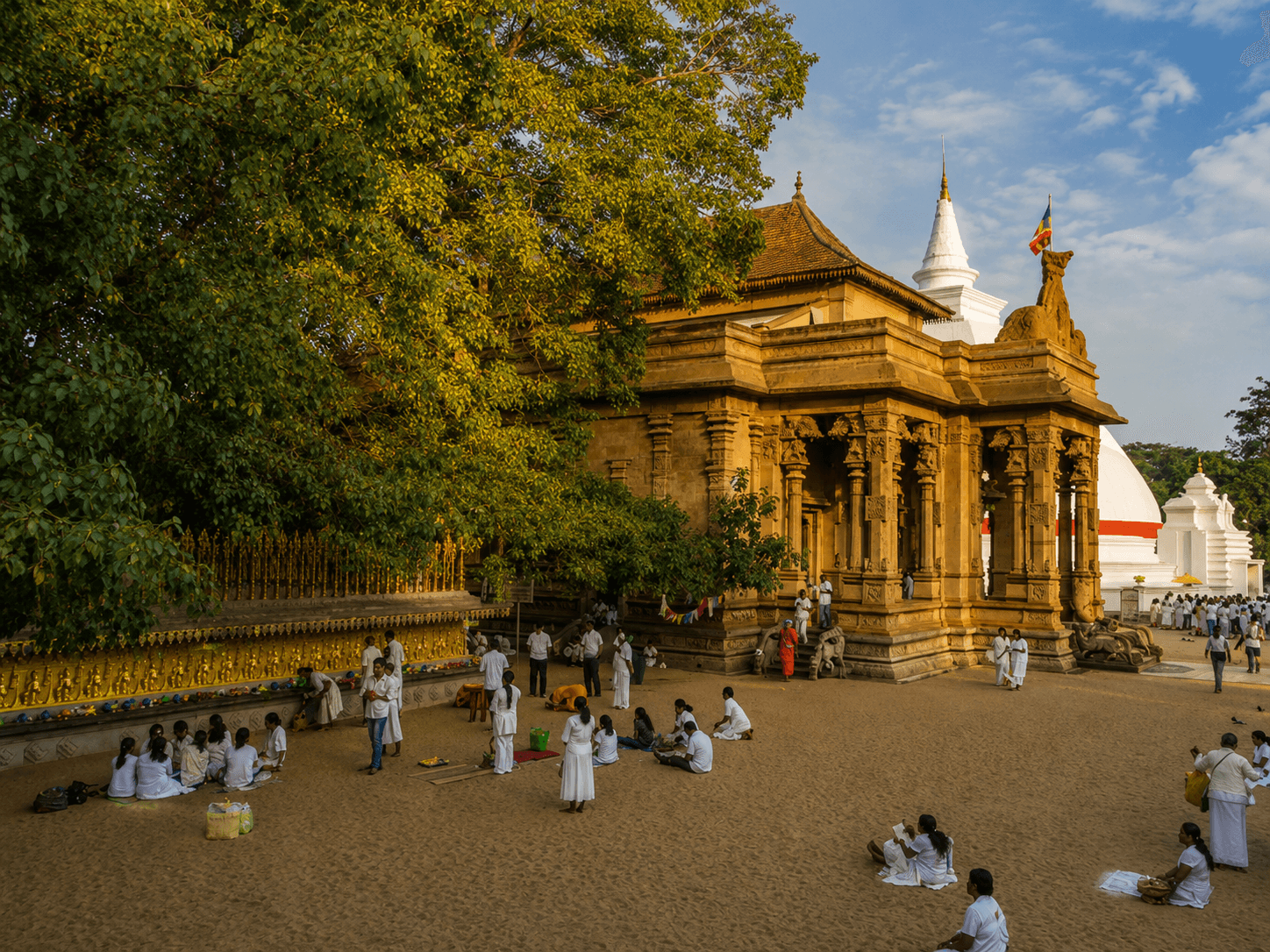
Sri Lanka is majority Buddhist, with significant Hindu, Muslim and Christian minorities woven through different regions, a considerably more religiously mixed country than Turkey's overwhelmingly Muslim demographic. This shows up visibly: Buddhist temples, Hindu kovils, mosques and churches often sit within a short distance of each other, particularly in Colombo, Kandy and parts of the east coast.
For Turkish visitors, this diversity is usually one of the more genuinely novel aspects of the trip rather than a source of discomfort, and etiquette at each type of religious site, modest dress, shoe removal, quiet conduct, applies consistently regardless of which faith a given site belongs to.
Public religious practice is also visibly different day to day: the call to prayer, a familiar soundscape across Turkish cities, is far less prominent outside Sri Lanka's Muslim-majority coastal towns, while Buddhist poya (full moon) days bring their own quieter rhythm, with alcohol sales paused nationwide and some sites busier than usual.
Food, dining and prayer practicalities
Halal-friendly dining is genuinely accessible in the main tourist areas, Colombo, Kandy, the Cultural Triangle and popular coastal towns, without needing to seek it out with much difficulty, a point of genuine reassurance for Muslim Turkish travellers planning meals around the trip.
A dedicated guide to halal food and prayer facilities across the island covers this in far more depth than a single mention here can, and is worth reading before finalising a route for anyone for whom this is a priority.
- →Halal-friendly dining: genuinely accessible in Colombo, Kandy, the Cultural Triangle and popular coastal towns.
- →Poya days: alcohol sales pause nationwide monthly; dates shift with the lunar calendar.
- →Mosques: present in most towns, more concentrated along parts of the coast and in Kandy.
Settling in quickly
None of the genuine adjustment points, traffic, a slower daily pace, a different religious landscape, are difficult, and most Turkish visitors find them interesting rather than unsettling once expected rather than encountered unprepared.
Lankan Stays & Trails builds itineraries for Turkish travellers with these adjustment points already factored into the pacing and route, so the trip's rhythm matches what actually suits a visitor arriving from Istanbul, Ankara or Izmir.
Frequently asked questions
Is Sri Lanka very different from Turkey culturally?
In some ways yes, in others surprisingly familiar. Hospitality culture and spice tolerance translate well, while traffic, a slower daily pace and a more religiously mixed landscape, majority Buddhist with Hindu, Muslim and Christian communities, are the genuine adjustments.
Is Sri Lankan food too spicy for Turkish visitors?
Generally not. Sri Lankan rice and curry is genuinely spicy by many standards, but Turkish visitors used to bold, well-seasoned food usually adjust faster than travellers from milder culinary backgrounds, even if the specific flavours are new.
Is Colombo traffic difficult for visitors?
It can be dense and slow-moving, similar in feel to Istanbul's more congested areas. Building genuine buffer time into any Colombo-based plans, rather than assuming quick journeys, avoids the main frustration visitors report.
Is Sri Lanka a Muslim-friendly destination for Turkish travellers?
Yes, halal-friendly dining is accessible in the main tourist areas without much difficulty. Sri Lanka's religious landscape is more mixed than Turkey's, majority Buddhist with Hindu, Muslim and Christian minorities, but this is generally experienced as interesting rather than difficult.
Do Turkish visitors need to adjust their pace in Sri Lanka?
Somewhat. Daily life and service generally move slower than in Turkey, even compared with Turkey's more relaxed coastal towns. Most visitors settle into this within a day or two rather than finding it a lasting adjustment.
What feels familiar to Turkish visitors in Sri Lanka?
Hospitality culture, guests treated generously with tea offered often, and a comfortable tolerance for spice both translate well. Sri Lanka's own strong tea-drinking tradition also resonates with Turkey's tea culture.
What is a poya day and does it affect visitors?
A poya day is a Buddhist full moon holiday, observed monthly, when alcohol sales pause nationwide and some temples see larger crowds. Dates shift each year with the lunar calendar, so it's worth checking before finalising activity plans.