
Quick answer
A Sri Lanka off-the-beaten-path itinerary for Canadian travellers typically runs 10 to 12 days, pairing Wilpattu National Park in place of the more crowded Yala, Batticaloa on the east coast in place of Arugam Bay or Trincomalee, and lesser-known Ramayana trail sites in the Cultural Triangle instead of the standard Sigiriya circuit. It suits travellers on a second or third trip to Sri Lanka, or first-time visitors who specifically prioritise a quieter experience over the most famous headline sites.
Key takeaways
- Wilpattu National Park offers a similar range of wildlife to Yala, elephants, sloth bears and leopards, with considerably fewer vehicles per sighting.
- Batticaloa, on the east coast between Trincomalee and Arugam Bay, is far less visited than either, with quiet lagoons and beaches.
- The Ramayana trail includes numerous lesser-known sites across the island connected to the Hindu epic, offering an alternative narrative thread to the standard Cultural Triangle circuit.
- This itinerary generally requires more independent research and flexibility than a standard route, since tourism infrastructure is thinner at each stop.
- It suits travellers on a second or third Sri Lanka trip particularly well, layering quieter alternatives on top of a first-trip foundation already covered.
What a Sri Lanka off-the-beaten-path itinerary looks like
An off-the-beaten-path itinerary deliberately substitutes quieter alternatives for several of Sri Lanka's most-visited sites: Wilpattu instead of Yala, Batticaloa instead of Arugam Bay or Trincomalee, and lesser-known Ramayana trail sites layered into a Cultural Triangle visit. The substitutions are close enough in experience to the originals that little is genuinely lost, while the crowds at each stop are considerably thinner.
This route generally suits travellers on a second or third Sri Lanka trip, or first-timers who have specifically prioritised a quieter experience over ticking off the most photographed sites, since it deliberately steps around some of the country's signature stops.
A sample 11-day route
This sample pairs quiet alternatives with a few Ramayana trail detours.
- →Days 1 to 3: Cultural Triangle, focused on lesser-known Ramayana trail sites alongside a shorter Sigiriya visit rather than the full standard circuit.
- →Days 4 to 6: Wilpattu National Park, staying at a lodge bordering the park for two full days of quieter game drives.
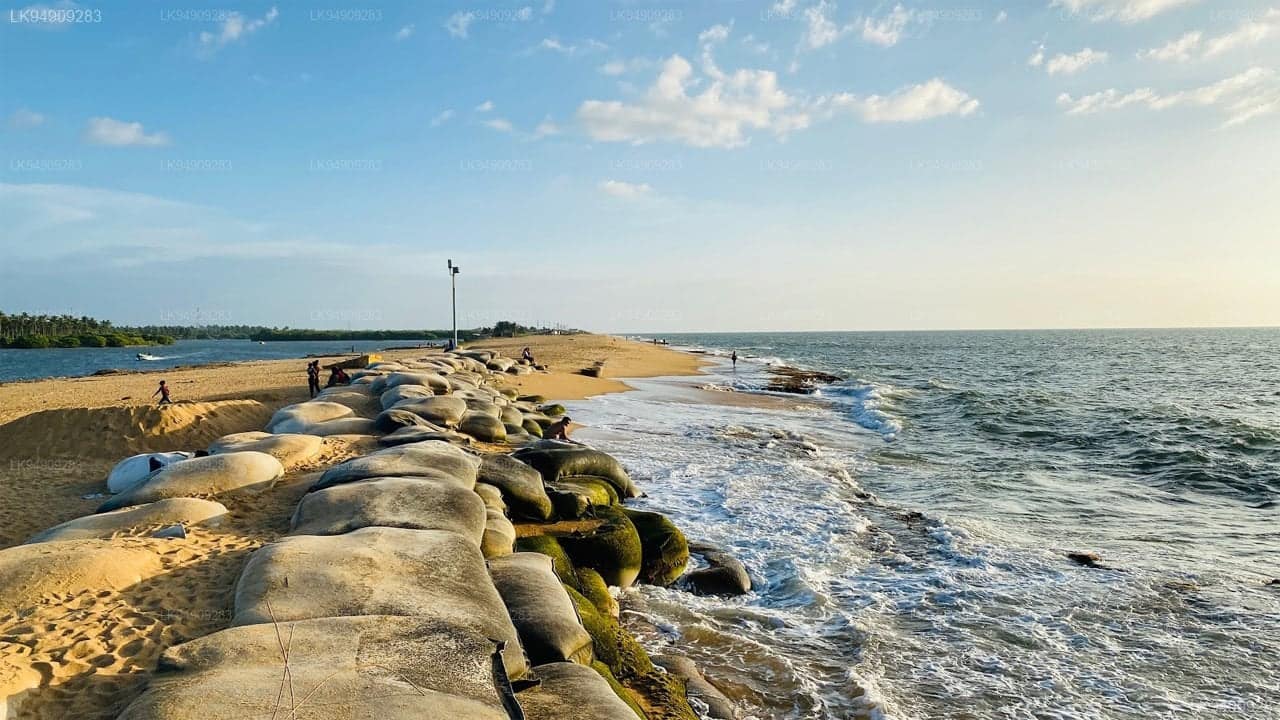
- →Days 7 to 9: Batticaloa, for its quiet lagoons and beaches, considerably less developed than Trincomalee or Arugam Bay.
- →Days 10 to 11: a quieter south-coast stretch, such as Tangalle, to close the trip away from the busiest towns.
What genuinely changes with the substitutions
Wilpattu offers a similar species range to Yala, elephants, sloth bears and leopards, with a genuinely lower vehicle density per sighting, though it can take longer to find wildlife given the park's larger, more forested terrain. This trade-off, patience for quiet, is the defining character of an off-the-beaten-path safari.
Batticaloa sits between Trincomalee and Arugam Bay geographically but sees a fraction of the visitors either receives, with quiet lagoons, a Dutch-era fort and considerably less-developed tourism infrastructure, worth knowing in advance rather than expecting the amenities of the more established coastal towns.
Practicalities for a quieter route
Tourism infrastructure, hotels, restaurants, English-speaking guides, is thinner at each of these substitute destinations than at their more famous equivalents, so this itinerary generally requires more flexibility and independent research than a standard route, and a private driver-guide familiar with the specific region is worth prioritising over a self-drive or public-transport approach.
Booking accommodation somewhat further ahead than a standard itinerary is still worth doing, even though these destinations see fewer visitors overall, since the smaller number of quality properties at each can still book out during peak season.
Planning your off-the-beaten-path itinerary
Wilpattu instead of Yala, Batticaloa instead of Arugam Bay or Trincomalee, and Ramayana trail detours alongside a shorter Cultural Triangle visit is the framework for a genuinely quieter Sri Lanka trip. It suits travellers who have done a standard route before, or first-timers specifically prioritising fewer crowds.
Lankan Stays & Trails builds private, driver-guided off-the-beaten-path itineraries for Canadian travellers, substituting quieter alternatives at each stage of a standard route.
Frequently asked questions
How many days should an off-the-beaten-path Sri Lanka itinerary be?
10 to 12 days is typical, pairing Wilpattu, Batticaloa and lesser-known Ramayana trail sites as quieter alternatives to Yala, Arugam Bay or Trincomalee, and the standard Sigiriya circuit.
Is Wilpattu a good alternative to Yala?
Yes. It offers a similar range of wildlife, elephants, sloth bears and leopards, with considerably fewer vehicles per sighting, though it can take longer to find wildlife given the park's larger, more forested terrain.
Is Batticaloa worth visiting instead of Trincomalee or Arugam Bay?
For travellers prioritising quiet over established tourism infrastructure, yes. It sees far fewer visitors than either, with quiet lagoons and a Dutch-era fort, though amenities are considerably more limited.
What is the Ramayana trail in Sri Lanka?
A series of sites across the island connected to the Hindu epic the Ramayana, offering an alternative narrative thread through the Cultural Triangle and beyond, away from the standard Sigiriya-focused circuit.
Is an off-the-beaten-path itinerary good for first-time visitors?
It can work, but generally suits travellers on a second or third trip better, or first-timers who specifically prioritise a quieter experience over the most photographed, well-known sites.
Does an off-the-beaten-path Sri Lanka trip need more planning?
Generally yes. Tourism infrastructure is thinner at each stop, so more flexibility and independent research, or a private driver-guide familiar with the specific region, is worth prioritising over a standard self-planned approach.