
Quick answer
A Sri Lanka south coast itinerary for Canadian travellers typically runs 8 to 10 days, moving from Galle Fort east through Weligama and Mirissa to the quieter beaches around Tangalle, without an inland detour to the Cultural Triangle or hill country. December to March is the coast's dry season and the strongest window, offering whale watching at Mirissa, surf lessons at Weligama, and calmer, swimmable seas along most of the route. It suits travellers with limited time who want depth on one coastline rather than breadth across the island.
Key takeaways
- 8 to 10 days moving east from Galle to Tangalle covers the south coast's main towns without backtracking or an inland detour.
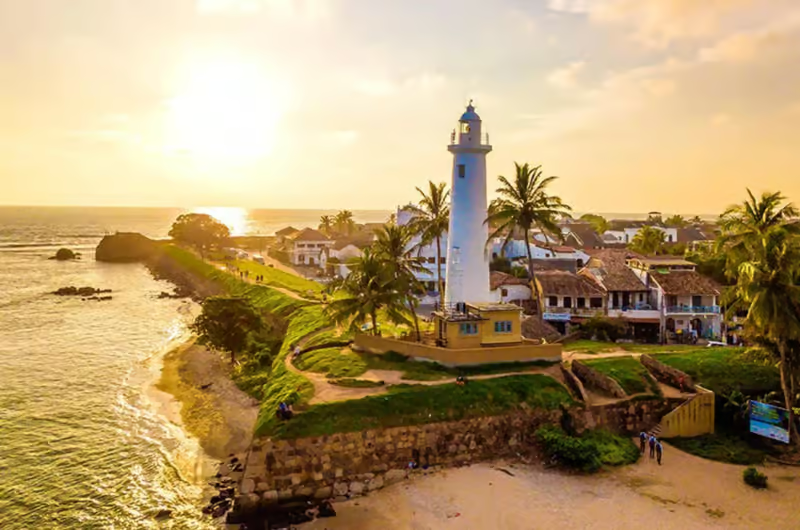
- Galle Fort, a UNESCO World Heritage site, is the most walkable, historically dense stop on the route and suits two or three nights.
- Mirissa's blue whale season runs roughly November to April, making it worth timing a multi-night stay there around a dawn boat trip.
- Weligama has the coast's most established surf school scene, suited to beginners, and sits a short distance from Mirissa.
- Tangalle and the coastline further east offer quieter, less developed beaches than Galle or Mirissa, worth the extra distance for travellers prioritising a slower close to the trip.
What a Sri Lanka south coast itinerary looks like
A south-coast-only itinerary moves in one direction, generally west to east from Galle toward Tangalle, staying close to the shore rather than detouring inland to the Cultural Triangle or hill country. This suits travellers with limited time who want real depth on one stretch of coastline instead of a wider but shallower loop of the island.
The route naturally sequences through the coast's different characters: Galle's colonial-era fort town, Weligama and Mirissa's surf-and-whale-watching stretch, and Tangalle's quieter, less developed beaches further east.
A sample 9-day route
This sample moves steadily east along the coast.
- →Days 1 to 3: Galle Fort, for its ramparts, colonial architecture and boutique shopping, with day trips to nearby beaches.
- →Days 4 to 6: Weligama and Mirissa, for surf lessons and two or three dawn whale-watching boat trips.
- →Days 7 to 9: Tangalle, for quieter, less developed beaches and a slower close to the trip.
Why stay on the coast only
Skipping the inland detour to the Cultural Triangle or hill country means shorter, less demanding transfers throughout, since the coast road stays largely flat and direct compared with the winding hill-country routes further north. This makes a south-coast-only itinerary a realistic option even for travellers with under 10 days, where a full-island loop would feel rushed.
The trade-off is missing the ancient cities and tea country entirely; travellers who want both should look at a standard first-time itinerary instead, or extend this route by three or four days to add a Cultural Triangle loop before returning to the coast.
Getting around the south coast
The coastal train line connects Galle, Weligama and Mirissa reasonably well, running close to the shore for scenic stretches, and is a viable alternative to a private driver for travellers comfortable navigating local transport. A private driver remains the more flexible option for reaching Tangalle and any quieter beaches further off the main line.
December to March is the strongest season for calm, swimmable seas and dry weather across the whole route; the south-west monsoon, roughly May to September, brings rougher seas and more rain to this specific coast.
Planning your south coast itinerary
Galle, Weligama and Mirissa, then Tangalle, moving steadily east over 8 to 10 days, is the framework for a focused south-coast trip. December to March gives the calmest seas and best whale-watching odds; add a Cultural Triangle extension separately if time allows.
Lankan Stays & Trails builds private, driver-guided south-coast itineraries for Canadian travellers, sequencing Galle, the surf-and-whale-watching stretch and Tangalle's quieter beaches into one coherent route.
Frequently asked questions
How many days should a Sri Lanka south coast itinerary be?
8 to 10 days is typical, moving steadily from Galle Fort east through Weligama and Mirissa to the quieter beaches around Tangalle, without an inland detour.
Is a south-coast-only itinerary enough for a first Sri Lanka trip?
It works well for travellers with limited time who prioritise beach, surf and whale watching over ancient cities and hill country. Those wanting both should extend the trip or choose a standard first-time itinerary instead.
What is the best time for a Sri Lanka south coast trip?
December to March, the region's dry season, offering calm, swimmable seas, reliable whale-watching conditions at Mirissa, and generally dry weather along the whole route.
Can you use the train along Sri Lanka's south coast?
Yes. The coastal train line connects Galle, Weligama and Mirissa reasonably well and runs close to the shore for scenic stretches, though a private driver remains more flexible for reaching Tangalle.
Is Galle or Mirissa better to base in on the south coast?
They suit different purposes rather than one being better. Galle Fort offers history and walkability; Mirissa offers whale watching and beach time. Most itineraries include both rather than choosing one.
Are the beaches quieter east of Mirissa?
Yes, generally. Tangalle and the coastline further east are less developed than Galle or Mirissa, worth the extra distance for travellers prioritising a slower, quieter close to the trip.