
Quick answer
For Turkish travellers, Sri Lanka generally has the routing and pacing advantage: Turkish Airlines flies direct from Istanbul to Colombo in roughly nine to ten hours with a minimal time shift of around two and a half hours, while Bali requires a connecting flight of typically 15 hours or more and sits roughly five hours ahead of Turkish time. Bali answers back with a well-established surf, wellness and digital-nomad scene and dramatic rice-terrace and volcano landscapes. Choose Bali for that built-out independent-travel infrastructure; choose Sri Lanka for a direct flight, a smaller time shift, fewer crowds and an accessible wildlife safari.
Key takeaways
- Turkish Airlines flies direct Istanbul to Colombo in roughly nine to ten hours; reaching Bali from Istanbul typically requires a connection and 15 hours or more of total flying.
- Sri Lanka sits roughly two and a half hours ahead of Turkish time; Bali sits roughly five hours ahead, a noticeably bigger adjustment for the body clock.
- Sri Lanka has leopard and elephant safaris at Yala and Udawalawe national parks, an experience Bali does not offer.
- Bali's most popular areas, Canggu, Seminyak and Ubud, have grown considerably busier and pricier over the past decade compared with Sri Lanka's still-developing tourist circuit.
- Sri Lanka's day-to-day touring costs generally run lower in USD terms than Bali's increasingly built-up tourist zones.
The short answer for Turkish travellers
If routing simplicity and a smaller time shift matter most, and you'd rather spend the trip on a full-country circuit with wildlife than a single well-trodden island, Sri Lanka is the stronger choice from Istanbul. If an established surf, wellness and co-working scene on a compact, scooter-friendly island is what you're after, Bali delivers that better than Sri Lanka does, and it's worth the longer journey for the right traveller.
Neither destination is the wrong answer; they suit different trips. The honest differentiator for a Turkish traveller specifically is what happens in the air and in the days immediately after landing, and that consistently favours Sri Lanka.
- →Direct flight, minimal time shift, fewer crowds, wildlife safari: Sri Lanka.
- →Established surf, wellness and digital-nomad infrastructure, dramatic rice terraces: Bali.
- →Both: strong beaches, rich culture, good value relative to Turkish city prices.
- →Quieter, less commercialised tourist circuit: generally Sri Lanka.
Flight time and time difference from Turkey
Turkish Airlines flies non-stop from Istanbul to Colombo in roughly nine to ten hours, the shortest route to Sri Lanka among its major international markets. Bali has no direct flight from Istanbul; travellers typically connect through a hub such as Doha, Singapore or Dubai, with total journey time commonly running 15 hours or more once the connection is included, and it's worth checking current routing since it does shift.
The time-zone gap compounds the flight difference. Sri Lanka sits roughly two and a half hours ahead of Turkish time, a small enough shift that most travellers barely notice jet lag. Bali sits roughly five hours ahead, a genuinely bigger adjustment that, combined with the longer connecting journey, makes for a noticeably more tiring arrival.
- →Istanbul to Colombo: direct on Turkish Airlines, roughly nine to ten hours.
- →Istanbul to Bali: typically one connection via the Gulf or Asia, 15-plus hours total.
- →Time difference from Turkey: roughly 2.5 hours for Sri Lanka versus roughly 5 hours for Bali.
Crowds, infrastructure and the digital-nomad scene
Bali's south, Canggu, Seminyak, Uluwatu, and the cultural hub of Ubud have developed into a dense, well-oiled scene of co-working spaces, wellness retreats, beach clubs and villa rentals, genuinely excellent for independent, spontaneous travel by scooter. That same popularity means these areas are considerably busier and more built-up than they were a decade ago, and it shows in traffic and crowding at the best-known sights.
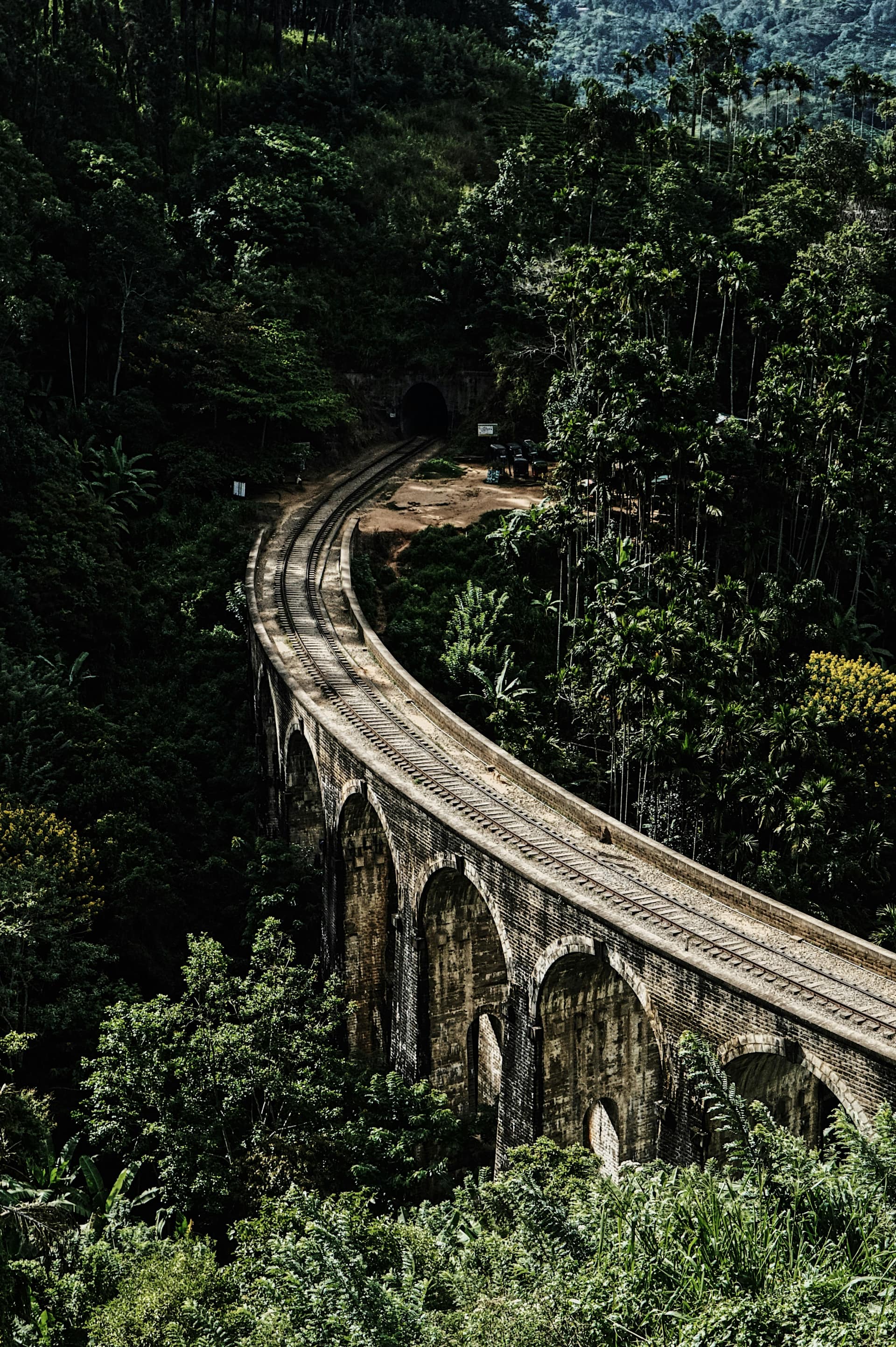
Sri Lanka's tourist circuit is still comparatively quiet. Sigiriya Rock, the Kandy-Ella train, and even the south coast beaches feel noticeably less commercialised than Bali's headline spots, though this is shifting gradually as the island's tourism sector grows. For a Turkish traveller who has already done a busy resort-island trip elsewhere, Sri Lanka's relative quiet is a genuine point of difference.
- →Bali: dense, well-developed infrastructure for independent and digital-nomad travel, but noticeably busier at popular sites.
- →Sri Lanka: still a comparatively quiet tourist circuit, though growing steadily.
- →Bali is easier for spontaneous, unguided travel by scooter; Sri Lanka is typically toured with a private driver-guide.
Landscape, culture and wildlife
Bali's Hindu-Balinese temples at Tanah Lot and Uluwatu, the UNESCO-listed subak rice-terrace system, and active volcanoes at Batur and Agung give it real cultural and landscape density within a small island. It's a genuinely photogenic and spiritually distinctive place.
Sri Lanka answers with breadth: multiple UNESCO World Heritage Sites across ancient cities and cave temples, cool hill-country tea estates, rainforest, and wildlife Bali simply doesn't have, leopard safaris at Yala, elephant gatherings at Minneriya, blue whale watching off two coasts. If wildlife matters to the trip, Sri Lanka wins outright.
Cost comparison
Both destinations offer strong value against Turkish city prices, though Bali's most popular areas have grown noticeably pricier as tourism infrastructure has expanded, particularly Canggu and Seminyak. Sri Lanka's day-to-day costs, driver-guides, food, entry fees, generally run lower in USD terms than Bali's more developed tourist zones.
Bali remains cheap and easy to get around independently, a scooter or a short ride-hailing trip covers most of the compact tourist area. Sri Lanka is a considerably bigger, more geographically varied country, and a private driver-guide is the standard way to see it, still affordable relative to Turkish touring costs.
Deciding between them
If Bali's specific scene, surf, wellness, co-working, dramatic rice terraces, is genuinely what you want, the longer connecting flight and bigger time shift are a reasonable trade-off. If routing ease, a smaller time adjustment, fewer crowds and a real wildlife safari matter more, Sri Lanka is the stronger fit for a Turkish traveller's single long-haul trip.
Lankan Stays & Trails builds private, driver-guided Sri Lanka itineraries for Turkish travellers, timed around the direct Istanbul-Colombo flight so the trip starts well-rested rather than after a long connecting journey.
Frequently asked questions
Is Sri Lanka better than Bali for Turkish travellers?
It depends on priorities. Sri Lanka has a direct flight from Istanbul, a smaller time shift and an accessible wildlife safari. Bali has a more established surf, wellness and digital-nomad scene, but requires a connecting flight and a bigger time-zone adjustment from Turkey.
Is there a direct flight from Istanbul to Bali?
No. Bali has no non-stop flight from Istanbul; travellers typically connect through a hub such as Doha, Singapore or Dubai, with total journey time commonly 15 hours or more. Sri Lanka, by contrast, has a direct Istanbul-Colombo flight of roughly nine to ten hours.
What is the time difference between Turkey and Bali?
Bali sits roughly five hours ahead of Turkish time, a noticeably bigger adjustment than Sri Lanka's roughly two-and-a-half-hour difference. Combined with a longer connecting flight, this makes Bali's arrival adjustment more tiring for most Turkish travellers.
Is Bali more crowded than Sri Lanka?
Generally yes at the headline sights. Bali's popular areas, Canggu, Seminyak, Uluwatu and Ubud, have grown considerably busier over the past decade. Sri Lanka's tourist circuit, including Sigiriya and the south coast, is still comparatively quiet, though it is growing.
Does Sri Lanka have anything like Bali's surf and wellness scene?
Not to the same scale. Sri Lanka has good surf, particularly at Arugam Bay, and a growing wellness offering, but Bali's co-working, retreat and beach-club infrastructure is considerably more developed and geared toward independent, longer-stay travel.
Which is cheaper, Sri Lanka or Bali?
Sri Lanka's day-to-day touring costs generally run lower in USD terms than Bali's more developed and increasingly pricier tourist zones. Nightly accommodation rates vary widely in both, so total trip cost depends heavily on the specific hotels and activities chosen.
Does Sri Lanka have wildlife like Bali?
Sri Lanka has wildlife experiences Bali doesn't offer: leopard safaris at Yala, elephant gatherings at Minneriya, and blue whale watching off two coasts. This is Sri Lanka's clearest advantage over Bali if wildlife matters to a Turkish traveller's trip.