
Quick answer
For Turkish travellers focused mainly on diving and snorkelling, the Maldives generally offers the stronger experience, with house-reef diving directly from many resorts, exceptional visibility, manta ray cleaning stations and seasonal whale shark sightings around atolls such as Ari. Sri Lanka's reefs at Pigeon Island, Hikkaduwa and Trincomalee are genuinely worthwhile but generally less consistent and less renowned internationally, and Sri Lanka adds blue whale watching off the south and east coasts, an experience the Maldives cannot offer. Choose the Maldives if diving quality is the main priority; choose Sri Lanka if variety and blue whale watching matter too.
Key takeaways
- Many Maldives resorts offer house-reef access directly from the beach or jetty, letting guests snorkel or dive without a boat excursion.
- Manta ray cleaning stations and seasonal whale shark aggregations, particularly around South Ari Atoll, are among the Maldives' most distinctive dive draws.
- Sri Lanka's Pigeon Island National Park off Trincomalee and Hikkaduwa's reef are its best-known snorkelling sites, both generally reachable by a short boat ride from shore.
- Sri Lanka offers blue whale watching off Mirissa on the south coast and Trincomalee on the east coast, a marine wildlife experience the Maldives does not offer.
- The Maldives is generally considered the stronger pure reef-diving destination of the two, with more consistent visibility and a more established liveaboard diving industry.
The honest answer for divers
Diving and snorkelling quality is one comparison where the Maldives generally has a clear edge over Sri Lanka, and it's worth saying plainly rather than hedging around it. The Maldives' reef systems, built on coral atolls with exceptional water clarity, are internationally regarded as among the best diving in the world, and much of that quality is accessible directly from a resort's house reef.
Sri Lanka's reefs are genuinely good but generally more variable, affected more by monsoon seasons, coastal development and past coral bleaching events than the Maldives' more remote atoll systems. What Sri Lanka adds that the Maldives cannot is blue whale watching and a more varied trip overall, so the honest framing is: Maldives for the best pure diving, Sri Lanka for a broader marine and cultural experience with respectable diving included.
- →Pure reef-diving quality and consistency: generally the Maldives.
- →Blue whale watching: Sri Lanka only.
- →Variety of a trip beyond diving: generally Sri Lanka.
Diving and snorkelling in the Maldives
The Maldives' appeal for divers starts with house-reef access: many resorts sit directly on or near a reef, so guests can snorkel or shore-dive without booking a boat trip, a genuine convenience over most other diving destinations. Visibility is generally excellent for much of the year, and the atoll structure creates channels and drop-offs that concentrate marine life.
Manta ray cleaning stations, particularly around South Ari Atoll and Baa Atoll, draw divers specifically for reliable manta sightings, and whale sharks are seen seasonally in some of the same areas. A well-established liveaboard diving industry also lets serious divers cover multiple atolls on a single trip, something a resort-based stay alone doesn't offer.
- →House-reef access: many resorts allow snorkelling or diving directly from the property.
- →Manta ray cleaning stations: a signature Maldives dive draw, particularly around South Ari and Baa Atolls.
- →Whale sharks: seasonal sightings in parts of the Maldives, generally best confirmed with a local dive operator.
- →Liveaboards: an established option for divers wanting to cover several atolls on one trip.
Diving and snorkelling in Sri Lanka
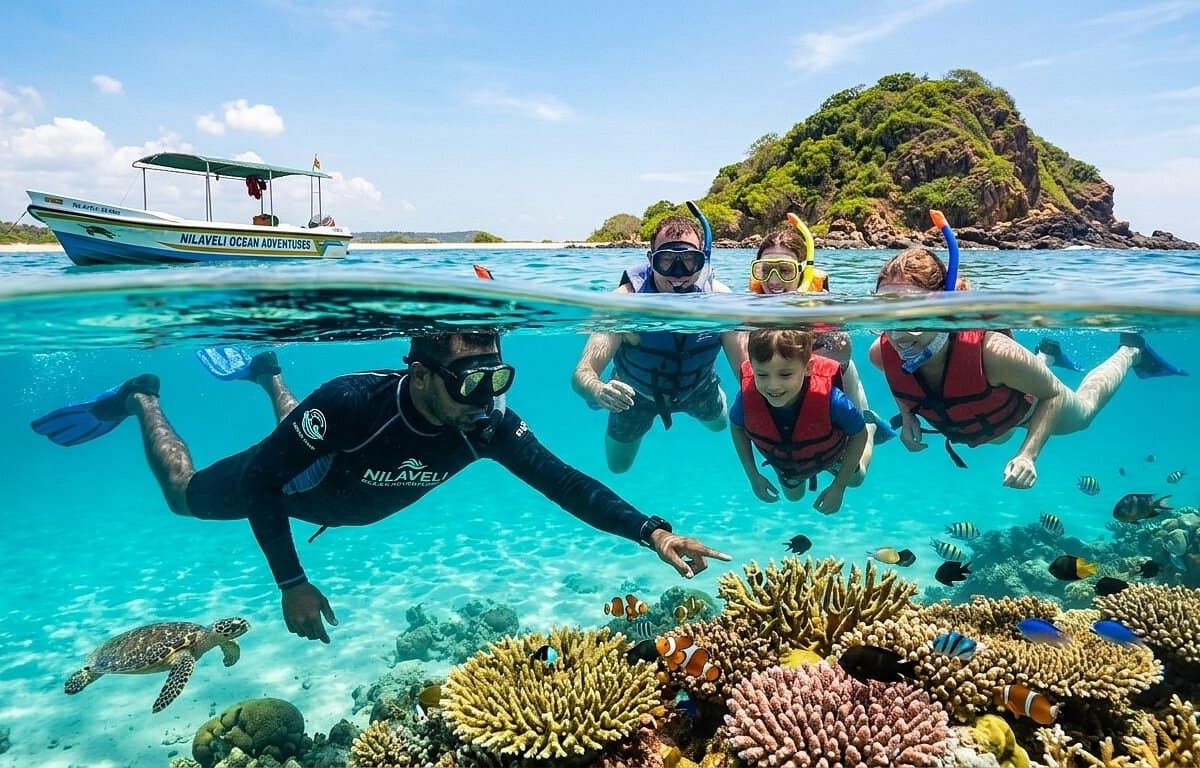
Sri Lanka's best-known snorkelling site is Pigeon Island National Park off Trincomalee on the east coast, a shallow reef with generally good visibility and a reasonable variety of reef fish, reachable by a short boat ride from shore. Hikkaduwa on the south coast offers another accessible reef, generally busier and closer to shore, suited to casual snorkellers rather than serious divers.
Trincomalee itself also offers wreck diving and reef sites beyond Pigeon Island, and the east coast's diving season generally runs opposite the south and west coasts due to Sri Lanka's two separate monsoon systems, which is worth planning around. Overall, Sri Lanka's reefs are genuinely enjoyable but generally don't match the Maldives' consistency or renown among serious divers.
- →Pigeon Island National Park, Trincomalee: Sri Lanka's best-regarded snorkelling site.
- →Hikkaduwa: accessible, generally busier reef suited to casual snorkellers.
- →Trincomalee: reef and wreck diving, with a dive season generally opposite the south and west coasts.
Blue whale watching: Sri Lanka's marine wildlife advantage
Sri Lanka offers blue whale watching off Mirissa on the south coast during roughly the northeast monsoon months, and off Trincomalee on the east coast during roughly the opposite season, giving the island close to year-round whale watching opportunities depending on the coast. This is a genuinely rare wildlife experience, since Sri Lanka's continental shelf drops off close to shore in these areas, bringing deep-water species within a relatively short boat trip.
The Maldives, as a coral atoll nation without a comparable continental shelf structure nearby, does not offer an equivalent blue whale watching experience. For a Turkish traveller who wants marine megafauna beyond reef life specifically, this is a point genuinely in Sri Lanka's favour.
Which destination suits which kind of diver
Serious or experienced divers chasing manta rays, whale sharks and the best possible visibility will generally get more from a dedicated Maldives dive trip or liveaboard, since that's what the destination is built around. Dive certification courses and equipment hire are also widely available and well-established across Maldives resorts.
Travellers who want good snorkelling and some diving as part of a broader trip, alongside temples, tea country, a safari and whale watching, will generally get more overall value from Sri Lanka. Lankan Stays & Trails builds itineraries for Turkish travellers that combine a Trincomalee or Mirissa stop with the rest of a Sri Lanka route, rather than treating diving as the entire trip.
Frequently asked questions
Is the Maldives better than Sri Lanka for diving?
Generally yes for pure reef-diving quality, with more consistent visibility, house-reef access from many resorts and signature draws like manta ray cleaning stations. Sri Lanka's diving is genuinely worthwhile but generally less consistent and less internationally renowned than the Maldives'.
Where is the best snorkelling in Sri Lanka?
Pigeon Island National Park off Trincomalee on the east coast is generally considered Sri Lanka's best snorkelling site, with a shallow reef and good visibility. Hikkaduwa on the south coast is another accessible option, generally busier and suited to casual snorkellers.
Can you see whale sharks in the Maldives?
Yes, seasonally in parts of the Maldives, particularly around South Ari Atoll, though sightings are not guaranteed on any given trip. It's worth confirming current seasonal patterns with a local dive operator before booking a trip specifically for whale sharks.
Does Sri Lanka have blue whale watching?
Yes, off Mirissa on the south coast and off Trincomalee on the east coast, at roughly opposite times of year due to Sri Lanka's two monsoon systems. This is an experience the Maldives, a coral atoll nation, does not offer.
Is Maldives diving suitable for beginners?
Yes, many resorts offer beginner dive courses and shallow house-reef sites suitable for first-time divers, alongside more advanced sites and liveaboards for experienced divers. Confirm a specific resort's dive centre credentials and course offerings before booking.
What is the best time to dive in Sri Lanka?
It depends on the coast, since Sri Lanka has two separate monsoon seasons. The west and south coasts, including Hikkaduwa, generally suit diving roughly from November to April, while the east coast, including Trincomalee and Pigeon Island, generally suits diving roughly from May to September.
Do you need a boat to snorkel in the Maldives?
Not always. Many Maldives resorts offer house-reef access directly from the beach or jetty, letting guests snorkel without a boat trip, though reaching manta ray cleaning stations or more remote sites generally still requires a boat excursion.