
Quick answer
The Maldives generally offers superior diving for reef variety, visibility and pelagic life such as manta rays and whale sharks, with many resorts giving direct house-reef access from your villa. Sri Lanka offers a different but genuine draw: accessible snorkelling at Pigeon Island and Hikkaduwa, historic shipwreck diving around Trincomalee and Galle, and, uniquely, some of the world's most reliable blue whale watching off Mirissa. Serious divers chasing big pelagics generally prefer the Maldives; travellers who want varied marine encounters alongside a wider holiday tend to prefer Sri Lanka.
Key takeaways
- The Maldives leads on reef diving, visibility and encounters with manta rays and whale sharks.
- Sri Lanka's strength is variety: shipwrecks, accessible reef snorkelling and exceptional blue whale watching.
- Many Maldives resorts offer house-reef access directly from your villa; Sri Lanka's best sites require a short boat trip.
- Mirissa is one of the most reliable places in the world to see blue whales, a marine encounter the Maldives doesn't offer.
- Sri Lanka's diving season runs opposite on each coast, so timing matters more than in the Maldives.
Diving and snorkelling in the Maldives
The Maldives sits on a series of coral atolls with exceptional water clarity, and its reputation for pelagic encounters (manta rays, whale sharks, reef sharks) is well earned, particularly around channels and cleaning stations that concentrate marine life. Many resorts have a house reef reachable by wading or a short swim, which makes snorkelling genuinely effortless.
The trade-off is that you're diving and snorkelling one atoll system for the trip, with excursions to nearby sites by boat. It's world-class, but it's one kind of underwater environment repeated with variations.
- →Exceptional visibility and coral atoll diving across the archipelago.
- →Regular encounters with manta rays and, seasonally, whale sharks in known channels.
- →House-reef access directly from many resorts, ideal for casual snorkellers.
- →One underwater environment throughout the trip, with boat excursions for variety.
Diving and snorkelling in Sri Lanka
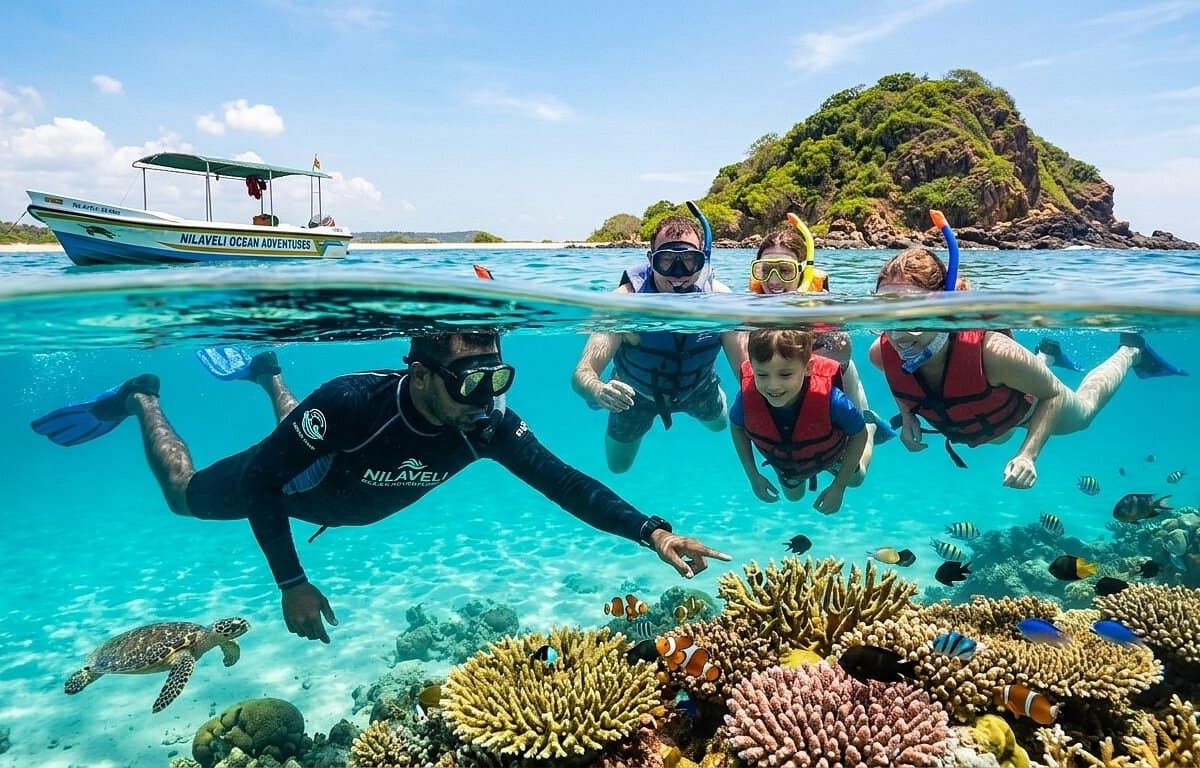
Sri Lanka's underwater draw is different in character. Pigeon Island off Nilaveli on the east coast offers easy, shallow reef snorkelling with reef sharks and turtles in clear water; Hikkaduwa on the south coast has a long-established snorkelling reef close to shore. Around Trincomalee and Galle, wreck diving from the colonial and wartime periods adds a historical dimension the Maldives doesn't have.
The standout, though, is whale watching rather than diving: Mirissa on the south coast is one of the most reliable places anywhere to see blue whales, the largest animal that has ever lived, on a boat trip rather than underwater, alongside sperm whales and dolphins in season.
- →Pigeon Island (Nilaveli, east coast): shallow, easy reef snorkelling with reef sharks and turtles.
- →Hikkaduwa (south coast): a long-established, shore-accessible snorkelling reef.
- →Trincomalee and Galle: shipwreck diving with genuine historical interest.
- →Mirissa: among the world's most reliable spots for blue whale watching, in season.
Reef quality and marine life compared
For pure reef diving quality and pelagic density, the Maldives is generally considered ahead: the atoll system concentrates marine life at predictable sites in a way Sri Lanka's more scattered coastal reefs don't quite match. Serious divers logging manta and whale shark encounters usually get more consistent results in the Maldives.
But 'better diving' isn't the only underwater question. Sri Lanka's blue whale watching is a genuinely world-class wildlife encounter unavailable in the Maldives, and its wreck sites add a dimension purely reef-based diving doesn't have. Which matters more depends on whether you're chasing dive logs or varied encounters.
Best season for each
The Maldives has a relatively stable dry season roughly December to April, with generally good diving conditions across the year given the scattered geography of the atolls. Sri Lanka's diving is more seasonally split: the west and south coasts, including Hikkaduwa and Mirissa's whale season, are best November to April, while the east coast, including Pigeon Island and Trincomalee, is best May to September.
This means Sri Lanka rewards more careful timing than the Maldives: pick the wrong coast in the wrong month and conditions (visibility, swell, whale presence) drop noticeably.
- →Maldives: relatively stable conditions, best broadly December to April.
- →Sri Lanka west/south coast and Mirissa whale season: November to April.
- →Sri Lanka east coast, including Pigeon Island: May to September.
- →Timing matters more in Sri Lanka than in the Maldives.
Choosing between them
Choose the Maldives if diving quality and reef consistency are the priority and you're happy on one archipelago for the trip. Choose Sri Lanka if you want underwater time as part of a wider holiday, with blue whale watching as a genuine highlight rather than an afterthought, and timed to the correct coast and season.
Lankan Stays & Trails can build a Sri Lanka itinerary around the east or south coast's diving and whale-watching season, paired with the Cultural Triangle or hill country for the rest of the trip.
Frequently asked questions
Is diving better in Sri Lanka or the Maldives?
The Maldives is generally considered ahead for reef diving quality, visibility and pelagic encounters like manta rays and whale sharks. Sri Lanka offers a different draw instead: wreck diving, accessible reef snorkelling and exceptional blue whale watching.
Can you see whale sharks in Sri Lanka or the Maldives?
Whale sharks are a more established Maldives sighting, particularly in known channels in season. Sri Lanka is instead known for reliable blue whale watching off Mirissa on the south coast, a different and equally significant marine encounter.
What is the best snorkelling spot in Sri Lanka?
Pigeon Island off Nilaveli on the east coast is the standout, with shallow, clear water, reef sharks and turtles. Hikkaduwa on the south coast offers a long-established, shore-accessible snorkelling reef.
Is there wreck diving in Sri Lanka?
Yes. Trincomalee and Galle both have shipwreck diving sites from the colonial and wartime periods, adding a historical dimension that isn't part of the Maldives' reef-focused diving.
When is the best time to dive in Sri Lanka?
November to April for the west and south coasts, including Hikkaduwa and the Mirissa whale season, and May to September for the east coast, including Pigeon Island and Trincomalee. Diving the wrong coast in the wrong month gives noticeably worse conditions.
Is house-reef snorkelling available in Sri Lanka like the Maldives?
Not in the same way. Many Maldives resorts offer a house reef reachable by wading directly from the villa. Sri Lanka's best snorkelling sites, such as Pigeon Island, are typically reached by a short boat trip rather than straight from your accommodation.