
Quick answer
For Turkish travellers, Sri Lanka's climate varies noticeably by region: hot and tropical on the coasts, noticeably cooler in the hill country around Nuwara Eliya, and humid inland, shaped by a two-monsoon system that means somewhere on the island is generally dry at any time of year. The Maldives, a flat coral atoll nation with no hill regions, stays consistently hot and humid year-round with less regional variation, though it still has a wetter and a drier season. Sri Lanka offers climate variety within one trip; the Maldives offers climate consistency.
Key takeaways
- Sri Lanka has two monsoon seasons, the Yala monsoon affecting the south-west from roughly May to September and the Maluwa monsoon affecting the north-east from roughly October to January, meaning one coast is usually drier while the other is wetter.
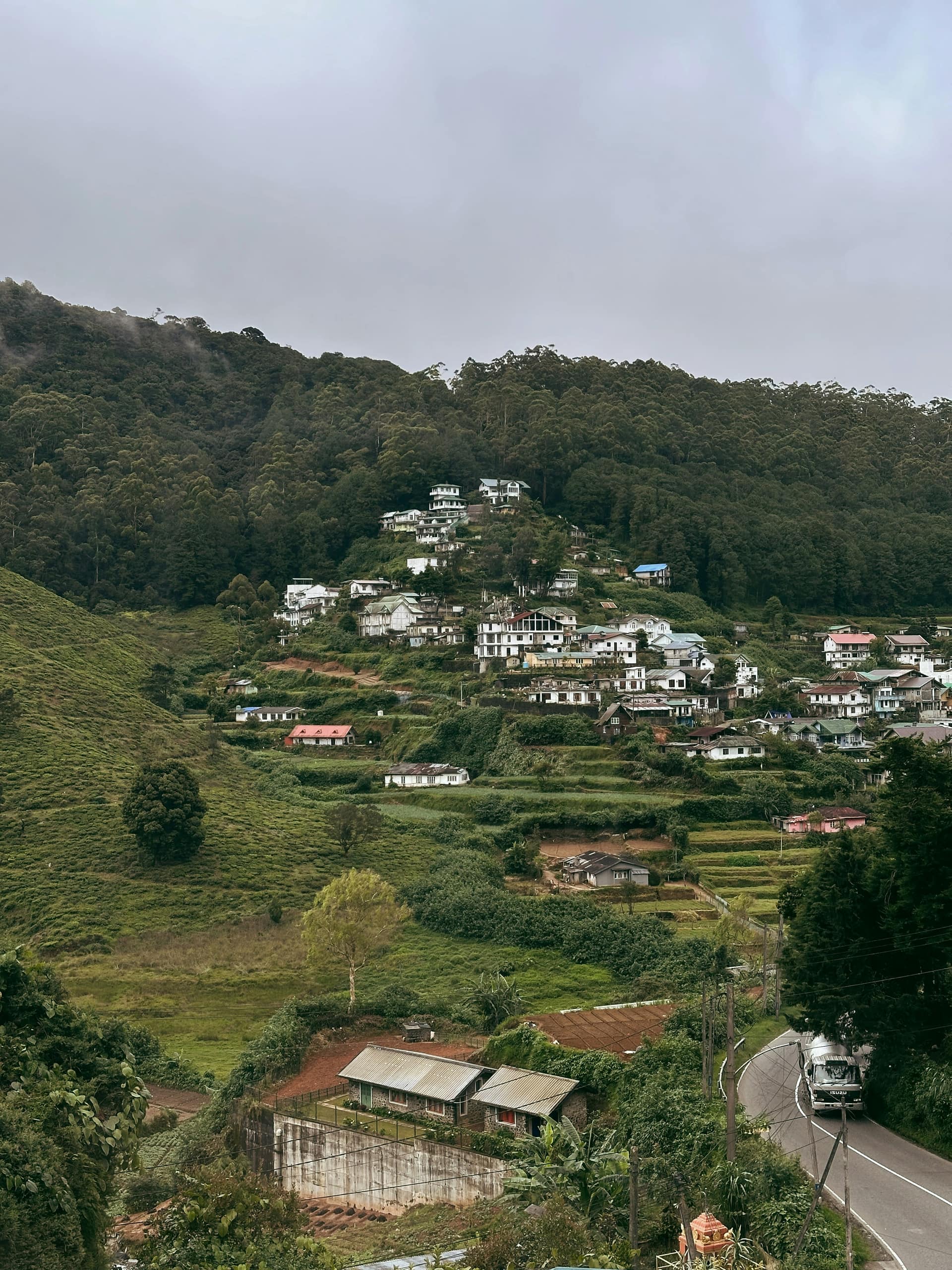
- Nuwara Eliya and Sri Lanka's hill country sit at higher altitude and stay noticeably cooler than the coast, sometimes requiring a light jacket in the evenings, unlike anywhere in the flat Maldives.
- The Maldives has no hill regions or altitude variation at all, since its islands sit only a metre or two above sea level, so temperature and humidity stay broadly consistent across the entire nation.
- Both destinations are warm enough for a beach holiday for most of the year, with average daytime temperatures generally in the high twenties to low thirties Celsius.
- Because Sri Lanka's two coasts are affected by opposite monsoon timings, a well-planned itinerary can generally find good weather somewhere on the island in almost any month.
The short answer on weather and climate
Weather works fundamentally differently across Sri Lanka and the Maldives because of geography, not just latitude. Sri Lanka is a single large island with real elevation change, from sea-level coast to hill country reaching well over a thousand metres, so its climate shifts noticeably depending on where a traveller stands. The Maldives is a nation of flat coral atolls with essentially no elevation, so its climate stays broadly the same island to island.
This gives each destination a different weather personality. Sri Lanka rewards planning a route around its regional and monsoon variation; the Maldives rewards very little weather planning at all, beyond choosing a generally drier season.
- →Sri Lanka: regional climate variation, tropical coast to cool hill country, plus a two-monsoon system.
- →Maldives: consistent hot, humid, flat-island climate with less regional variation.
- →Sri Lanka's two coasts have opposite monsoon timings, so one side is usually drier.
- →The Maldives has one general wet season and one general drier season, applying nationwide.
Sri Lanka's two-monsoon system
Sri Lanka's weather is shaped by two separate monsoon systems affecting opposite sides of the island at different times of year. The Yala monsoon generally brings wetter conditions to the south-west coast and hill country from around May to September, while the Maluwa monsoon generally brings wetter conditions to the north-east coast from around October to January.
Because these monsoons affect opposite coasts at different times, Sri Lanka rarely has genuinely bad weather island-wide at once. A trip planned in July, for example, might favour the north-east coast around Trincomalee, while a trip in December might favour the south-west around Galle and Mirissa, with the Cultural Triangle and hill country generally workable across much of the year.
- →Yala monsoon: generally wetter on the south-west coast and hill country, roughly May to September.
- →Maluwa monsoon: generally wetter on the north-east coast, roughly October to January.
- →The Cultural Triangle and central regions are generally workable across most of the year.
- →A route can often be planned to favour whichever coast is drier at the time of travel.
Regional variation within Sri Lanka
Sri Lanka's coastal areas, including the south, west, and east coasts, are tropical and consistently warm, generally in the high twenties to low thirties Celsius year-round, exactly what most Turkish travellers picture for a beach holiday. The hill country around Nuwara Eliya, sitting at significantly higher altitude, is a genuinely different climate: noticeably cooler, sometimes requiring a light jacket in the evenings, with a temperate, almost spring-like feel that surprises many first-time visitors.
Inland and lowland areas, including much of the Cultural Triangle around Sigiriya and Dambulla, tend to be hot and humid, generally warmer and more humid than the coast at times, since they lack both the sea breeze of the coast and the altitude of the hill country. This regional spread means a single Sri Lanka itinerary can genuinely cross three distinct climate experiences in one trip.
The Maldives' consistent tropical climate
The Maldives, lying close to the equator and consisting entirely of flat coral islands, has a climate that stays remarkably consistent both geographically and, to a lesser extent, seasonally. Daytime temperatures generally sit in the high twenties to low thirties Celsius throughout the year, with humidity consistently high given the nation's ocean-surrounded, low-lying geography.
There is no hill-country equivalent anywhere in the Maldives to offer a cooler alternative, since its islands sit only a metre or two above sea level at their highest points. This means, unlike Sri Lanka, a Maldives itinerary does not involve choosing between climate zones; every resort island experiences broadly the same conditions.
- →Consistently hot and humid year-round across the entire nation.
- →No altitude variation; all islands sit only a metre or two above sea level.
- →Daytime temperatures generally high twenties to low thirties Celsius throughout the year.
- →No cooler regional alternative exists, unlike Sri Lanka's hill country.
The Maldives' wet and dry seasons
Despite its overall consistency, the Maldives does have a general seasonal pattern, with a drier season roughly from December to April and a wetter, more monsoon-influenced season roughly from May to November, though rain even in the wetter season tends to arrive as short, heavy tropical showers rather than sustained bad weather.
Because the Maldives is one climate zone rather than several, this seasonal split applies fairly uniformly nationwide, unlike Sri Lanka's two-coast monsoon split. Choosing a generally drier month is therefore a simpler decision in the Maldives, with less need to weigh one region against another.
What this means for planning your trip
For Turkish travellers weighing the two, Sri Lanka rewards more deliberate route planning around its regional and monsoon variation, but offers a genuine climate-variety payoff: coastal warmth, hill-country coolness, and everything between in one trip. The Maldives asks for a simpler, single seasonal check and then delivers consistent tropical conditions throughout the stay.
Lankan Stays & Trails builds private, driver-guided Sri Lanka itineraries for Turkish travellers, and part of that planning involves sequencing the route to favour whichever coast and region suit the travel dates best, rather than fixing an itinerary regardless of season.
Frequently asked questions
What is the best time to visit Sri Lanka?
It depends on the region, since Sri Lanka has two monsoons affecting opposite coasts. The south-west coast and hill country are generally drier from around December to March, while the north-east coast is generally drier from around May to September, so timing can be matched to the planned route.
What is the best time to visit the Maldives?
The Maldives' generally drier season runs roughly December to April, with a wetter, more monsoon-influenced season roughly May to November. Since the Maldives is one broad climate zone, this seasonal pattern applies fairly uniformly across the whole nation.
Is the weather in Sri Lanka the same everywhere?
No. Sri Lanka's coastal areas are tropical and warm year-round, the hill country around Nuwara Eliya is noticeably cooler due to altitude, and inland lowland areas tend to be hot and humid, so a single trip can cross genuinely different climate zones.
Does the Maldives have a cooler season or region?
Not really. The Maldives has no altitude variation, since its islands sit only a metre or two above sea level, so temperature and humidity stay broadly consistent nationwide across the year, with only a general wetter and drier season rather than a cooler region.
Is it cold in Sri Lanka's hill country?
Not cold in an absolute sense, but noticeably cooler than the coast, sometimes requiring a light jacket in the evenings around Nuwara Eliya, given its higher altitude. It has a temperate, almost spring-like feel that contrasts sharply with Sri Lanka's tropical coastline.
Can I avoid the rain by choosing the right coast in Sri Lanka?
Generally yes, to a meaningful extent. Because Sri Lanka's two monsoons affect the south-west and north-east coasts at different times of year, a route can often be planned to favour whichever coast is drier during the travel dates.
Is the Maldives always hot and humid?
Yes, consistently. As a flat coral atoll nation close to the equator, the Maldives has no regional climate variation, and daytime temperatures generally stay in the high twenties to low thirties Celsius with high humidity throughout the year, regardless of season.