
Quick answer
On the 12-day Alps-to-beach Sri Lanka itinerary, food shifts by stage: the Cultural Triangle and Kandy typically serve rice-and-curry buffet spreads with 5 to 10 small dishes, hill-country Nuwara Eliya adds a genuine tea-and-scone stop at an estate cafe that echoes a Swiss mountain teahouse (in feeling, not in altitude), and the south coast at Mirissa or Unawatuna shifts to grilled fish, prawns and crab. Spice levels are usually adjustable if you ask.
Key takeaways
- Rice-and-curry buffets in the Cultural Triangle and Kandy typically include 5 to 10 small dishes: a main curry, several vegetable curries, dhal, sambol and rice.
- Nuwara Eliya's tea estates commonly run cafes serving scones, cake and a pot of estate tea, a genuine echo of a Swiss mountain teahouse stop in atmosphere rather than altitude.
- South-coast bases such as Mirissa and Unawatuna typically list the day's catch, prawns and crab on evening menus, priced by weight at many beachfront restaurants.
- Hoppers (bowl-shaped rice-flour pancakes, often with an egg cracked into the centre) and kottu roti (chopped flatbread stir-fried with vegetables and often egg or meat) appear widely across all five stops.
- Spice levels in Sri Lankan cooking can run hot by Swiss standards, and most hotels and restaurants along this route will tone dishes down if asked at the time of ordering.
Cultural Triangle: the first curry spread
The Cultural Triangle stage of this route, roughly 2 nights around Sigiriya or Habarana, is where most Swiss travellers meet a proper Sri Lankan rice-and-curry spread for the first time, usually as a hotel buffet after the Sigiriya climb or the Dambulla cave temple visit. A typical spread runs 5 to 10 small dishes: a main protein curry (chicken or fish), several vegetable curries, dhal, a coconut sambol, and plain rice to build the plate around.
Portions at these buffets are generous and dishes vary in spice level, so it is worth tasting a small amount of each curry before loading a plate, since the sambols in particular can be considerably hotter than they look. Hotels used to international guests will usually flag which dishes are mild.
- →Rice-and-curry buffet: main curry, 3 to 5 vegetable curries, dhal, sambol, plain rice.
- →Coconut sambol (grated coconut, chilli, lime) is a common condiment and often the spiciest item on the table.
- →Fresh king coconut water is widely available and a good way to cool down after the Sigiriya climb.
Kandy: home-style spreads and a wider menu
Kandy, roughly days 3 to 4 of the route, tends to offer a slightly wider food scene than the Cultural Triangle simply because it is a proper city rather than a resort area, with more independent restaurants around the lake and town centre alongside hotel buffets. Home-style Kandyan cooking is generally milder on coconut milk and heavier on greens than coastal versions of the same curries.
Kandy is also a reasonable place to try string hoppers (steamed rice-noodle nests, usually served for breakfast with a thin curry sauce) if they have not already appeared at breakfast in the Cultural Triangle, and kottu roti in the evening, which is cooked on a hot griddle with audible chopping that has become something of a street-food signature across Sri Lanka.
- →String hoppers with thin curry sauce: a common Kandy breakfast option.
- →Kottu roti: chopped flatbread stir-fried with vegetables and egg, chicken or seafood, widely available in the evening.
- →Independent restaurants around Kandy Lake offer more variety than the Cultural Triangle's largely hotel-based dining.
Hill country: tea, scones and a genuinely cooler table
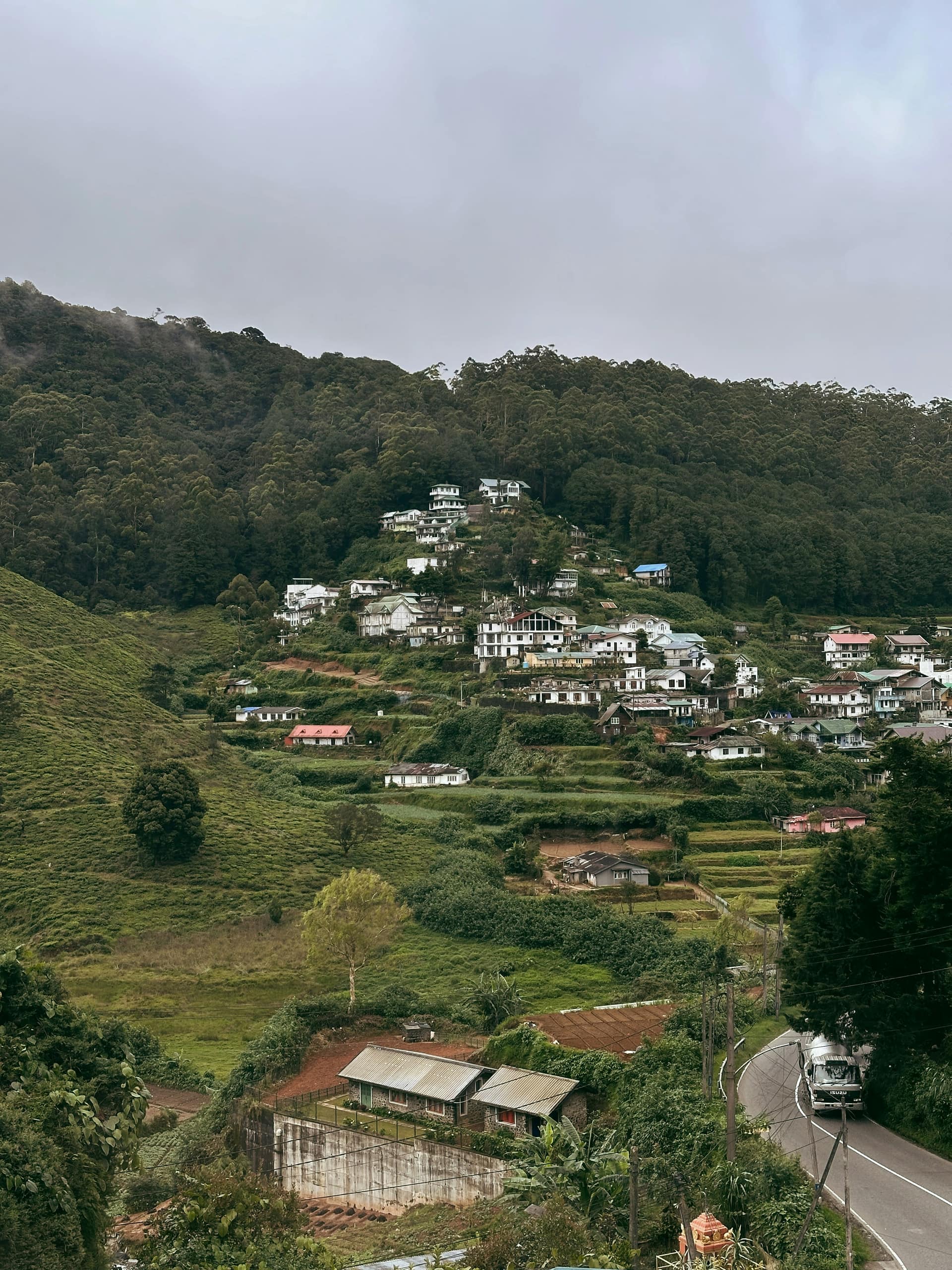
The hill-country stretch, roughly days 5 to 7 around Nuwara Eliya and Ella, is where food takes its most noticeable turn on this route. Nuwara Eliya's tea estates commonly run visitor cafes serving a pot of estate tea alongside scones, cake or short eats, a stop that genuinely echoes the feel of a Swiss mountain teahouse, though this is a comparison of atmosphere and hospitality, not of altitude or architecture.
Nuwara Eliya's colonial-era hotels also tend to lean into this heritage with British-influenced menus, sometimes including roast dinners or afternoon tea sets alongside the usual rice and curry. Ella, a day or so later on the route, has a more backpacker-influenced food scene with cafes serving Western breakfasts, wood-fired pizza and fresh juices alongside local dishes, reflecting its position as a long-standing traveller hub.
- →Tea estate cafes in Nuwara Eliya: a pot of estate tea, scones and cake, typically part of the tea factory visit.
- →Colonial-era hotels in Nuwara Eliya sometimes offer roast dinners or a British-style afternoon tea set.
- →Ella's cafe scene mixes Western breakfasts and wood-fired pizza with local dishes, reflecting its long-standing traveller-hub character.
South coast: the seafood finish
The final stretch of the route, roughly days 8 to 12 at Mirissa or Unawatuna, shifts food emphasis to seafood, with beachfront restaurants commonly displaying the day's catch, tiger prawns and crab on ice for guests to select before it is grilled to order. Pricing at these places is often by weight, so it is worth confirming the price before ordering rather than after the plate arrives.
Fruit is also at its best on the coast, with pineapple, papaya, mango (seasonally) and king coconut sold from roadside stalls and hotel breakfasts alike. Evenings on this stretch are the most relaxed of the route, and a slow seafood dinner by the water is generally the natural way to close out each of the final days before departure.
- →Beachfront restaurants in Mirissa and Unawatuna typically display fresh catch, prawns and crab, priced by weight.
- →Confirm the price of seafood before ordering, since by-weight pricing can vary between similar-looking dishes.
- →Fresh tropical fruit, pineapple, papaya and king coconut, is widely available and at its best on the coastal stretch.
Breakfast patterns across the five stops
Breakfast on this route generally follows the same rhythm at each hotel, a buffet mixing local and continental options, though the balance shifts noticeably by stage. In the Cultural Triangle and Kandy, expect string hoppers, hoppers, and a mild dhal alongside toast, eggs and fruit, giving a gentle introduction to Sri Lankan flavours earlier in the day than the fuller curry spreads served at lunch and dinner.
Hill-country breakfasts in Nuwara Eliya often lean further towards the colonial-hotel style, with cooked breakfasts, porridge and toast sitting comfortably alongside hoppers, a reflection of the area's British-era hospitality heritage. On the south coast, breakfast tends to loosen up again, with fresh tropical fruit, juices and lighter options suited to the heat, often eaten with a sea view rather than in an enclosed dining room.
- →Cultural Triangle and Kandy breakfasts: string hoppers, hoppers, mild dhal, toast, eggs and fruit.
- →Nuwara Eliya breakfasts often add cooked options and porridge, echoing the town's colonial-era hotel style.
- →South-coast breakfasts lean towards fresh fruit and lighter fare, frequently served with a sea view.
Managing spice levels across the route
Sri Lankan cooking can run considerably hotter than typical Swiss cuisine, particularly sambols and certain curries built around dried chilli, and this catches some first-time visitors off guard partway through the Cultural Triangle stage. Most hotels and restaurants along this route are used to international guests and will happily tone a dish down if asked when ordering, rather than after the fact.
It is worth noting that spice intensity is not consistent across the route either. Home-style Kandyan cooking tends to be gentler than some coastal preparations, while a curry at a small, non-touristic roadside stop in the Cultural Triangle can be considerably hotter than the equivalent dish at an international hotel buffet, simply because it is cooked for a local rather than a visiting palate.
We at Lankan Stays & Trails flag this to travellers before the trip starts, since a quiet word to kitchen staff on day one in the Cultural Triangle generally sets the tone for milder preparation at every stop that follows, without losing the character of the food.
Frequently asked questions
What food is typical on the Cultural Triangle stage of this itinerary?
Rice-and-curry buffets are typical, usually 5 to 10 small dishes: a main protein curry, several vegetable curries, dhal, coconut sambol and rice, served at hotels near Sigiriya or Habarana after the day's sightseeing.
Is the food spicy in Sri Lanka?
It can be, particularly sambols and certain curries, and this often runs hotter than typical Swiss cooking. Most hotels and restaurants along this route will adjust spice levels if asked at the time of ordering.
What should I eat in the hill country section of the route?
A tea estate cafe visit in Nuwara Eliya, typically part of the factory tour, serves a pot of estate tea with scones or cake, a genuine echo of a Swiss teahouse stop in atmosphere. Ella's cafes add Western breakfasts and pizza to the mix.
Is seafood good on the south coast stage of the itinerary?
Yes, Mirissa and Unawatuna both have beachfront restaurants displaying fresh catch, prawns and crab, usually priced by weight and grilled to order, making the final days of the route the strongest for seafood on the whole trip.
Does food vary a lot between the five stops on this route?
Yes, noticeably. The Cultural Triangle and Kandy lean on rice-and-curry buffets, the hill country adds tea and scones alongside home-style dishes, and the south coast shifts the emphasis to grilled seafood and tropical fruit.
Can vegetarians eat well on this route?
Generally yes, given Sri Lanka's strong vegetarian culinary tradition, though this itinerary's food is covered separately in more detail in a dedicated vegetarian and vegan guide for this route.
Is it worth trying kottu roti and hoppers on this trip?
Yes, both appear widely across all five stops on this route. Kottu roti (chopped flatbread stir-fried with vegetables and often egg or meat) and hoppers (bowl-shaped rice-flour pancakes) are considered essential tastes of a Sri Lanka trip.