
Quick answer
On the 12-day Alps-to-beach Sri Lanka itinerary, tap water is not recommended for drinking anywhere on the route, so bottled or properly filtered water is the standard practice at all five stops, from the hot, dusty Cultural Triangle through cool Nuwara Eliya and Ella to the humid south coast. Basic precautions, sealed bottled water, ice made from filtered water at reputable hotels, and well-washed or cooked salads, reduce the risk of stomach upset considerably, and a simple rehydration and anti-diarrhoeal kit is worth packing regardless.
Key takeaways
- Tap water is not recommended for drinking anywhere on this route, and sealed bottled water or a personal filter bottle is the standard approach at all five stops.
- The Cultural Triangle stage, roughly days 1 to 2, carries the highest heat-driven dehydration risk on the route, given the Sigiriya climb and daytime temperatures that can reach the low-to-mid 30s Celsius.
- Hill-country air in Nuwara Eliya and Ella feels cooler and less risky, but dehydration and stomach-upset risk from food and water do not disappear simply because the temperature drops.
- Ice at larger hotels and established restaurants along this route is generally made from filtered or boiled water, though it is reasonable to ask if unsure, particularly at smaller roadside stops.
- A basic travel pharmacy kit, oral rehydration salts, a general anti-diarrhoeal, and any personal medication, is worth packing from Switzerland rather than assuming easy access along the route.
Why tap water is off the table for this whole route
Tap water across Sri Lanka, including at all five stops on this itinerary, is not treated to a standard considered safe for direct drinking by international visitors, and this applies consistently whether you are in the hot Cultural Triangle, cool Nuwara Eliya or the humid south coast. Bottled water is inexpensive and sold everywhere along the route, and most mid-range and upmarket hotels also provide complimentary bottled or filtered water in rooms.
Brushing teeth with tap water is generally considered a low risk by most travel health guidance, but drinking it directly, or swallowing it in the shower, is best avoided throughout the trip. Travellers who prefer to reduce plastic waste can bring a filter bottle or purification tablets, both of which work well given the wide availability of refill points at hotels along this route.
For Swiss travellers used to drinkable tap water everywhere at home, this is often the single biggest habit adjustment on the whole trip, more than the food itself, simply because it requires remembering to check before every glass rather than a specific dietary choice made once at the start of the day.
Cultural Triangle: the highest heat risk on the route
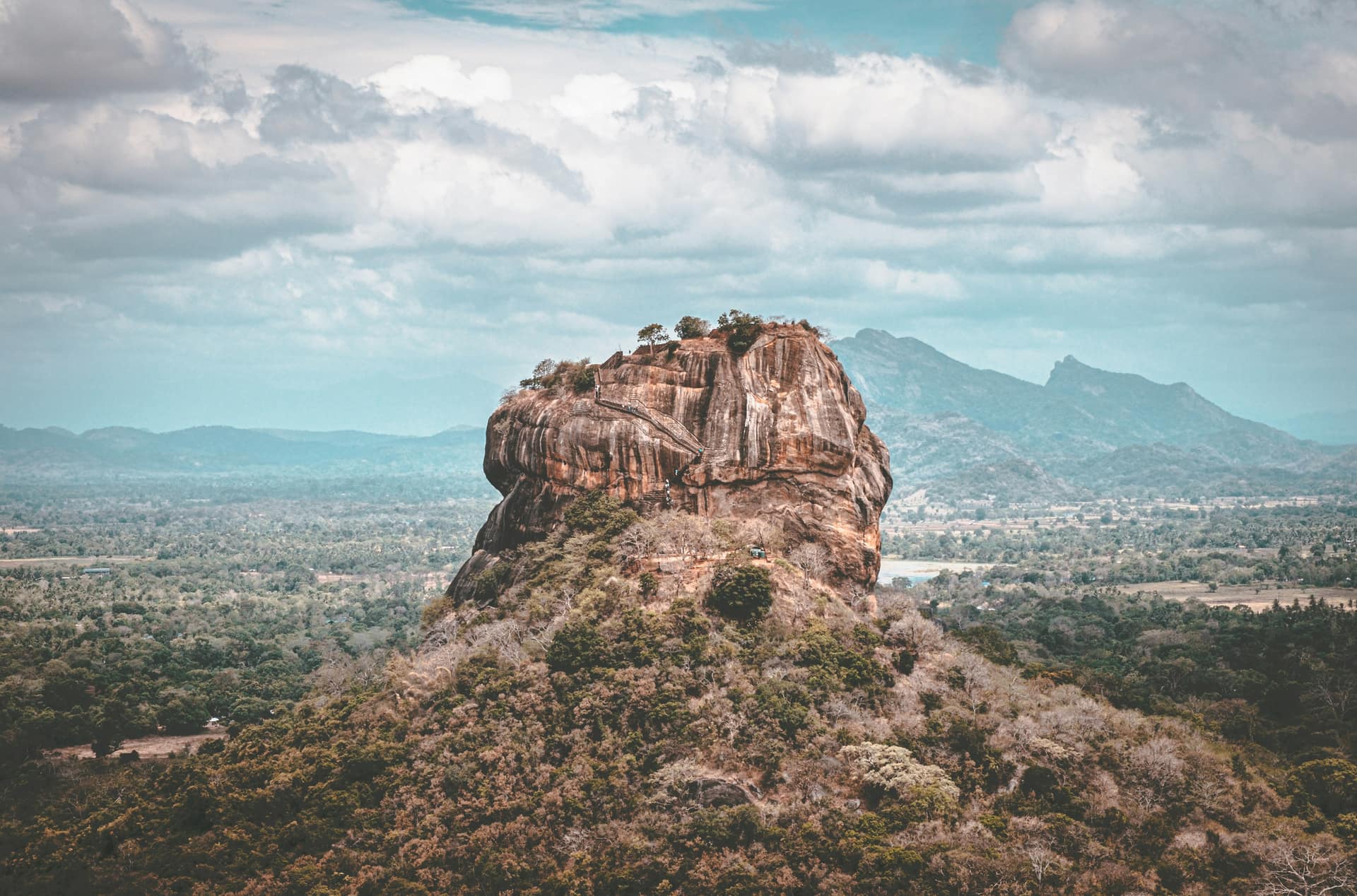
Days 1 to 2, spent around Sigiriya and Habarana, carry the sharpest dehydration risk of the whole itinerary, combining daytime heat that can reach the low-to-mid 30s Celsius with the roughly 1,200-step Sigiriya climb, typically 2 to 3 hours return, undertaken in direct sun for much of the ascent. Carrying at least 1.5 to 2 litres of bottled water per person for the climb alone is a reasonable minimum, more in the hottest months.
Dust and heat together can also make travellers more prone to appetite loss and mild digestive upset in the first couple of days, before the body has adjusted to the climate, so starting with familiar, well-cooked food and building up to heavier curry spreads over the first day or two is a sensible approach.
- →Carry at least 1.5 to 2 litres of bottled water per person for the Sigiriya climb.
- →Dambulla's cave temples, visited the same day, are cooler inside but the walk up to them is exposed to full sun.
- →Early starts (before roughly 7am for Sigiriya) reduce both heat exposure and water needs for the climb.
Hill country: cooler air, but the same basic rules
Nuwara Eliya and Ella, roughly days 5 to 7, feel noticeably cooler than the rest of the route, with daytime highs typically in the range of 16 to 20°C, and this cooler air tends to lull travellers into relaxing precautions that still matter. Bottled or filtered water remains the standard here, and stomach upset risk from food does not fall just because the climate feels gentler.
The optional dawn trip to Horton Plains on day 6, roughly 1.5 to 2 hours each way at an elevation of roughly 2,100 to 2,300 metres, is cold and can be windy, and dehydration is still a genuine risk on the walk to World's End even though the air feels cool rather than hot. Carrying water on this excursion is just as important as on the Sigiriya climb, for different reasons.
- →Bottled or filtered water remains standard practice in Nuwara Eliya and Ella despite the cooler climate.
- →The Horton Plains walk to World's End (roughly 1.5 to 2 hours each way) still carries dehydration risk in cool, windy conditions.
- →Tea estate cafe tea and scones are generally low risk, made and served at established, visitor-oriented venues.
South coast: humidity, ice and seafood freshness
The south-coast stage, roughly days 8 to 12 at Mirissa or Unawatuna, brings back higher temperatures (typically 28 to 32°C) and humidity, which increases both water needs and the general importance of food freshness, particularly with seafood served at beachfront restaurants. Choosing restaurants that look busy and turn over stock quickly is a reasonable, informal way to judge freshness when there is no other guidance available.
Ice at larger hotels and established restaurants along the coast, and indeed the whole route, is generally made from filtered or boiled water, but it is entirely reasonable to ask if there is any doubt, particularly at smaller, less obviously tourist-oriented stalls. Salads washed in tap water carry a similar, modest risk, and sticking to cooked vegetables or salads at reputable hotels reduces this further.
- →Ice at larger hotels and established restaurants is generally made from filtered or boiled water; ask if unsure at smaller stalls.
- →Salads at reputable hotels are typically washed to a higher standard than at very informal roadside stops.
- →Busy, high-turnover seafood restaurants are a reasonable informal indicator of freshness on the south-coast stretch.
What to do if stomach upset happens anyway
Even with reasonable precautions, mild stomach upset affects some travellers at some point across a 12-day trip through several different food environments, and this is worth planning for rather than treating as a sign something went badly wrong. Resting for a day, sticking to plain rice, bananas and toast, and prioritising rehydration with oral rehydration salts rather than plain water alone generally resolves a mild case within a day or two.
If symptoms are severe, persistent beyond 48 hours, or include a high fever, hotel staff at any of the five stops on this route can generally arrange contact with a local doctor or clinic, and larger towns such as Kandy and the south-coast bases have better medical access than the more rural hill-country stretch. Travel insurance covering medical treatment abroad is worth confirming before departure from Switzerland, as with any long-haul trip.
- →Plain rice, bananas and toast, alongside oral rehydration salts, are the standard first response to mild stomach upset.
- →Medical access is stronger in Kandy and on the south coast than in the more rural hill-country stretch.
- →Confirm travel insurance covers medical treatment abroad before departing Switzerland.
A basic precautions kit for the whole trip
A simple travel pharmacy packed from Switzerland covers most of what is needed: oral rehydration salts, a general anti-diarrhoeal, any personal prescription medication, and a basic painkiller, since pharmacies along the route, while reasonably well stocked in towns like Kandy or on the coast, are less reliably available in more remote stretches such as the transfer days.
It is also worth packing a small supply of hand sanitiser or wipes for use before meals, particularly on transfer days between the Cultural Triangle, Kandy, the hill country and the coast, when handwashing facilities are not always immediately available at roadside stops.
We at Lankan Stays & Trails brief every traveller on this route about water and food precautions before departure, and our driver-guides carry a basic first-aid kit including rehydration salts as standard, useful given how much of this itinerary happens away from town centres on transfer days.
None of this needs to feel like an unusual amount of preparation for a 12-day trip; most of the kit fits into a single small pouch, and once packed it is simply carried along rather than actively thought about, which is generally how most travellers on this route describe it in hindsight.
Frequently asked questions
Can I drink tap water anywhere on this Sri Lanka itinerary?
No, tap water is not recommended for drinking at any of the five stops on this route, from the Cultural Triangle through the hill country to the south coast. Bottled or filtered water is the standard practice throughout.
Is ice safe to have in drinks in Sri Lanka?
Generally yes at larger hotels and established restaurants, where ice is usually made from filtered or boiled water, though it is reasonable to ask if unsure, particularly at smaller roadside stalls away from the main tourist areas.
Do I need to worry about stomach upset in the cooler hill country?
Yes, the same basic precautions still apply. The cooler air in Nuwara Eliya and Ella does not reduce the risk from untreated water or poorly washed food, even though the climate feels gentler than the Cultural Triangle or coast.
What should I pack for stomach upset on this trip?
A basic kit with oral rehydration salts, a general anti-diarrhoeal, and any personal medication, packed from Switzerland, is sensible, since pharmacy access is less reliable on transfer days between the route's five stops.
How much water should I carry for the Sigiriya climb?
At least 1.5 to 2 litres per person is a reasonable minimum, more in hotter months, given the roughly 1,200-step climb, 2 to 3 hours return, undertaken largely in direct sun during the hottest part of the Cultural Triangle stage.
Is seafood on the south coast safe to eat?
Generally yes at established restaurants in Mirissa and Unawatuna, particularly busy, high-turnover places serving fresh catch. Confirming freshness and choosing reputable venues reduces risk further on this final, humid stretch of the route.
Should I bring water purification tablets or a filter bottle?
It is a reasonable option for travellers who want to reduce plastic waste, since refill points are widely available at hotels along this route. Bottled water remains the simpler default for most travellers on all five stops.