
Quick answer
The 10-day Sri Lanka itinerary for Turkish travellers needs four distinct clothing modes: lightweight, sturdy clothing with closed shoes for the Sigiriya climb, modest coverage of shoulders and knees for temple visits at Dambulla and Kandy, a warm layer for Nuwara Eliya's cool evenings, and simple beachwear for the south coast finish. Packing a small, easy-to-reach set of temple-appropriate clothing and a single warm layer, rather than relying on one wardrobe for the whole trip, keeps every stage comfortable.
Key takeaways
- Four distinct clothing modes are needed across the route: climbing wear, temple wear, cold-weather wear and beachwear.
- Shoulders and knees covered is required at Dambulla, the Temple of the Sacred Tooth Relic and Sigiriya's summit area.
- Nuwara Eliya on day six is the only stop where a genuine warm layer, not just a light cardigan, earns its place in the bag.
- A light scarf or shawl is the single most versatile item on this route, covering shoulders at short notice and doubling as flight comfort.
- Neutral colours are worth prioritising for the Yala safari jeep, where bright colours can be more noticeable to wildlife at close range.
What to wear for the Sigiriya climb
Lightweight, breathable clothing that allows free movement matters most for the Sigiriya climb, given the roughly three-to-four-hour return trip largely without shade. Closed shoes with grip are worth prioritising over sandals for the steeper metal staircases near the summit.
A hat and sunglasses are worth wearing rather than packing away, since the exposure builds quickly once past the lower gardens, and a light, quick-drying top handles the inevitable sweat better than heavier cotton.
Temple dress code across the route
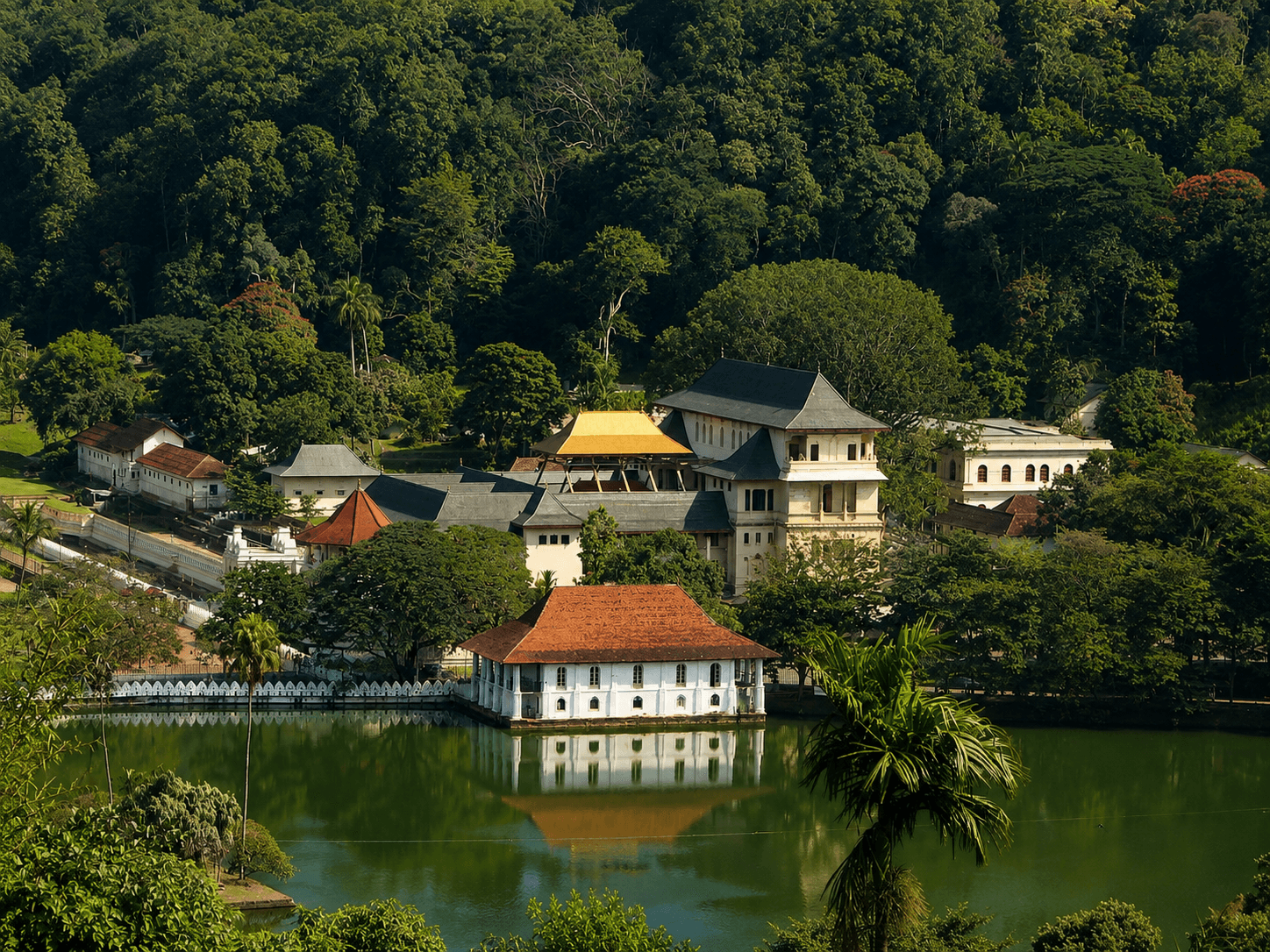
Dambulla's cave temples, the Temple of the Sacred Tooth Relic in Kandy, and Sigiriya's summit area all expect shoulders and knees covered, a standard that applies to all visitors regardless of gender or nationality at active Buddhist sites.
Packing two or three specific outfits that meet this standard, rather than improvising with a scarf each time, makes the temple stops considerably less stressful, and shoes that slip on and off easily save time at entrances where footwear comes off before entering.
- →Shoulders and knees covered: required at Dambulla, the Temple of the Sacred Tooth Relic, and Sigiriya's summit.
- →Easy-to-remove footwear: shoes come off before entering the inner shrine areas.
- →A light scarf or shawl: useful as a quick shoulder cover if an outfit falls slightly short of the standard.
Dressing for Nuwara Eliya's cold evenings
Nuwara Eliya, at roughly 1,868 metres elevation, is the one stop on this route where a genuine warm layer matters, since night temperatures can drop to single digits Celsius, a real surprise on a trip otherwise packed for tropical heat.
A fleece, light jacket or a jumper packed specifically for this one or two nights is worth the small amount of luggage space, and layering over a long-sleeved top works better than relying on a single heavy item.
Safari wear and beach wear
Neutral colours, greens, browns and khakis, are worth prioritising for the Yala safari jeep on day eight, since bright colours and white can be more noticeable to wildlife at closer range, alongside closed shoes and a hat for the open vehicle.
The final south coast stretch calls for simple, practical beachwear: swimwear, light cover-ups, and sandals, a genuine contrast to everything worn earlier in the trip and a signal that the pace has finally slowed.
- →Safari: neutral colours, closed shoes, a hat, and layers for a cool early-morning start if that session is chosen.
- →Beach: swimwear, light cover-ups, sandals, and a beach towel if not provided by the hotel.
- →Evenings on the coast: light, breathable clothing is generally all that is needed given the consistent warmth.
Packing for the transitions
The transitions between stages, Sigiriya to temple wear, hill country to the safari, cold Nuwara Eliya to the warm coast, are where a poorly planned wardrobe shows its gaps, so packing with the day-by-day route in mind rather than a single generic list pays off.
Lankan Stays & Trails flags each of these transitions in advance for Turkish travellers booking this route, particularly the Nuwara Eliya cold layer, which is the item most frequently left at home.
Frequently asked questions
What should you wear to climb Sigiriya Rock?
Lightweight, breathable clothing with closed shoes offering good grip for the metal staircases near the summit, along with a hat and sunglasses given the largely shade-free ascent.
Do you need to cover your shoulders and knees in Sri Lanka?
At active temple sites, yes. Dambulla's cave temples, the Temple of the Sacred Tooth Relic in Kandy, and Sigiriya's summit area all expect shoulders and knees covered, regardless of the visitor's nationality or gender.
What colour clothing is best for a Yala safari?
Neutral colours, greens, browns and khakis, are generally preferred over bright colours or white, since they are less noticeable to wildlife at closer range in the open jeep.
How cold does it get in Nuwara Eliya, and what should you pack for it?
Night temperatures can drop to single digits Celsius at roughly 1,868 metres elevation. A fleece or light jacket, layered over a long-sleeved top, is generally enough for this one or two nights of the route.
Is a scarf useful for a Sri Lanka trip?
Yes, a light scarf or shawl is one of the most versatile items on this route, doubling as a quick shoulder cover at temple entrances and as extra comfort on the flight itself.
Can you wear the same clothes for temples and the beach in Sri Lanka?
Not comfortably. Temple visits require shoulders and knees covered, while the beach stretch calls for swimwear and light, casual clothing, so packing distinct items for each is worth the extra planning.