
Quick answer
Day 2 of the 10-day Sri Lanka itinerary climbs Sigiriya Rock at opening, roughly 1,200 steps and two to three hours including the frescoes and the Lion's Paw terrace, then rests at the hotel through the midday heat. In the late afternoon it drives around 30 minutes to the Dambulla Cave Temple, five painted cave shrines reached by a stepped path of roughly 15 to 20 minutes. Covered shoulders and knees are required at Dambulla, and shoes come off at the entrance.
Key takeaways
- Sigiriya Rock is best climbed at opening, when the heat is lowest and the queues on the upper stairs are shortest.
- The climb is roughly 1,200 steps and takes two to three hours with time for the frescoes and the summit palace.
- The Dambulla Cave Temple is around 30 minutes from Sigiriya and is cooler and quieter in the late afternoon.
- Dambulla requires covered shoulders and knees, and shoes are left at the entrance, so bring socks for the hot stone.
- Because day 3 is also in the Cultural Triangle, the 10-day route can leave the whole midday free for rest.
Day 2 of the 10-day itinerary at a glance
Day 2 of the 10-day Sri Lanka itinerary splits cleanly into three blocks: Sigiriya Rock in the morning, rest in the middle, and the Dambulla Cave Temple in the late afternoon. On the shorter 7-day route this day has to carry more; on the 10-day route Polonnaruwa and the elephants move to day 3, which is what makes the long midday break possible.
The whole day involves less than an hour and a half of driving, which is a welcome change after the transfer from the airport.
- →Around 6.30am: leave the hotel with a breakfast box.
- →Opening time: begin the climb up Sigiriya Rock, roughly two to three hours.
- →Late morning to around 3pm: lunch, pool and sleep.
- →Around 3.30pm: drive roughly 30 minutes to Dambulla.
- →Late afternoon: the Dambulla Cave Temple, roughly one to one and a half hours.
Climbing Sigiriya Rock on day 2
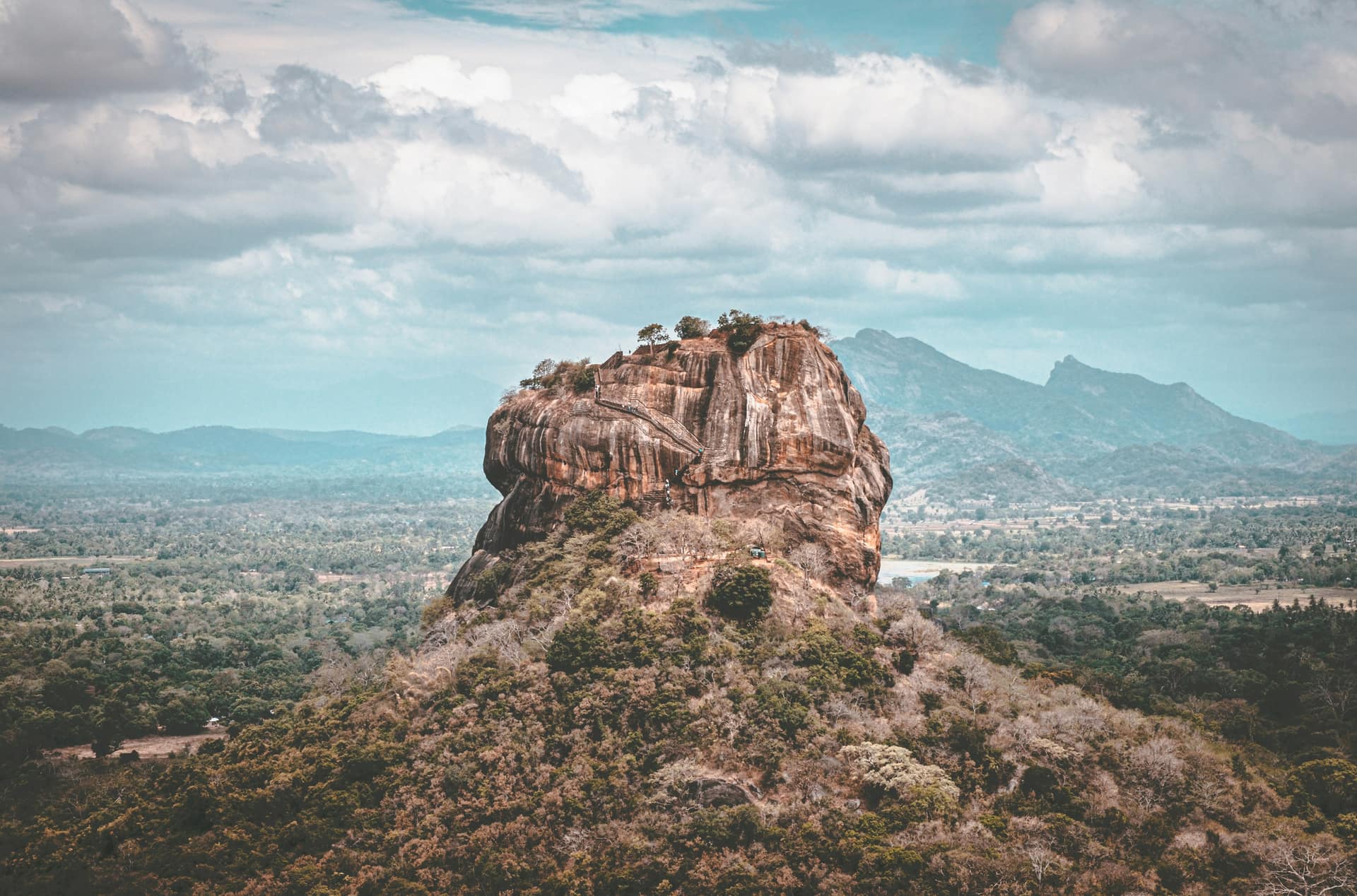
Sigiriya Rock, the fifth-century fortress of King Kashyapa, rises roughly 200 metres out of the plain, and the climb to the summit is roughly 1,200 steps. The route passes through the water gardens, up to the sheltered gallery of fresco maidens, along the Mirror Wall and through the giant Lion's Paw gateway before the final metal staircase to the palace ruins on top.
Climbing at opening matters for two reasons. The rock face turns into a radiator by late morning, and tour groups arrive from mid-morning, which creates queues on the narrow upper stairs. Confirm the current opening time locally, since it can change, and be at the gate a little before it.
- →Water gardens and boulder gardens: 20 to 30 minutes at the base.
- →Fresco gallery: reached by a spiral staircase; photography rules are enforced.
- →Lion's Paw terrace: a natural rest stop before the steepest section.
- →Summit: palace foundations, cisterns and views over the jungle to Pidurangala.
Sigiriya or Pidurangala on day 2
Pidurangala Rock, a few minutes' drive from Sigiriya, is the alternative climb: shorter, rougher, cheaper, and famous for its view of Sigiriya itself. The walk up takes roughly 45 to 60 minutes each way and ends with a boulder scramble, which some travellers find harder than Sigiriya's staircases.
On the 10-day route there is time for both, but not comfortably on the same morning. Some travellers climb Pidurangala at sunrise on day 2 and Sigiriya the same morning; others save Pidurangala for sunrise on day 3 before Polonnaruwa. Anyone with limited mobility or a fear of heights should choose Sigiriya, which has handrails throughout.
The midday rest in the Cultural Triangle
The Cultural Triangle is Sri Lanka's dry zone, and between late morning and mid-afternoon the heat is strong enough to make any sightseeing unpleasant. The 10-day route uses those hours for lunch, a swim and sleep, which also helps long-haul travellers catch up after the flight.
If you would rather keep moving, a village lunch in the paddy fields near Sigiriya, arranged through your hotel or driver, is a gentle option. Keep it short and shaded, and drink more water than feels necessary.
- →Drink at least two to three litres across the day in the dry zone.
- →Reapply sunscreen after the climb; the summit has almost no shade.
- →Keep the afternoon free of anything strenuous before Dambulla's steps.
The Dambulla Cave Temple in the late afternoon
The Dambulla Cave Temple, a UNESCO World Heritage Site, is a group of five cave shrines cut into a granite outcrop and filled with painted ceilings and around 150 Buddha statues. The path up from the road takes roughly 15 to 20 minutes on shallow steps, and the view from the terrace across the plain towards Sigiriya is worth the climb on its own.
Late afternoon is the best time on the 10-day route because the stone is cooling, the light is warmer and the tour groups have mostly gone. Shoulders and knees must be covered, shoes are left at a counter by the entrance, and the rock is hot, so a pair of socks helps. Monkeys on the path are bold; keep food out of sight.
- →Cave 2, the largest, holds the most impressive painted ceiling.
- →Allow roughly one to one and a half hours including the walk.
- →The Golden Temple building at the base is modern; the caves above are the heritage site.
Planning day 2 of the 10-day route
Buy Sigiriya tickets at the gate on the day or check whether advance online sales are running when you travel; either way, arrive early. Wear shoes with grip for Sigiriya, and pack a scarf or sarong for Dambulla so one outfit covers both.
Lankan Stays & Trails times day 2 around opening hours and the heat rather than a set schedule, and our drivers know the quieter entrance routes at both sites. Day 3 of this series continues with Polonnaruwa by bicycle and a wild elephant safari.
Frequently asked questions
Can you do Sigiriya and Dambulla on the same day?
Yes, and on the 10-day route they sit comfortably together: Sigiriya Rock at opening, a long midday rest, then the Dambulla Cave Temple in the late afternoon. The two are around 30 minutes apart by car, so the day involves very little driving.
How long does it take to climb Sigiriya?
Roughly two to three hours from the entrance to the summit and back, including the water gardens, the fresco gallery and the Lion's Paw terrace. Fit walkers can be quicker, but queues on the upper stairs after mid-morning often slow everyone down, so start at opening.
What should I wear to Sigiriya and Dambulla?
Light, breathable clothes and shoes with good grip for Sigiriya. For the Dambulla Cave Temple, shoulders and knees must be covered, so wear or carry a scarf, sarong or light trousers. Shoes are removed at Dambulla, and socks protect your feet on hot stone.
Is Pidurangala better than Sigiriya?
Neither is better; they offer different things. Sigiriya has the frescoes, the Lion's Paw and the palace ruins. Pidurangala is shorter and rougher, with a final boulder scramble, and gives the classic view of Sigiriya itself. On a 10-day trip there is time to climb both on separate mornings.
Is Sigiriya hard to climb?
It is steady rather than technical: roughly 1,200 steps with handrails, some narrow metal staircases and a few exposed sections near the top. Most reasonably fit travellers manage it in the morning cool. People with vertigo sometimes find the upper staircases uncomfortable.
Why visit Dambulla in the afternoon?
The rock and the stone floors of the caves are cooler late in the day, the light over the plain is softer, and most tour groups visit in the morning. Visiting after a midday rest also means the 10-day route never stacks two climbs back to back in the heat.